Search

Applied Biosystems™
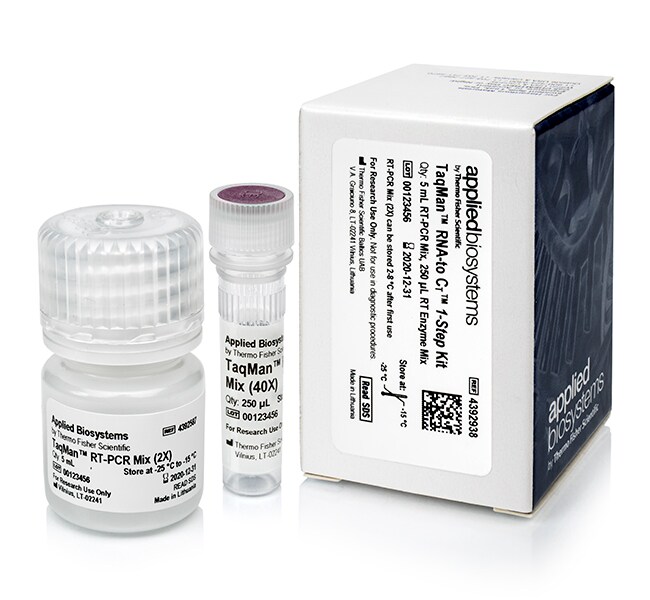
TaqMan™ RNA-to-C T™1-步法 试剂盒
Applied Biosystems TaqMan RNA-to-CT 1-Step 试剂盒可为各种Assay提供一致的 RNA 靶标定量,并已通过 Applied Biosystems了解更多信息
Have Questions?
更改视图

| 货号 | 反应次数 |
|---|---|
| 4392938 | 200 次反应 |
| 4392653 | 40 次反应 |
| 4392656 | 2,000 次反应 |
货号 4392938
价格(CNY)
7,171.29
飞享价
Ends: 31-Dec-2026
10,032.00共减 2,860.71 (29%)
Each
反应次数:
200 次反应
价格(CNY)
7,171.29
飞享价
Ends: 31-Dec-2026
10,032.00共减 2,860.71 (29%)
Each
Applied Biosystems TaqMan RNA-to-CT 1-Step 试剂盒可为各种Assay提供一致的 RNA 靶标定量,并已通过 Applied Biosystems TaqMan 基因表达Assay综合文库进行验证。推荐该试剂盒用于各种应用,包括一般基因表达研究、生物标记物发现和微阵列验证。
TaqMan RNA-to-CT 1-Step 试剂盒的特点包括:
可在宽动态范围内进行精确测量,并确保可靠的性能
•已通过 TaqMan 基因表达Assay验证,实验设置简单
•在各种靶标之间保持一致的性能,包括富含 AT、富含 GC 的序列及长序列
•1-Step形式意味着更少的移液步骤,减少了发生错误的机会
在不同加样浓度范围内的效率
RNA 模板加样量的较大灵活性使得您可在广泛模板量范围内实现出色的实时荧光定量 PCR 效率。图1显示了跨越6个数量级的卓越扩增效率。结果与 TaqMan RNA-to-CT 2-Step 试剂盒的结果相当,而且,相对于 TaqMan One-Step RT-PCR Master Mix 试剂,在动态范围和灵敏度方面有着明显的改进。
在低靶标浓度下实现高灵敏度
TaqMan RNA-to-CT 1-Step 试剂盒已通过使用拷贝数确知的合成 RNA 模板进行验证。在测定低浓度靶标时会出现明显的采样误差,因此需要使用多次重复实验进行统计分析,以便进行正确评估。图2显示了靶标的预期数量和相应的平均 CT 值。统计分析表明,基于 T 检验(表 I),样品定量具有高置信度,其结果与少至10个靶标拷贝的结果一致*。
*结果取决于多种因素,包括Assay设计。
TaqMan RNA-to-CT 1-Step 试剂盒的特点包括:
可在宽动态范围内进行精确测量,并确保可靠的性能
•已通过 TaqMan 基因表达Assay验证,实验设置简单
•在各种靶标之间保持一致的性能,包括富含 AT、富含 GC 的序列及长序列
•1-Step形式意味着更少的移液步骤,减少了发生错误的机会
在不同加样浓度范围内的效率
RNA 模板加样量的较大灵活性使得您可在广泛模板量范围内实现出色的实时荧光定量 PCR 效率。图1显示了跨越6个数量级的卓越扩增效率。结果与 TaqMan RNA-to-CT 2-Step 试剂盒的结果相当,而且,相对于 TaqMan One-Step RT-PCR Master Mix 试剂,在动态范围和灵敏度方面有着明显的改进。
在低靶标浓度下实现高灵敏度
TaqMan RNA-to-CT 1-Step 试剂盒已通过使用拷贝数确知的合成 RNA 模板进行验证。在测定低浓度靶标时会出现明显的采样误差,因此需要使用多次重复实验进行统计分析,以便进行正确评估。图2显示了靶标的预期数量和相应的平均 CT 值。统计分析表明,基于 T 检验(表 I),样品定量具有高置信度,其结果与少至10个靶标拷贝的结果一致*。
*结果取决于多种因素,包括Assay设计。
仅供科研使用。不可用于诊断程序。
规格
适用于(设备)7000 系统、7300 系统、7500系统、7700 系统、7900HT 系统、Applied Biosystems StepOnePlus™ 快速实时 PCR 系统、StepOne™、标准模式、StepOnePlus™、标准模式
反应次数200 次反应
参比荧光染料ROX(预混)
聚合酶AmpliTaq Gold DNA 聚合酶
产品线RNA-to-CT,TaqMan
产品类型一步法 RT-PCR 试剂盒
纯度或质量等级UP (Ultra Pure)
数量200 reactions
逆转录酶ArrayScript™ UP
样品类型RNA
运输条件湿冰
足够用于200 次反应
检测方法引物-探针
适用于(应用)基因表达
PCR 方法一步法 RT-qPCR
反应速度标准
Unit SizeEach
内容与储存
含有足以进行 200 次反应体积为 50 µ L 的反应的试剂。包括:
•1 × 5 mL 管装 2X 预混液,含有 AmpliTaq Gold™ DNA 聚合酶 UP、dNTP(包括 dUTP)、惰性参比染料 1 和经优化的缓冲液组分。在 -15 至 -25°C 下储存。
•1 × 250 µL 管装 40X RT 酶混合物,含有 ArrayScript™ UP 逆转录酶、RNase 抑制剂。在 -15°C 至 -30°C 下存储。
•1 × 5 mL 管装 2X 预混液,含有 AmpliTaq Gold™ DNA 聚合酶 UP、dNTP(包括 dUTP)、惰性参比染料 1 和经优化的缓冲液组分。在 -15 至 -25°C 下储存。
•1 × 250 µL 管装 40X RT 酶混合物,含有 ArrayScript™ UP 逆转录酶、RNase 抑制剂。在 -15°C 至 -30°C 下存储。