Search

Applied Biosystems™
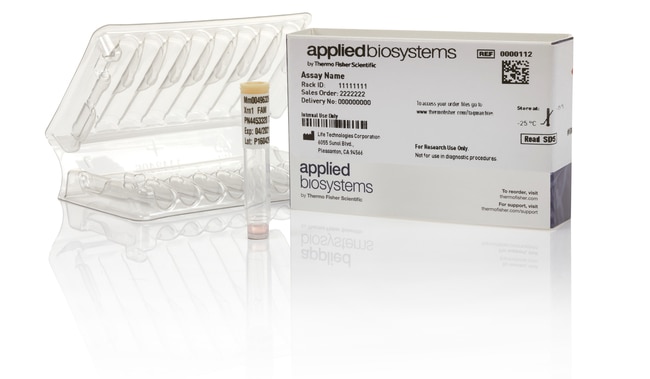
TaqMan™ Copy Number Reference Assay,人类,RNase P
人类 TaqMan™ Copy Number Reference Assays 在双重实时荧光定量 PCR 反应中与人类 TaqMan™了解更多信息
Have Questions?
更改视图

| 货号 | 反应次数 |
|---|---|
| 4403326 | 1500 次反应 |
| 4403328 | 3000 次反应 |
货号 4403326
价格(CNY)
1,843.00
Each
反应次数:
1500 次反应
价格(CNY)
1,843.00
Each
人类 TaqMan™ Copy Number Reference Assays 在双重实时荧光定量 PCR 反应中与人类 TaqMan™ Copy Number Assays 搭配使用,以检测和测量人类基因组中的拷贝数变异 (CNV) 和较小区域。提供两种可用作人类内源性参比基因的基因选项:RNase P 和 TERT。TaqMan™ 拷贝数参比测定试剂盒设计用于参比基因组组装中独特的基因组序列 (build GRCh38),并且是拷贝数靶标的相对定量所必需的。
TaqMan™ Copy Number Assays 对目标基因进行定量,并标准化为一种已知存在于二倍体基因组的两个拷贝中的内源性参比基因。请注意,TaqMan™ Copy Number Reference Assays 具有种属特异性。
RNase P:标准参比基因选项
TaqMan™ Copy Number Reference Assays 具有 VIC™ 染料–标记的 TAMRA™ 探针和参比序列–特异性正向和反向引物。这些测定不受引物限制。推荐将
TaqMan™ Copy Number Reference Assay RNase P 作为拷贝数分析的标准参比测定。该测定试剂盒检测染色体 14、cytoband 14q11.2 上的核糖核酸酶 P RNA 组分 H1 (H1RNA) 基因 (RPPH1)。测定位置为 chr.14:20343370,在 build GRCh38 上。它具有 87 bp 扩增子,该扩增子映射于单个外显子 RPPH1 基因内。
TaqMan™ 拷贝数参比测定试剂盒 TERT 是一个替代参比测定试剂盒;如果由于染色体畸变或其他问题,RNase P 测定试剂盒测定样品的功能很差,推荐使用该测定试剂盒。该测定试剂盒以位于染色体5、cytoband 5p15.33 上的端粒酶逆转录酶 (TERT) 基因为靶标。测定位置为 chr5:1253257,在 build GRCh38 上。它具有 88 bp 扩增子,该扩增子映射于 TERT 基因的第16外显子内。
较简单的拷贝数分析工作流程
TaqMan™ 拷贝数测定具有当前所有拷贝数分析方法的较简单工作流程。将试验测定(FAM™ 染料–标记的)、参比测定(VIC™ 染料–标记的)、您的样品 DNA 与 TaqMan™ Master Mix 组合,然后使用标准 TaqMan™ Copy Number Assay 方案,在 Applied Biosystems™ 实时荧光定量 PCR 系统上运行。平均来说,设置到一级分析仅需3–4小时(包括约2小时 PCR 运行)
。强大的数据分析软件
CopyCaller™ 软件 专为 TaqMan™ 拷贝数测定数据分析而开发。这款免费、易于使用的软件采用图形界面,可快速计算运行中一组样品的可能拷贝数。它还为每个拷贝数的检出提供了置信度,并具有异常值检查功能。
TaqMan™ Copy Number Assays 对目标基因进行定量,并标准化为一种已知存在于二倍体基因组的两个拷贝中的内源性参比基因。请注意,TaqMan™ Copy Number Reference Assays 具有种属特异性。
RNase P:标准参比基因选项
TaqMan™ Copy Number Reference Assays 具有 VIC™ 染料–标记的 TAMRA™ 探针和参比序列–特异性正向和反向引物。这些测定不受引物限制。推荐将
TaqMan™ Copy Number Reference Assay RNase P 作为拷贝数分析的标准参比测定。该测定试剂盒检测染色体 14、cytoband 14q11.2 上的核糖核酸酶 P RNA 组分 H1 (H1RNA) 基因 (RPPH1)。测定位置为 chr.14:20343370,在 build GRCh38 上。它具有 87 bp 扩增子,该扩增子映射于单个外显子 RPPH1 基因内。
TaqMan™ 拷贝数参比测定试剂盒 TERT 是一个替代参比测定试剂盒;如果由于染色体畸变或其他问题,RNase P 测定试剂盒测定样品的功能很差,推荐使用该测定试剂盒。该测定试剂盒以位于染色体5、cytoband 5p15.33 上的端粒酶逆转录酶 (TERT) 基因为靶标。测定位置为 chr5:1253257,在 build GRCh38 上。它具有 88 bp 扩增子,该扩增子映射于 TERT 基因的第16外显子内。
较简单的拷贝数分析工作流程
TaqMan™ 拷贝数测定具有当前所有拷贝数分析方法的较简单工作流程。将试验测定(FAM™ 染料–标记的)、参比测定(VIC™ 染料–标记的)、您的样品 DNA 与 TaqMan™ Master Mix 组合,然后使用标准 TaqMan™ Copy Number Assay 方案,在 Applied Biosystems™ 实时荧光定量 PCR 系统上运行。平均来说,设置到一级分析仅需3–4小时(包括约2小时 PCR 运行)
。强大的数据分析软件
CopyCaller™ 软件 专为 TaqMan™ 拷贝数测定数据分析而开发。这款免费、易于使用的软件采用图形界面,可快速计算运行中一组样品的可能拷贝数。它还为每个拷贝数的检出提供了置信度,并具有异常值检查功能。
仅供科研使用。不可用于诊断程序。
规格
3' 引物修改无
5' 引物修改无
产品规格管装
基因符号RPPH1
内部探针修改TAMRA™ 淬灭剂 (3')、VIC™ (5')
反应次数1500 次反应
产品线TaqMan
产品类型可配置的测定试剂盒
纯化方法HPLC
纯度或质量等级不含 RNase 和 DNase
数量750 reactions
运输条件环境温度
种属人
足够用于750 次反应
靶标RNase P
最大浓度20X
检测方法引物-探针
形式冷冻
高 GC PCR 扩增效果低
标签或染料VIC:
PCR 方法qPCR
反应速度标准
Unit SizeEach
内容与储存
对照引物探针套件