Search

Thermo Scientific™
Pierce™ IgG 筛选用蛋白 G 离心板
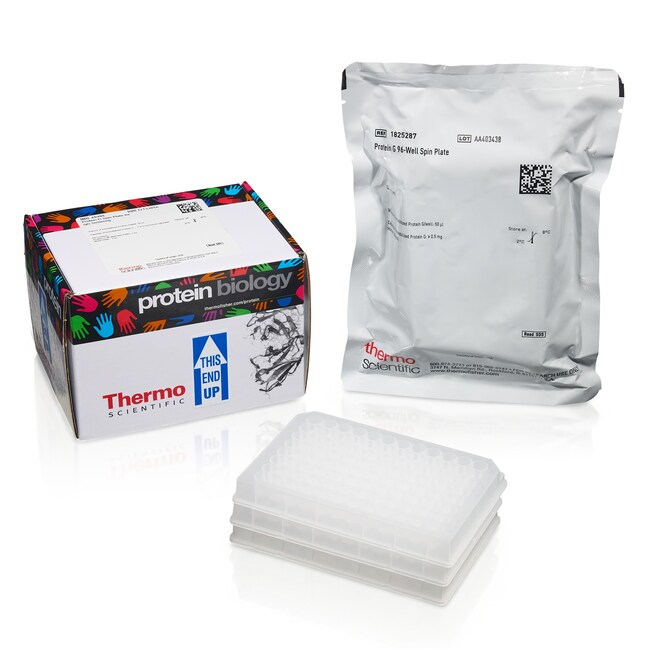
Thermo Scientific™ Pierce™ IgG 筛选用蛋白 G 琼脂糖离心板为快速纯化和筛选抗体以及免疫沉淀 (IP) 提供了高通量形式。96孔离心板的每个孔可以处理了解更多信息
| 货号 | 数量 |
|---|---|
| 45204 | 1 块板 |
货号 45204
价格(CNY)
4,739.00
Each
数量:
1 块板
价格(CNY)
4,739.00
Each
Thermo Scientific™ Pierce™ IgG 筛选用蛋白 G 琼脂糖离心板为快速纯化和筛选抗体以及免疫沉淀 (IP) 提供了高通量形式。96孔离心板的每个孔可以处理 10–100 µL 的血清、细胞培养上清液或腹水样品。
Pierce 蛋白 G 琼脂糖的特点:
•蛋白 G—固定化蛋白 G 适用于从小鼠、人、牛、山羊和绵羊血清中纯化多克隆 IgG(包括人 IgG3 和小鼠 IgG1 同种型)
• 琼脂糖树脂—支持物为交联 6% 微珠状琼脂糖 (CL-6B),这是蛋白亲和纯化方法的较常用树脂
• 惰性且稳定—优越的生产方法通过不带电荷的抗浸出性共价键固定蛋白 G,因此非特异性结合较低且能够多次使用而不降低得率
• 标准容量— Pierce 蛋白 G 琼脂糖包含正常上样量的固定化蛋白 G,提供 11–15 mg 人 IgG/mL 树脂的结合容量
Pierce 蛋白 G 琼脂糖包含共价固定至高质量交联 6% 微珠状琼脂糖 (CL-6B) 上的重组蛋白 G。该特殊种类的亲和树脂可提供通用的色谱特点组合,用于从哺乳动物血清样品中获得高得率的全 IgG 和对全 IgG 进行高纯度纯化。琼脂糖微珠的物理和化学特性适用于许多亲和纯化系统。
蛋白 G 是源自 G 群链球菌的细菌细胞壁蛋白,现可在大肠杆菌中以重组形式生产。与蛋白A相同,蛋白G可与大多数哺乳动物的免疫球蛋白结合,结合部位主要为其Fc区。天然蛋白G包含两个免疫球蛋白结合位点以及白蛋白和细胞表面结合位点。重组形式的蛋白G中已除去这些白蛋白及细胞表面结合位点,以减少免疫球蛋白纯化过程中的非特异性结合。重组蛋白G分子量约为21.6kDa,但在SDS-PAGE中表观大小为31至34kDa。IgG 结合功能在 pH 值为 5 时较佳,但在近中性条件(pH 值 7.0 至 7.2)下也可高效结合。
与蛋白 A 相比,蛋白 G 可与人、小鼠和大鼠血清中更广泛的 IgG 亚类结合。其中,除了与蛋白A一样能够结合其他类型免疫球蛋白之外,蛋白G还对人IgG3、小鼠IgG1和大鼠的全部三种IgG亚型具有特别强的结合能力。因此,在涉及这些物种和抗体亚型的应用中一般建议采用蛋白G。关于其他物种,蛋白 G 对牛、山羊和绵羊 IgG 的结合能力更强,但对猪、豚鼠、犬和猫 IgG 的结合能力弱于蛋白 A。
Pierce 蛋白 G 琼脂糖使用 Thermo Scientific AminoLink 偶联化学法制备,该方法与传统配体固定方法相比具有多项优势。AminoLink 固定后,琼脂糖珠的糖单体与蛋白 A 上的天然赖氨酸残基通过简单的酰胺键结合。与典型的溴化氰 (CNBr) 固定法不同,AminoLink 方法不引入任何新的化学基团,从而避免了可能导致的非特异性结合,并且形成基本不可逆的稳定结合。所得的高结合能力树脂在多轮抗体纯化之后仍然能保留功能性固定化蛋白 G。
Pierce 蛋白 G 琼脂糖可从许多哺乳动物物种的血清和其他液体中有效地亲和纯化 IgG。除了来自人、山羊和绵羊样品的大多数 IgG 同种型外,蛋白 G 还特别适用于与小鼠抗体(包括 IgG1)配合使用。
交联 6% 微珠状琼脂糖 (CL-6B) 的特性:
•支持 pH 值稳定性:2 至 14(短期);3 至 13(长期)
• 平均粒径:45 至 165 微米
• 排阻极限:10,000至4,000,000 道尔顿
•最大体积流速:约1 mL/分钟(对于1 cm 直径柱)
•最大线性速度:30 cm/h
• 最大压力:低于 25psi (1.5 bar);定义为树脂可承受的跨色谱柱最大压降(注:液相色谱装置的指示表压可能测量的是总系统压力,而不是跨色谱柱压降。)
更多产品数据
• 使用抗体结合蛋白进行抗体纯化
Pierce 蛋白 G 琼脂糖的特点:
•蛋白 G—固定化蛋白 G 适用于从小鼠、人、牛、山羊和绵羊血清中纯化多克隆 IgG(包括人 IgG3 和小鼠 IgG1 同种型)
• 琼脂糖树脂—支持物为交联 6% 微珠状琼脂糖 (CL-6B),这是蛋白亲和纯化方法的较常用树脂
• 惰性且稳定—优越的生产方法通过不带电荷的抗浸出性共价键固定蛋白 G,因此非特异性结合较低且能够多次使用而不降低得率
• 标准容量— Pierce 蛋白 G 琼脂糖包含正常上样量的固定化蛋白 G,提供 11–15 mg 人 IgG/mL 树脂的结合容量
Pierce 蛋白 G 琼脂糖包含共价固定至高质量交联 6% 微珠状琼脂糖 (CL-6B) 上的重组蛋白 G。该特殊种类的亲和树脂可提供通用的色谱特点组合,用于从哺乳动物血清样品中获得高得率的全 IgG 和对全 IgG 进行高纯度纯化。琼脂糖微珠的物理和化学特性适用于许多亲和纯化系统。
蛋白 G 是源自 G 群链球菌的细菌细胞壁蛋白,现可在大肠杆菌中以重组形式生产。与蛋白A相同,蛋白G可与大多数哺乳动物的免疫球蛋白结合,结合部位主要为其Fc区。天然蛋白G包含两个免疫球蛋白结合位点以及白蛋白和细胞表面结合位点。重组形式的蛋白G中已除去这些白蛋白及细胞表面结合位点,以减少免疫球蛋白纯化过程中的非特异性结合。重组蛋白G分子量约为21.6kDa,但在SDS-PAGE中表观大小为31至34kDa。IgG 结合功能在 pH 值为 5 时较佳,但在近中性条件(pH 值 7.0 至 7.2)下也可高效结合。
与蛋白 A 相比,蛋白 G 可与人、小鼠和大鼠血清中更广泛的 IgG 亚类结合。其中,除了与蛋白A一样能够结合其他类型免疫球蛋白之外,蛋白G还对人IgG3、小鼠IgG1和大鼠的全部三种IgG亚型具有特别强的结合能力。因此,在涉及这些物种和抗体亚型的应用中一般建议采用蛋白G。关于其他物种,蛋白 G 对牛、山羊和绵羊 IgG 的结合能力更强,但对猪、豚鼠、犬和猫 IgG 的结合能力弱于蛋白 A。
Pierce 蛋白 G 琼脂糖使用 Thermo Scientific AminoLink 偶联化学法制备,该方法与传统配体固定方法相比具有多项优势。AminoLink 固定后,琼脂糖珠的糖单体与蛋白 A 上的天然赖氨酸残基通过简单的酰胺键结合。与典型的溴化氰 (CNBr) 固定法不同,AminoLink 方法不引入任何新的化学基团,从而避免了可能导致的非特异性结合,并且形成基本不可逆的稳定结合。所得的高结合能力树脂在多轮抗体纯化之后仍然能保留功能性固定化蛋白 G。
Pierce 蛋白 G 琼脂糖可从许多哺乳动物物种的血清和其他液体中有效地亲和纯化 IgG。除了来自人、山羊和绵羊样品的大多数 IgG 同种型外,蛋白 G 还特别适用于与小鼠抗体(包括 IgG1)配合使用。
交联 6% 微珠状琼脂糖 (CL-6B) 的特性:
•支持 pH 值稳定性:2 至 14(短期);3 至 13(长期)
• 平均粒径:45 至 165 微米
• 排阻极限:10,000至4,000,000 道尔顿
•最大体积流速:约1 mL/分钟(对于1 cm 直径柱)
•最大线性速度:30 cm/h
• 最大压力:低于 25psi (1.5 bar);定义为树脂可承受的跨色谱柱最大压降(注:液相色谱装置的指示表压可能测量的是总系统压力,而不是跨色谱柱压降。)
更多产品数据
• 使用抗体结合蛋白进行抗体纯化
仅供科研使用。不可用于诊断程序。
规格
描述Pierce IgG 筛选用蛋白 G 离心板
纯化目标IgG 抗体
数量1 块板
色谱柱类型琼脂糖树脂,亲和
产品规格96 孔过滤板
产品线Pierce
产品类型蛋白 G 离心板
固定相蛋白 G
Unit SizeEach
内容与储存
接收后,在 4°C 下储存