Search


引用和文献 (3)
Thermo Scientific™
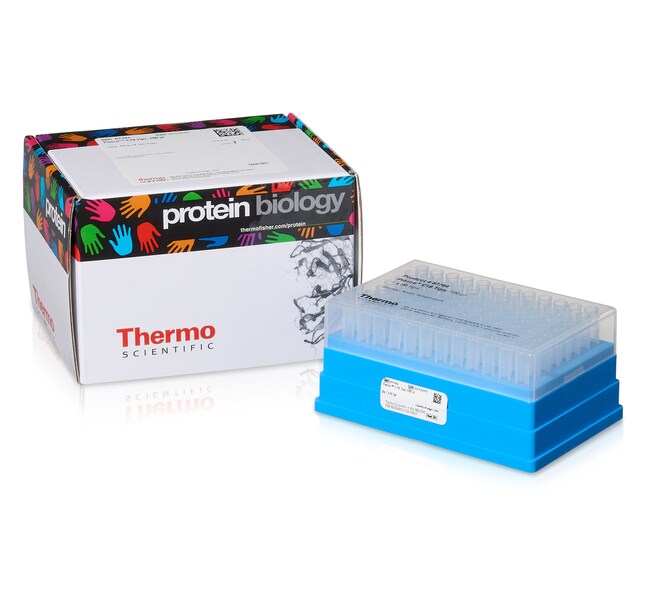
Pierce™ C18 离心吸头和离心柱
Thermo Scientific Pierce C18 离心柱是即用型多孔 C18 反相树脂离心柱,具有出色的结合和回收特性,适用于质谱法和其他方法的肽样品制备。可以使用 Pierce C18了解更多信息
Have Questions?
更改视图

| 货号 | 数量 | 产品类型 |
|---|---|---|
| 87784 | 96 x 100 μL 吸头 | 移液器吸头 |
| 89870 | 25柱 | 色谱柱 |
| 89873 | 50柱 | 色谱柱 |
| 84850 | 96 吸头 | 离心吸头 |
| 87782 | 96 x 10 μL 吸头 | 移液器吸头 |
货号 87784
价格(CNY)
4,241.00
飞享价
Ends: 31-Dec-2026
5,493.00共减 1,252.00 (23%)
Each
数量:
96 x 100 μL 吸头
产品类型:
移液器吸头
价格(CNY)
4,241.00
飞享价
Ends: 31-Dec-2026
5,493.00共减 1,252.00 (23%)
Each
Thermo Scientific Pierce C18 离心柱是即用型多孔 C18 反相树脂离心柱,具有出色的结合和回收特性,适用于质谱法和其他方法的肽样品制备。
可以使用 Pierce C18 离心柱针对多种应用纯化和浓缩肽样品。每一个离心柱都包含一个多孔 C18 反相树脂,具有优异的结合和回收特性,可适用范围广泛的肽浓度。这种离心柱的形式允许在大约 30 分钟内同时处理多份样品(每份 10 至 150 μL),而无需耗时费力的重复移液或专门的设备。Pierce C18 离心柱可有效地用于处理从 10 ng - 30 μg 蛋白质衍生的肽。灵敏度和检测限取决于下游应用。
C18 离心柱的特点:
•去除干扰污染物—可显著减少信号抑制并改善信噪比和序列覆盖
• 简化优化—处理过程可产生高质量的光谱,并且对于各种反相兼容的污染物都有效
• 稳健—适用于多种上样体积和浓度;无需在应用前减少样品体积
• 便利—易于处理,无需特殊设备即可同时处理多份样品(与需要一次处理一份样品的吸头驱动系统不同)
• 灵敏—特殊的 C18 树脂可实现出色的回收率,即使在样品上样体积较低(pmol 以下)时也是如此
基质辅助激光解析电离 (MALDI) 和电喷雾电离 (ESI) 质谱分析 (MS) 是研究生物化合物的必要条件,因为它们具有较高的灵敏度和质量精度。然而,生物样品中常见的许多缓冲液和化合物对 MALDI-MS 和 ESI-MS 都会产生干扰,从而降低了灵敏度和光谱质量。Pierce C-18 离心柱可在 MS 兼容溶液中去除干扰污染物并释放肽,为辅助转译后修饰的 MS 检查或通过肽图分析鉴定蛋白提供了一种有效工具。
可以使用 Pierce C18 离心柱针对多种应用纯化和浓缩肽样品。每一个离心柱都包含一个多孔 C18 反相树脂,具有优异的结合和回收特性,可适用范围广泛的肽浓度。这种离心柱的形式允许在大约 30 分钟内同时处理多份样品(每份 10 至 150 μL),而无需耗时费力的重复移液或专门的设备。Pierce C18 离心柱可有效地用于处理从 10 ng - 30 μg 蛋白质衍生的肽。灵敏度和检测限取决于下游应用。
C18 离心柱的特点:
•去除干扰污染物—可显著减少信号抑制并改善信噪比和序列覆盖
• 简化优化—处理过程可产生高质量的光谱,并且对于各种反相兼容的污染物都有效
• 稳健—适用于多种上样体积和浓度;无需在应用前减少样品体积
• 便利—易于处理,无需特殊设备即可同时处理多份样品(与需要一次处理一份样品的吸头驱动系统不同)
• 灵敏—特殊的 C18 树脂可实现出色的回收率,即使在样品上样体积较低(pmol 以下)时也是如此
基质辅助激光解析电离 (MALDI) 和电喷雾电离 (ESI) 质谱分析 (MS) 是研究生物化合物的必要条件,因为它们具有较高的灵敏度和质量精度。然而,生物样品中常见的许多缓冲液和化合物对 MALDI-MS 和 ESI-MS 都会产生干扰,从而降低了灵敏度和光谱质量。Pierce C-18 离心柱可在 MS 兼容溶液中去除干扰污染物并释放肽,为辅助转译后修饰的 MS 检查或通过肽图分析鉴定蛋白提供了一种有效工具。
For Research Use Only. Not for use in diagnostic procedures.
基质辅助激光解析电离 (MALDI) 和电喷雾电离 (ESI) 质谱分析 (MS) 是研究生物化合物的必要条件,因为它们具有较高的灵敏度和质量精度。然而,生物样品中常见的许多缓冲液和化合物对 MALDI-MS 和 ESI-MS 都会产生干扰,从而降低了灵敏度和光谱质量。Pierce C-18 离心柱可在兼容 MS 的溶液中去除干扰污染物并释放肽,为辅助转译后修饰的 MS 检查或通过肽图分析鉴定蛋白提供了一种有效工具。
规格
柱床容量100 μL
描述Pierce C-18 吸头,100 µL 柱床
最终产品类型肽
适用于(设备)微量离心机、质谱仪
数量96 x 100 μL 吸头
吸附剂C18
工作流程步骤样品纯化
检测方法质谱分析
产品规格提示
产品线Pierce
产品类型移液器吸头
原始材料肽, 蛋白酶酶切的蛋白
Unit SizeEach
内容与储存
在室温下储存。
引用和文献 (3)
引用和文献
Abstract
Carboxylate-Modified Magnetic Bead (CMMB)-Based Isopropanol Gradient Peptide Fractionation (CIF) Enables Rapid and Robust Off-Line Peptide Mixture Fractionation in Bottom-Up Proteomics.
Journal:Molecular & cellular proteomics : MCP
PubMed ID:33476790
Deep proteome coverage in bottom-up proteomics requires peptide-level fractionation to simplify the complex peptide mixture before analysis by tandem mass spectrometry. By decreasing the number of coeluting precursor peptide ions, fractionation effectively reduces the complexity of the sample leading to higher sample coverage and reduced bias toward high-abundance precursors that
Anti-inflammatory therapeutic biomarkers identified of human bone marrow mesenchymal stem cell therapy on aging mice by serum proteomics and peptidomics study.
Journal:Journal of proteomics
PubMed ID:37524227
Aging is accompanied by deterioration in physical condition, and creates high risks of diseases. Stem cell therapy exhibited promising potential in delaying aging. However, the unelucidated therapeutic mechanism limits future clinical application. Herein, to systematically understand the response to stem cell transfusion at the molecular level, we performed quantitative serum
An optimized co-immunoprecipitation protocol for the analysis of endogenous protein-protein interactions in cell lines using mass spectrometry.
Journal:STAR protocols
PubMed ID:35300004
This protocol represents an optimized proteomics-based protocol for the endogenous protein enrichment and protein-protein interaction analysis. This 2-step protocol consists of: 1) co-immunoprecipitation of the bait protein; 2) the bait-protein interactions analysis using LC-MS/MS. Here, we used Dynabeads® for the enrichment of the target protein (the bait) and its interactors.