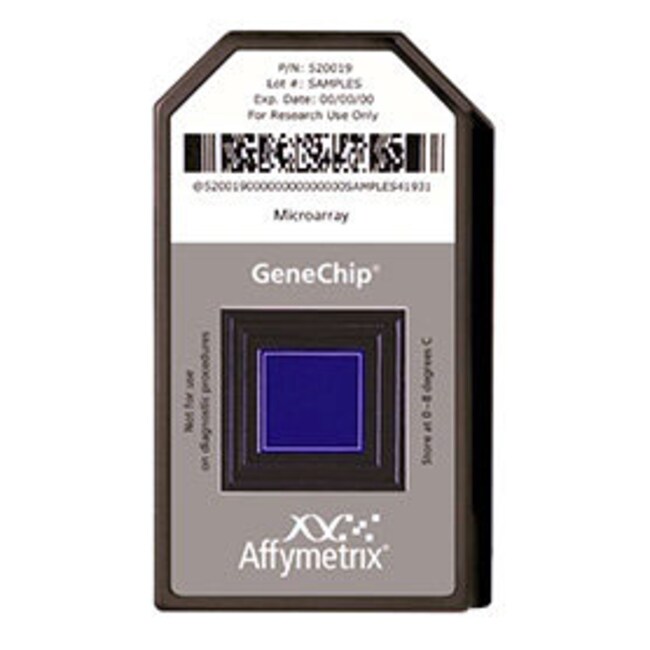
GeneChip™ 大鼠基因 1.0 ST 阵列
Applied Biosystems™

GeneChip™ 大鼠基因 1.0 ST 阵列

全面的设计我们理解,大鼠是常用来研究人类疾病的一种重要模式生物。为了让您的实验与转录组的理解保持关联,我们根据较新的基因组内容设计了一个阵列,用于生成全基因组表达谱。GeneChip™ 大鼠基因 1.0 ST 阵列可提供其他微阵列不具备的独特功能。与传统阵列设计(其依赖于针对基因 3'了解更多信息
Have Questions?
更改视图buttonViewtableView
货号阵列数量
90117530 阵列
9011722 阵列
9011736 阵列
货号 901175
价格(CNY)
-
阵列数量:
30 阵列
全面的设计
我们理解,大鼠是常用来研究人类疾病的一种重要模式生物。为了让您的实验与转录组的理解保持关联,我们根据较新的基因组内容设计了一个阵列,用于生成全基因组表达谱。

GeneChip™ 大鼠基因 1.0 ST 阵列可提供其他微阵列不具备的独特功能。与传统阵列设计(其依赖于针对基因 3' 末端第一个外显子设计的探针)不同,此阵列中成千上万的探针设计针对阵列上代表的每个转录本的每个外显子。

高转录覆盖度(中位值为每个基因 22 个探针)可准确检测全基因组转录本表达变化。这些阵列提供的分辨率和准确度高于许多可用的经典 3’ 偏倚微阵列解决方案。全转录本分析方法让研究人员能够从特定基因检测多个转录异构体,包括那些使用 3' 偏倚表达设计(如剪接变异、非多聚腺苷酸转录本、带有选择性多聚腺苷酸化位点的转录本和截短转录本)时可能遗漏的转录异构体。

关键优势
• 全转录本分析可捕获使用 3' 偏倚表达设计时可能遗漏的转录异构体
• 全面的转录组覆盖提供了发现有趣生物的较佳机会:
   - >27,000 个蛋白质编码转录本
   - >24,000 个 Entrez 基因
• 用探针检测选择性剪接事件/转录物变体,设计的探针具有较大的外显子覆盖率
• 重现性:信号关联系数 ≥ 0.99

内容概况
自设计出 GeneChip 大鼠基因 1.0 ST 阵列以来,对大鼠基因组结构和功能的理解已有了很大提升。为了向研究界提供一种可以测定令人兴奋的 RNA 转录本差异表达的工具,我们设计了 GeneChip 大鼠基因 2.0 ST 阵列(单独出售)。
仅供科研使用。不可用于诊断程序。
规格
产品线GeneChip™
数量30 arrays
类型大鼠基因 1.0 ST 阵列
数组转录组谱分析
产品规格阵列检测盒
阵列数量30 阵列
种属大鼠
Unit SizeEach

常见问题解答 (FAQ)

What is contained in the tab-delimited format of the GeneChip probe sequence download file?

The tab-delimited probe sequence file contains the following information:
-Probe Set Name
-Probe X: The X coordinate of the probe sequence on the GeneChip probe array.
-Probe Y: The Y coordinate of the probe sequence on the GeneChip probe array.
-Probe Interrogation Position: The base position on the consensus/exemplar sequence where the central base of the probe aligns, which is the 13th base of a 25mer probe.
-Probe Sequence: The 25-base perfect match sequence.
-Target Strandedness: The sense/antisense orientation of the target sequence that can hybridize with the probe sequence.

Find additional tips, troubleshooting help, and resources within our Microarray Analysis Support Center.

What is the NetAffx Analysis Center?

The NetAffx Analysis Center used to contain information and files regarding array content, probe sets, and functional annotations. However, the NetAffx Analysis Center has been retired. Much of the content provided by the NetAffx Analysis Center can now be accessed on the arrays’ thermofisher.com product pages or by contacting Technical Support (techsupport@thermofisher.com).

Find additional tips, troubleshooting help, and resources within our Microarray Analysis Support Center.

Are pseudogene databases included in the design of expression arrays?

Pseudogene databases were not included in the design of expression arrays.

How long can I store labeled cDNA when working with expression microarrays?

Labeled material can be stored for 2 weeks at -20 degrees C.

Is the protocol same for Exon 1.0 St and Gene 1.0 St arrays?

The protocols for the Gene 1.0 ST and Exon 1.0 ST arrays are the same until the fragmentation and labeling steps.
Depending on the input amount, please refer to the GeneChip WT Pico Reagent Kit or the GeneChip WT PLUS Reagent Kit for the protocol:
- WT Pico: 50 - 500ng of total RNA
- WT PLUS: ≥ 100pg of total RNA (approx. 10 cells)
From the hybridization step onwards, the differences in protocol are due to the format of the arrays. The Exon array is a 49 format array, whereas the Gene 1.0 ST array is a 169 format array.
For the fluidics step the following scripts should be used depending upon which array you are using:
- Gene 1.0 St array: FS450_0001
- Exon 1.0 St array: FS450_0007

Find additional tips, troubleshooting help, and resources within our Microarray Analysis Support Center.