Search


引用和文献 (67)
Invitrogen™
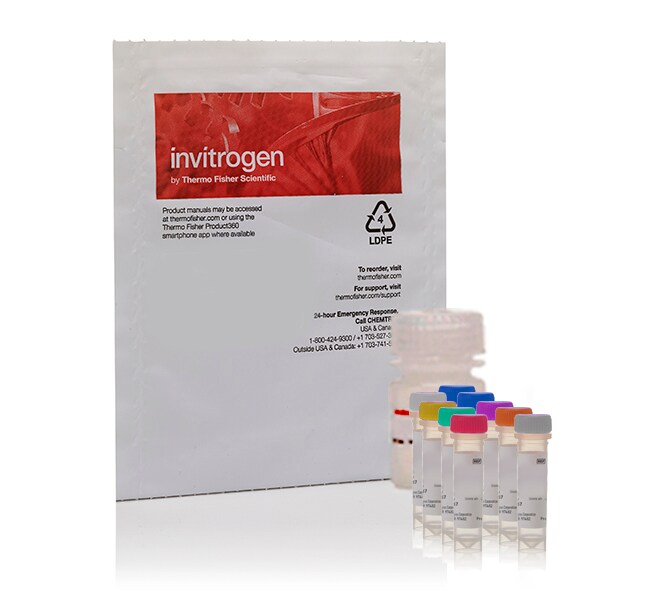
Amplex™ Red 胆固醇检测试剂盒
Amplex™; Red 胆固醇测定试剂盒为使用荧光微孔板读数仪或荧光计检测极低浓度的胆固醇提供了一种灵敏、快速且简单的荧光测定方法。该测定试剂盒可测量游离胆固醇和胆固醇酯。请查看我们完整的荧光微孔板测定试剂盒产品线。• 可检测低至 200 nM了解更多信息
| 货号 | 数量 |
|---|---|
| A12216 | 500 Assays |
货号 A12216
价格(CNY)
6,100.00
Each
数量:
500 Assays
价格(CNY)
6,100.00
Each
Amplex™; Red 胆固醇测定试剂盒为使用荧光微孔板读数仪或荧光计检测极低浓度的胆固醇提供了一种灵敏、快速且简单的荧光测定方法。该测定试剂盒可测量游离胆固醇和胆固醇酯。
请查看我们完整的荧光微孔板测定试剂盒产品线。
• 可检测低至 200 nM (80 ng/ml) 的胆固醇
• 有助于准确测量 0.01 µl 人血清的胆固醇含量
• 可检测游离胆固醇和胆固醇酯
• 可以实现多个时间点的测量
• 经过专门设计,自发荧光干扰极小
Amplex Red 胆固醇测定试剂盒包含以下试剂和缓冲液:
• Amplex Red 试剂
• DMSO
• 辣根过氧化物酶
• 过氧化氢
• 胆固醇酯酶
• 胆固醇氧化酶
• 胆固醇参比标准品
• 试卤灵荧光参比标准品
• 5X 反应缓冲液
胆固醇测量简单快速
Amplex™ Red 胆固醇测定快速、简单,加入试剂后只需孵育30分钟,无需分离步骤。100 µL 的测定试剂盒容量专为96孔板而设计;可使用微孔板读数仪或荧光计测量荧光。由于测定是连续的,一旦加入 Amplex™ Red 试剂,就可以进行多时间点测量。该全套试剂盒包含除去离子水外所有必要试剂。
有助于准确检测极低浓度的胆固醇
Amplex™ Red 胆固醇检测利用酶偶联反应,产生高荧光试卤灵用于定量测定。试卤灵由 Amplex™ Red 试剂和 H2O2 反应产生,后者由胆固醇氧化酶催化的胆固醇的氧化反应产生。血液中大部分胆固醇为胆固醇酯形式,因此胆固醇酯酶的作用是从胆固醇酯中产生游离胆固醇。在存在和不存在胆固醇酯酶的情况下进行测定,可能允许测定每种形式的胆固醇组分。
这种高灵敏度方法允许 Amplex™ Red 胆固醇测定试剂盒检测低至 200 nM 的胆固醇浓度,并测定 0.01 µl 人血清中的胆固醇含量。由于试卤灵的吸光度和最大发射波长分别为 571 nm 和 585 nm,大多数生物样品的自发荧光不会干扰检测。
Amplex™ Red 测定试剂盒可用于广泛的研究范围
可提供一系列经过验证的 Invitrogen Amplex™ Red 测定试剂盒以进行细胞信号转导和脂质、神经生物学、炎症和免疫功能以及代谢方面的研究。我们还提供 Amplex™ UltraRed(货号 A36006)—具有更高灵敏度和更明亮荧光的第二代试剂以及 Amplex™ Red/UltraRed 终止试剂(货号:A33855)。Amplex™ Red/UltraRed 终止试剂能够在使用者确定的时间点终止荧光信号生成反应,提供便利和控制。加入终止试剂之后,荧光信号能够保持稳定状态至少3个小时。还提供定制检测设计和包装。
仅供科研使用。不得用于任何动物或人的治疗或诊断。
相关链接
•了解有关 Amplex™ Red 测定试剂盒和技术的更多信息。
请查看我们完整的荧光微孔板测定试剂盒产品线。
• 可检测低至 200 nM (80 ng/ml) 的胆固醇
• 有助于准确测量 0.01 µl 人血清的胆固醇含量
• 可检测游离胆固醇和胆固醇酯
• 可以实现多个时间点的测量
• 经过专门设计,自发荧光干扰极小
Amplex Red 胆固醇测定试剂盒包含以下试剂和缓冲液:
• Amplex Red 试剂
• DMSO
• 辣根过氧化物酶
• 过氧化氢
• 胆固醇酯酶
• 胆固醇氧化酶
• 胆固醇参比标准品
• 试卤灵荧光参比标准品
• 5X 反应缓冲液
胆固醇测量简单快速
Amplex™ Red 胆固醇测定快速、简单,加入试剂后只需孵育30分钟,无需分离步骤。100 µL 的测定试剂盒容量专为96孔板而设计;可使用微孔板读数仪或荧光计测量荧光。由于测定是连续的,一旦加入 Amplex™ Red 试剂,就可以进行多时间点测量。该全套试剂盒包含除去离子水外所有必要试剂。
有助于准确检测极低浓度的胆固醇
Amplex™ Red 胆固醇检测利用酶偶联反应,产生高荧光试卤灵用于定量测定。试卤灵由 Amplex™ Red 试剂和 H2O2 反应产生,后者由胆固醇氧化酶催化的胆固醇的氧化反应产生。血液中大部分胆固醇为胆固醇酯形式,因此胆固醇酯酶的作用是从胆固醇酯中产生游离胆固醇。在存在和不存在胆固醇酯酶的情况下进行测定,可能允许测定每种形式的胆固醇组分。
这种高灵敏度方法允许 Amplex™ Red 胆固醇测定试剂盒检测低至 200 nM 的胆固醇浓度,并测定 0.01 µl 人血清中的胆固醇含量。由于试卤灵的吸光度和最大发射波长分别为 571 nm 和 585 nm,大多数生物样品的自发荧光不会干扰检测。
Amplex™ Red 测定试剂盒可用于广泛的研究范围
可提供一系列经过验证的 Invitrogen Amplex™ Red 测定试剂盒以进行细胞信号转导和脂质、神经生物学、炎症和免疫功能以及代谢方面的研究。我们还提供 Amplex™ UltraRed(货号 A36006)—具有更高灵敏度和更明亮荧光的第二代试剂以及 Amplex™ Red/UltraRed 终止试剂(货号:A33855)。Amplex™ Red/UltraRed 终止试剂能够在使用者确定的时间点终止荧光信号生成反应,提供便利和控制。加入终止试剂之后,荧光信号能够保持稳定状态至少3个小时。还提供定制检测设计和包装。
仅供科研使用。不得用于任何动物或人的治疗或诊断。
相关链接
•了解有关 Amplex™ Red 测定试剂盒和技术的更多信息。
仅供科研使用。不可用于诊断程序。
规格
检测方法荧光
染料类型Amplex Red
产品规格96 孔板
数量500 Assays
运输条件室温
颜色红色
发射波长范围585 nm
Excitation Wavelength Range571 nm
适用于(应用)Enzyme and Metabolic Activity
适用于(设备)微孔板读数仪
产品线Amplex
产品类型红色胆固醇测定试剂盒
Unit SizeEach
内容与储存
在冷冻冰箱(-5°C 至 -30°C)中避光储存。
常见问题解答 (FAQ)
I'm using an Amplex Red kit, the reagent changes color to pink almost immediately in my own Krebs-Ringer buffer but not in HBSS. Why is this?
For the lipid extraction for use with the Amplex Red Cholesterol Assay Kit (Cat. No. A12216), can the extraction be done in plastic tubes (Falcon tubes, Eppendorf tubes) or is glassware required?
In order to determine the cholesterol content of my cells with the Amplex Red Cholesterol Assay Kit (Cat. No. A12216), do I need lysed cells or the extracted lipidome of the cell?
Can I use Amplex Red Cholesterol Assay Kit (Cat. No. A12216) with cell or tissue samples?
Can Amplex Red Assays be performed using cell lysates?
引用和文献 (67)
引用和文献
Abstract
Constitutive hedgehog signaling in chondrosarcoma up-regulates tumor cell proliferation.
Journal:The American journal of pathology
PubMed ID:16400033
Chondrosarcoma is a malignant cartilage tumor that may arise from benign precursor lesions, such as enchondromas. Some cases of multiple enchondromas are caused by a mutation that results in constitutive activation of Hedgehog-mediated signaling. We found that chondrosarcomas expressed high levels of the Hedgehog target genes PTCH1 and GLI1. Treatment
Overexpression of nicastrin increases Abeta production.
Journal:FASEB J
PubMed ID:12692078
Gamma-secretase cleavage is the final proteolytic step that releases the amyloid beta-peptide (Abeta) from the amyloid beta-protein precursor (APP). Significant evidence indicates that the presenilins (PS) are catalytic components of a high molecular weight gamma-secretase complex. The glycoprotein nicastrin was recently identified as a functional unit of this complex based
Association of excitatory amino acid transporters, especially EAAT2, with cholesterol-rich lipid raft microdomains: importance for excitatory amino acid transporter localization and function.
Journal:J Biol Chem
PubMed ID:15187084
In the present study, we investigated the role of membrane cholesterol in the function of glutamate transporters. Depletion of membrane cholesterol by methyl-beta-cyclodextrin resulted in reduced Na(+)-dependent glutamate uptake in primary cortical cultures. Glial glutamate transporter EAAT2-mediated uptake was more sensitive to this effect. Cell surface biotinylation and immunostaining experiments
Lipid rafts in the maintenance of synapses, dendritic spines, and surface AMPA receptor stability.
Journal:J Neurosci
PubMed ID:12716933
'Cholesterol/sphingolipid microdomains (lipid rafts) in the membrane are involved in protein trafficking, formation of signaling complexes, and regulation of actin cytoskeleton. Here, we show that lipid rafts exist abundantly in dendrites of cultured hippocampal neurons, in which they are associated with several postsynaptic proteins including surface AMPA receptors. Depletion of
Involvement of raft-like plasma membrane domains of Entamoeba histolytica in pinocytosis and adhesion.
Journal:Infect Immun
PubMed ID:15322032
'Lipid rafts are highly ordered, cholesterol-rich, and detergent-resistant microdomains found in the plasma membrane of many eukaryotic cells. These domains play important roles in endocytosis, secretion, and adhesion in a variety of cell types. The parasitic protozoan Entamoeba histolytica, the causative agent of amoebic dysentery, was determined to have raft-like