Search

Invitrogen™
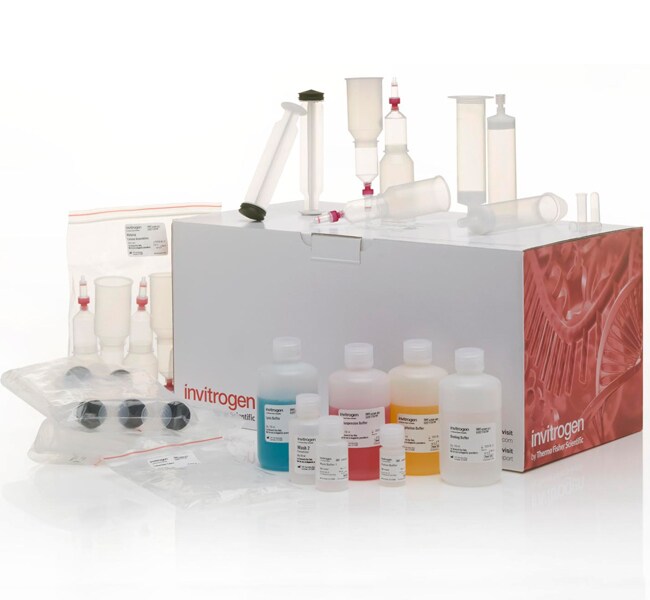
PureLink™ 快速低内毒素中量质粒纯化试剂盒
PureLink 快速低内毒素中量质粒纯化试剂盒使用含先进硅胶膜的新一代柱,可在约30分钟内完成转染级(低于 1 EU/µg)质粒 DNA 的分离。简单的无沉淀方案可产生高达 0.4了解更多信息
| 货号 | 反应次数 |
|---|---|
| A35892 | 25 次制备 |
货号 A35892
价格(CNY)
2,495.00
Online Exclusive
Ends: 31-Dec-2026
3,425.00共减 930.00 (27%)
Each
反应次数:
25 次制备
价格(CNY)
2,495.00
Online Exclusive
Ends: 31-Dec-2026
3,425.00共减 930.00 (27%)
Each
PureLink 快速低内毒素中量质粒纯化试剂盒使用含先进硅胶膜的新一代柱,可在约30分钟内完成转染级(低于 1 EU/µg)质粒 DNA 的分离。简单的无沉淀方案可产生高达 0.4 mg 的质粒,适用于标准转染以及所有分子生物学应用,如克隆和测序。
注:执行此程序需要使用真空歧管。我们推荐 FastVac 真空歧管。
PureLink 快速低内毒素中量质粒纯化试剂盒的优势包括:
•超快速方案 — 创新性硅胶基柱可在30分钟内纯化转染级质粒 DNA
• 低内毒素质粒 — 产生的质粒含有低于 1 EU/µg 内毒素
• 高得率—分离高达 0.4 mg 高质量质粒 DNA
• 彩色缓冲液 — 试剂盒具有彩色缓冲液,允许无错误地直观显示完整细菌细胞裂解和随后中和情况
注:执行此程序需要使用真空歧管。我们推荐 FastVac 真空歧管。
PureLink 快速低内毒素中量质粒纯化试剂盒的优势包括:
•超快速方案 — 创新性硅胶基柱可在30分钟内纯化转染级质粒 DNA
• 低内毒素质粒 — 产生的质粒含有低于 1 EU/µg 内毒素
• 高得率—分离高达 0.4 mg 高质量质粒 DNA
• 彩色缓冲液 — 试剂盒具有彩色缓冲液,允许无错误地直观显示完整细菌细胞裂解和随后中和情况
仅供科研使用。不可用于诊断程序。
规格
适用于(应用)克隆、PCR
反应次数25 次制备
制备规模中等规模起始培养物为 25-100 mL,得率高达 200 μg
产品线PureLink
产品类型质粒纯化试剂盒
数量25 次制备
规格中型胶
运输条件室温
测试时间30 分钟
产品规格试剂盒
分离技术硅胶柱
Unit SizeEach
内容与储存
•重悬缓冲液,接收后在 4°C 下储存
•裂解缓冲液,在室温下储存
•沉淀缓冲液,在室温下储存
•结合缓冲液,在室温下储存
•洗涤缓冲液 1,在室温下储存
•洗涤缓冲液 2(浓缩液),在室温下储存
•洗脱缓冲液,在室温下储存
•柱组件,在室温下储存
•注射器过滤器,在室温下储存
•注射器柱塞,在室温下储存
•收集管,在室温下储存
•裂解缓冲液,在室温下储存
•沉淀缓冲液,在室温下储存
•结合缓冲液,在室温下储存
•洗涤缓冲液 1,在室温下储存
•洗涤缓冲液 2(浓缩液),在室温下储存
•洗脱缓冲液,在室温下储存
•柱组件,在室温下储存
•注射器过滤器,在室温下储存
•注射器柱塞,在室温下储存
•收集管,在室温下储存