Search


引用和文献 (19)
Invitrogen™
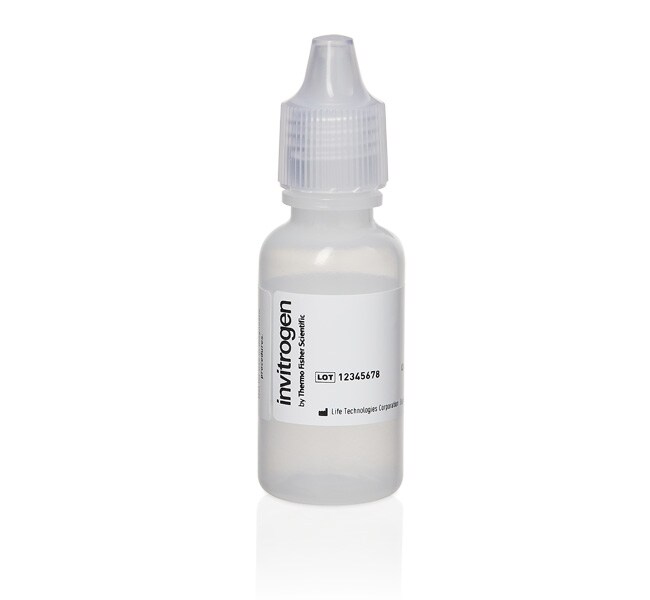
醛/硫酸盐乳胶微珠、4 % w/v、4 μm
微球(又称乳胶微球或乳胶颗粒), 是胶体粒度范围内的球形颗粒, 由诸如聚苯乙烯等非晶态聚合物形成。由于聚苯乙烯链在微珠中自行排列的方式、表面具有极高疏水特性,使其成为用于吸附一些物质(如蛋白质)的理想材料。该醛/硫酸盐乳胶包含大量键合在聚合物粒子表面的醛基了解更多信息
| 货号 | 数量 |
|---|---|
| A37304 | 15 mL |
货号 A37304
价格(CNY)
5,961.00
Each
数量:
15 mL
价格(CNY)
5,961.00
Each
微球(又称乳胶微球或乳胶颗粒), 是胶体粒度范围内的球形颗粒, 由诸如聚苯乙烯等非晶态聚合物形成。由于聚苯乙烯链在微珠中自行排列的方式、表面具有极高疏水特性,使其成为用于吸附一些物质(如蛋白质)的理想材料。
该醛/硫酸盐乳胶包含大量键合在聚合物粒子表面的醛基。高密度的醛基使蛋白和其他物质在一步过程中易于偶联至乳胶粒子。微球上的硫酸盐荷电基团在共价偶联过程中有助于保持稳定性。由于极性基团的高密度,该乳胶具有亲水性表面。
微球有多种尺寸和表面功能性可供选择
可选择 —0.02 微米至 16 微米范围内的• 25 种尺寸
用于与几乎所有材料结合的• 20 种不同表面—
• 无表面活性剂—超净
• 不同量—毫升至 500 升量级
微球的关键应用
• 仪器校准(流式细胞分析、显微镜、HTS、HCS)
• 流量检测(微流体、血流量、水流量和空气流量)
• 细胞生物学示踪剂(细胞分化和细胞示踪)
• 免疫检测(凝集反应检测、ELISA、粒子捕获和对比度试剂)
了解更多信息
阅读微球技术概述并了解高活性微珠、超活性微珠、特殊微珠以及查看 IDC 无表面活性剂乳胶微珠应用页面上的微珠偶联方案。
我们’为您制作一款定制微球产品
如果您’未看中’我们库存列表中的微球,我们’会为您读段定制微球。我们的定制结合服务是高效且保密的,我们保证工作的质量。我们获得了 ISO 9001:2000 认证。
仅供研究使用。不适用于动物或人类的治疗或诊断。
该醛/硫酸盐乳胶包含大量键合在聚合物粒子表面的醛基。高密度的醛基使蛋白和其他物质在一步过程中易于偶联至乳胶粒子。微球上的硫酸盐荷电基团在共价偶联过程中有助于保持稳定性。由于极性基团的高密度,该乳胶具有亲水性表面。
微球有多种尺寸和表面功能性可供选择
可选择 —0.02 微米至 16 微米范围内的• 25 种尺寸
用于与几乎所有材料结合的• 20 种不同表面—
• 无表面活性剂—超净
• 不同量—毫升至 500 升量级
微球的关键应用
• 仪器校准(流式细胞分析、显微镜、HTS、HCS)
• 流量检测(微流体、血流量、水流量和空气流量)
• 细胞生物学示踪剂(细胞分化和细胞示踪)
• 免疫检测(凝集反应检测、ELISA、粒子捕获和对比度试剂)
了解更多信息
阅读微球技术概述并了解高活性微珠、超活性微珠、特殊微珠以及查看 IDC 无表面活性剂乳胶微珠应用页面上的微珠偶联方案。
我们’为您制作一款定制微球产品
如果您’未看中’我们库存列表中的微球,我们’会为您读段定制微球。我们的定制结合服务是高效且保密的,我们保证工作的质量。我们获得了 ISO 9001:2000 认证。
仅供研究使用。不适用于动物或人类的治疗或诊断。
仅供科研使用。不可用于诊断程序。
规格
产品线IDC
数量15 mL
运输条件室温
表面改性醛硫酸盐
适用于(应用)流式细胞分析
产品类型醛/硫酸盐乳胶微珠
Unit SizeEach
内容与储存
储存在冰箱 (2–8°C) 中。
引用和文献 (19)
引用和文献
Abstract
Cancer exosomes trigger fibroblast to myofibroblast differentiation.
Journal:Cancer Res
PubMed ID:21098712
There is a growing interest in the cell-cell communication roles in cancer mediated by secreted vesicles termed exosomes. In this study, we examined whether exosomes produced by cancer cells could transmit information to normal stromal fibroblasts and trigger a cellular response. We found that some cancer-derived exosomes could trigger elevated
Targeting tumor antigens to secreted membrane vesicles in vivo induces efficient antitumor immune responses.
Journal:Cancer Res
PubMed ID:18281500
'Expression of non-self antigens by tumors can induce activation of T cells in vivo, although this activation can lead to either immunity or tolerance. CD8+ T-cell activation can be direct (if the tumor expresses MHC class I molecules) or indirect (after the capture and cross-presentation of tumor antigens by dendritic
Plasma exosomes can deliver exogenous short interfering RNA to monocytes and lymphocytes.
Journal:Nucleic Acids Res
PubMed ID:22618874
'Despite the promise of RNA interference (RNAi) and its potential, e.g. for use in cancer therapy, several technical obstacles must first be overcome. The major hurdle of RNAi-based therapeutics is to deliver nucleic acids across the cell''s plasma membrane. This study demonstrates that exosome vesicles derived from humans can deliver
Selective transfer of exosomes from oligodendrocytes to microglia by macropinocytosis.
Journal:J Cell Sci
PubMed ID:21242314
'The transfer of antigens from oligodendrocytes to immune cells has been implicated in the pathogenesis of autoimmune diseases. Here, we show that oligodendrocytes secrete small membrane vesicles called exosomes, which are specifically and efficiently taken up by microglia both in vitro and in vivo. Internalisation of exosomes occurs by a
Exosomal evasion of humoral immunotherapy in aggressive B-cell lymphoma modulated by ATP-binding cassette transporter A3.
Journal:Proc Natl Acad Sci U S A
PubMed ID:21873242
'Targeting the surface of malignant cells has evolved into a cornerstone in cancer therapy, paradigmatically introduced by the success of humoral immunotherapy against CD20 in malignant lymphoma. However, tumor cell susceptibility to immunochemotherapy varies, with mostly a fatal outcome in cases of resistant disease. Here, we show that lymphoma exosomes