Search

Gibco™
Expi293F™ 诱导细胞
Expi293F 诱导细胞系源自工程改造的 Expi293F 细胞,这些细胞稳定表达四环素抑制子 (TetR) 蛋白,因此可实现四环素调节的蛋白表达。通过与调节质粒 pcDNA6/TR 稳定集成建立了细胞系,可以在人 CMV了解更多信息
| 货号 | 数量 |
|---|---|
| A39241 | 1 vial |
货号 A39241
价格(CNY)
-
数量:
1 vial
Expi293F 诱导细胞系源自工程改造的 Expi293F 细胞,这些细胞稳定表达四环素抑制子 (TetR) 蛋白,因此可实现四环素调节的蛋白表达。通过与调节质粒 pcDNA6/TR 稳定集成建立了细胞系,可以在人 CMV 启动子的控制下编码 TetR 基因。它是一种用于实现四环素诱导重组蛋白高产量表达的强大工具。
Expi293 诱导细胞的特点包括:
•Expi293 表达培养基中的悬浮高密度培养物
• 四环素诱导蛋白表达,基础表达水平极低
• 蛋白产量与亲代 Expi293F 细胞相当—高达 1 g/L
• 蛋白产量显著高于其他 HEK293 四环素诱导细胞系替代物
对于相关蛋白的诱导表达,需要 pcDNA5/TO 哺乳动物表达载体(货号 V103320) 或等效诱导载体用于四环素调节的基因表达。
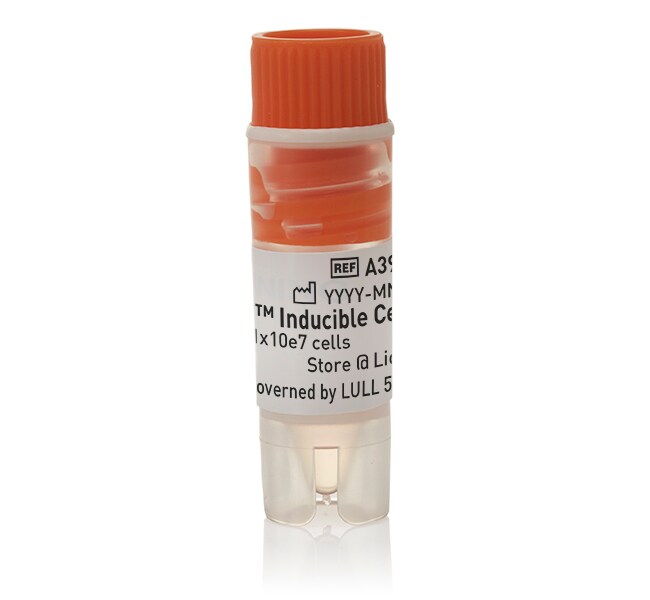
冷冻细胞以样品瓶形式供应,在 Expi293 表达培养基和 10% DMSO 中含 1 mL 细胞,每 mL 含 1 x 10⁷ 个活细胞。细胞应该直接解冻到 Expi293 表达培养基中。
Expi293 诱导细胞的特点包括:
•Expi293 表达培养基中的悬浮高密度培养物
• 四环素诱导蛋白表达,基础表达水平极低
• 蛋白产量与亲代 Expi293F 细胞相当—高达 1 g/L
• 蛋白产量显著高于其他 HEK293 四环素诱导细胞系替代物
对于相关蛋白的诱导表达,需要 pcDNA5/TO 哺乳动物表达载体(货号 V103320) 或等效诱导载体用于四环素调节的基因表达。
冷冻细胞以样品瓶形式供应,在 Expi293 表达培养基和 10% DMSO 中含 1 mL 细胞,每 mL 含 1 x 10⁷ 个活细胞。细胞应该直接解冻到 Expi293 表达培养基中。
仅供科研使用。不可用于诊断程序。
规格
产品线Expi293
数量1 vial
运输条件干冰
Unit SizeEach
内容与储存
1 管 Expi293F 诱导细胞(1x10⁷ 细胞/瓶),储存于汽相液氮中