Search

Invitrogen™
DNA-free™ DNA 去除试剂盒
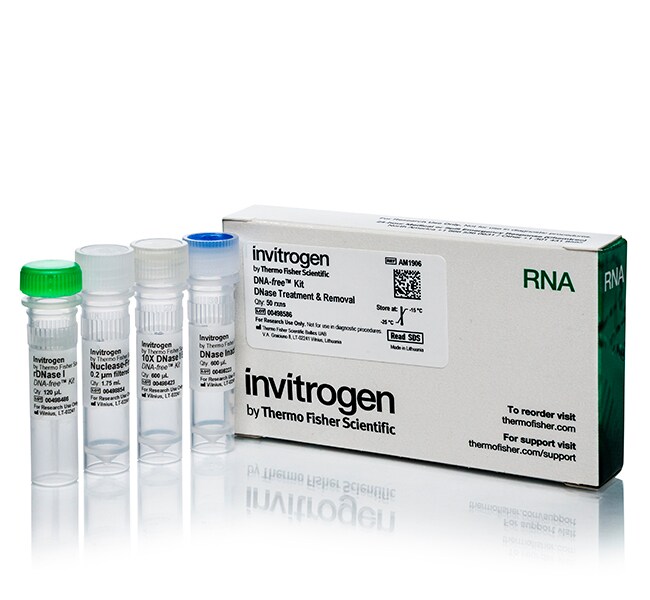
DNA-free™ DNase 处理和去除试剂设计用于从 RNA 样品去除污染 DNA,并在处理后去除 DNase。该试剂套装的特点包括:•从 RNA 样品安全去除了解更多信息
| 货号 | 数量 |
|---|---|
| AM1906 | 50 reactions |
货号 AM1906
价格(CNY)
1,668.00
飞享价
Ends: 31-Dec-2026
2,383.00共减 715.00 (30%)
Each
数量:
50 reactions
价格(CNY)
1,668.00
飞享价
Ends: 31-Dec-2026
2,383.00共减 715.00 (30%)
Each
DNA-free™ DNase 处理和去除试剂设计用于从 RNA 样品去除污染 DNA,并在处理后去除 DNase。该试剂套装的特点包括:
•从 RNA 样品安全去除 DNA 污染
• 无需有机提取或热灭活
• 包含去除 DNase 的新试剂
• 重组 DNase I 经认证无 RNase
Dnase 的灭活和去除
DNA-free™ 试剂可有效去除反应混合物中的 DNase 和二价阳离子。仅需三分钟即可完成 DNase/阳离子去除步骤。无需有机提取、EDTA 添加或热灭活。DNA-free™ 试剂盒随附 RNase-free DNase I、优化的 10X 反应缓冲液和新的 Dnase 去除试剂。
附属产品
TURBO DNA-free™ 试剂盒(货号AM1907)类似于 DNA-free™ 试剂盒,但包括 TURBO™ DNase,这是一种专门设计的高活性 DNase,催化效率比野生型 DNase 高350%。该酶还具有低6倍的 Km,因此可有效去除痕量 DNA 污染。
•从 RNA 样品安全去除 DNA 污染
• 无需有机提取或热灭活
• 包含去除 DNase 的新试剂
• 重组 DNase I 经认证无 RNase
Dnase 的灭活和去除
DNA-free™ 试剂可有效去除反应混合物中的 DNase 和二价阳离子。仅需三分钟即可完成 DNase/阳离子去除步骤。无需有机提取、EDTA 添加或热灭活。DNA-free™ 试剂盒随附 RNase-free DNase I、优化的 10X 反应缓冲液和新的 Dnase 去除试剂。
附属产品
TURBO DNA-free™ 试剂盒(货号AM1907)类似于 DNA-free™ 试剂盒,但包括 TURBO™ DNase,这是一种专门设计的高活性 DNase,催化效率比野生型 DNase 高350%。该酶还具有低6倍的 Km,因此可有效去除痕量 DNA 污染。
仅供科研使用。不可用于诊断程序。
规格
兼容缓冲液10X 反应缓冲液
产品类型DNA 去除试剂盒
数量50 reactions
运输条件干冰
酶DNase
产品线Ambion,DNA-free
Unit SizeEach
内容与储存
rDNase1、10X Dnase 1 缓冲液和 DNase 灭活试剂应储存在 -20°C 下。–无核酸酶水应储存在室温下。