Search


引用和文献 (5)
Invitrogen™
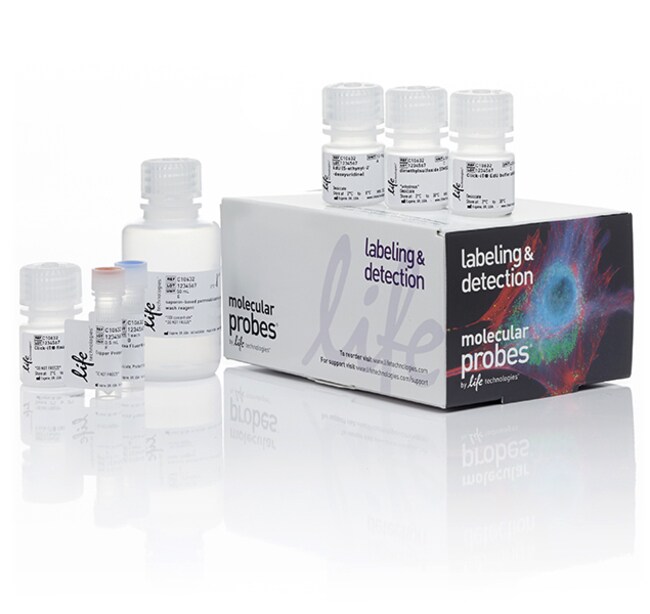
Click-iT™ Plus EdU Alexa Fluor™ 488 流式细胞分析试剂盒
Click-iT™ Plus EdU Alexa Fluor™ 488 流式细胞分析检测试剂盒用于分析增殖细胞中的 DNA 复制,是一种较传统 BrdU了解更多信息
Have Questions?
更改视图

| 货号 | 数量 |
|---|---|
| C10632 | 50 assays |
| C10633 | 100 assays |
货号 C10632
价格(CNY)
6,574.00
飞享价
Ends: 31-Dec-2026
8,736.00共减 2,162.00 (25%)
Each
数量:
50 assays
价格(CNY)
6,574.00
飞享价
Ends: 31-Dec-2026
8,736.00共减 2,162.00 (25%)
Each
Click-iT™ Plus EdU Alexa Fluor™ 488 流式细胞分析检测试剂盒用于分析增殖细胞中的 DNA 复制,是一种较传统 BrdU 法更简单、更可靠的检测方法。采用流式细胞仪的 488 nm 激光分析新合成的 DNA。Click-iT™ Plus 配方与标准荧光基团(包括 R-PE、R-PE 串联体以及荧光蛋白)兼容。
•可联用—可与 R-PE(和串联体)及荧光蛋白兼容
•准确—检测结果优于 BrdU 检测
•快速—可在短短 60 分钟内获得结果
查看流式细胞分析所有 Click-iT™ EdU 和 Click-iT™ Plus EdU 检测的选择指南。
可联用
与初代 Click-iT™ EdU 流式细胞分析检测相比,Click-iT Plus™ 配方具有更好的联用性。Click-iT™ Plus EdU 检测可与 R-PE 和 R-PE 串联体,以及各种荧光蛋白(如 GFP 和 mCherry)配合使用,同时还具有初代 Click-iT™ EdU 检测准确、快速的特点。
更出色的 BrdU 替代方法,提供更优结果
更准确的增殖分析方法,可直接测量 DNA 合成。最初,这是通过掺入放射性核甘酸来完成的。随后基于抗体的溴脱氧尿苷(BrdU,核苷类似物)法取代了这种检测方法。Click-iT™ Plus EdU 流式细胞分析检测是替代 BrdU 检测的新方法。EdU(5-乙炔基-2´-脱氧尿苷)是胸苷类似物,可在活跃的 DNA 合成过程中掺入 DNA 中。检测基于点击化学,在铜催化反应中,炔与染料标记的叠氮化物反应,形成稳定的共价键。在该应用中,在 EdU 的乙炔基团中发现了炔烃,而叠氮化物偶联至 Alexa Fluor™ 染料。标准流式细胞分析方法用于检测细胞群中 S 期细胞的百分比。
温和条件,可与细胞周期染料和抗体配合使用
小型叠氮染料,可使用温和条件高效检测掺入的 EdU,同时具有足够的基于醛的标准固定和去污剂透化能力,可用于 Click-iT™ Plus 检测试剂,以获得 DNA。这与 BrdU 检测相反,BrdU 检测需要使用 HCl、加热或用 Dnase 消化变性 DNA,使 BrdU 暴露以便用抗 BrdU 抗体检测。BrdU 法处理样品会改变细胞周期分布,且 HCl 可破坏抗原识别位点。相比之下,易于使用的 Click-iT™ Plus EdU 检测与细胞周期染料兼容。Click-iT™ Plus EdU 检测也可与细胞表面和细胞内标记物的抗体以及标记标准荧光基团的偶联物(包括 R-PE、R-PE 串联体和荧光蛋白(GFP 和 mCherry)联用。
快速简便的方案
Click-iT™ Plus EdU 方案基于免疫组化抗体标记的醛基固定和洗涤剂透化步骤。但是,EdU 与其他固定剂/透化剂(包括皂苷和甲醇)兼容。只需五步就能分析细胞增殖数据:
1.’用 EdU 处理细胞。
2.固定并透化细胞。
3.使用 Click-iT™ Plus 检测混合物检测 S 期细胞 30 min。
4.清洗一次。
5.分析。
在某些情况下,60 分钟内即可获得结果,但我们建议所有应用采用 90 分钟。
•可联用—可与 R-PE(和串联体)及荧光蛋白兼容
•准确—检测结果优于 BrdU 检测
•快速—可在短短 60 分钟内获得结果
查看流式细胞分析所有 Click-iT™ EdU 和 Click-iT™ Plus EdU 检测的选择指南。
可联用
与初代 Click-iT™ EdU 流式细胞分析检测相比,Click-iT Plus™ 配方具有更好的联用性。Click-iT™ Plus EdU 检测可与 R-PE 和 R-PE 串联体,以及各种荧光蛋白(如 GFP 和 mCherry)配合使用,同时还具有初代 Click-iT™ EdU 检测准确、快速的特点。
更出色的 BrdU 替代方法,提供更优结果
更准确的增殖分析方法,可直接测量 DNA 合成。最初,这是通过掺入放射性核甘酸来完成的。随后基于抗体的溴脱氧尿苷(BrdU,核苷类似物)法取代了这种检测方法。Click-iT™ Plus EdU 流式细胞分析检测是替代 BrdU 检测的新方法。EdU(5-乙炔基-2´-脱氧尿苷)是胸苷类似物,可在活跃的 DNA 合成过程中掺入 DNA 中。检测基于点击化学,在铜催化反应中,炔与染料标记的叠氮化物反应,形成稳定的共价键。在该应用中,在 EdU 的乙炔基团中发现了炔烃,而叠氮化物偶联至 Alexa Fluor™ 染料。标准流式细胞分析方法用于检测细胞群中 S 期细胞的百分比。
温和条件,可与细胞周期染料和抗体配合使用
小型叠氮染料,可使用温和条件高效检测掺入的 EdU,同时具有足够的基于醛的标准固定和去污剂透化能力,可用于 Click-iT™ Plus 检测试剂,以获得 DNA。这与 BrdU 检测相反,BrdU 检测需要使用 HCl、加热或用 Dnase 消化变性 DNA,使 BrdU 暴露以便用抗 BrdU 抗体检测。BrdU 法处理样品会改变细胞周期分布,且 HCl 可破坏抗原识别位点。相比之下,易于使用的 Click-iT™ Plus EdU 检测与细胞周期染料兼容。Click-iT™ Plus EdU 检测也可与细胞表面和细胞内标记物的抗体以及标记标准荧光基团的偶联物(包括 R-PE、R-PE 串联体和荧光蛋白(GFP 和 mCherry)联用。
快速简便的方案
Click-iT™ Plus EdU 方案基于免疫组化抗体标记的醛基固定和洗涤剂透化步骤。但是,EdU 与其他固定剂/透化剂(包括皂苷和甲醇)兼容。只需五步就能分析细胞增殖数据:
1.’用 EdU 处理细胞。
2.固定并透化细胞。
3.使用 Click-iT™ Plus 检测混合物检测 S 期细胞 30 min。
4.清洗一次。
5.分析。
在某些情况下,60 分钟内即可获得结果,但我们建议所有应用采用 90 分钟。
仅供科研使用。不可用于诊断程序。
规格
检测方法荧光
染料类型Alexa Fluor™ 488
产品规格管
数量50 assays
运输条件室温
发射波长范围488
适用于(设备)流式细胞仪
产品线Click-iT
产品类型流式细胞分析测定试剂盒
Unit SizeEach
内容与储存
含有 EdU(5-乙炔基-2'-脱氧尿苷)、Alexa Fluor™ 488 吡啶甲基叠氮化物、无水二甲基亚砜 (DMSO)、Click-iT™ 固定剂、Click-iT™ 皂苷基透化液和洗涤缓冲液、铜保护剂和 Click-iT™ EdU 缓冲液添加剂。储存于 2°C 至 8°C 干燥避光储存。
常见问题解答 (FAQ)
我发现自己的点击标记样品无信号或特异性信号非常低,如何提高信号?
我对自己的Click-iT EdU TUNEL标记样品成像时,观测到较高的非特异性本底。这是什么原因造成的?如何降低本底干扰?
我注意到,当我在click反应后用DAPI染色细胞并检测EdU的掺入时,相比于我的无click反应对照样品,DAPI信号非常低。是什么原因导致DAPI信号降低?
我观测到自己的的click标记样品无信号或信号非常低,如何提高信号?
当我分析click标记样品时,观测到较高的本底干扰,这是什么原因所致?如何减少本底干扰?
引用和文献 (5)
引用和文献
Abstract
A portable BRCA1-HAC (human artificial chromosome) module for analysis of BRCA1 tumor suppressor function.
Journal:
PubMed ID:25260588
'BRCA1 is involved in many disparate cellular functions, including DNA damage repair, cell-cycle checkpoint activation, gene transcriptional regulation, DNA replication, centrosome function and others. The majority of evidence strongly favors the maintenance of genomic integrity as a principal tumor suppressor activity of BRCA1. At the same time some functional aspects
The microanatomic segregation of selection by apoptosis in the germinal center.
Journal:Science
PubMed ID:28935768
'B cells undergo rapid cell division and affinity maturation in anatomically distinct sites in lymphoid organs called germinal centers (GCs). Homeostasis is maintained in part by B cell apoptosis. However, the precise contribution of apoptosis to GC biology and selection is not well defined. We developed apoptosis-indicator mice and used
BRCA2 suppresses replication stress-induced mitotic and G1 abnormalities through homologous recombination.
Journal:Nat Commun
PubMed ID:28904335
Mutations in the tumor suppressor BRCA2 predominantly predispose to breast cancer. Paradoxically, while loss of BRCA2 promotes tumor formation, it also causes cell lethality, although how lethality is triggered is unclear. Here, we generate BRCA2 conditional non-transformed human mammary epithelial cell lines using CRISPR-Cas9. Cells are inviable upon BRCA2 loss,
Pulmonary pericytes regulate lung morphogenesis.
Journal:Nat Commun
PubMed ID:29934496
Blood vessels are essential for blood circulation but also control organ growth, homeostasis, and regeneration, which has been attributed to the release of paracrine signals by endothelial cells. Endothelial tubules are associated with specialised mesenchymal cells, termed pericytes, which help to maintain vessel wall integrity. Here we identify pericytes as
Single-cell transcriptomics reveals a new dynamical function of transcription factors during embryonic hematopoiesis.
Journal:Elife
PubMed ID:29555020
Recent advances in single-cell transcriptomics techniques have opened the door to the study of gene regulatory networks (GRNs) at the single-cell level. Here, we studied the GRNs controlling the emergence of hematopoietic stem and progenitor cells from mouse embryonic endothelium using a combination of single-cell transcriptome assays. We found that