Search


引用和文献 (53)
Invitrogen™
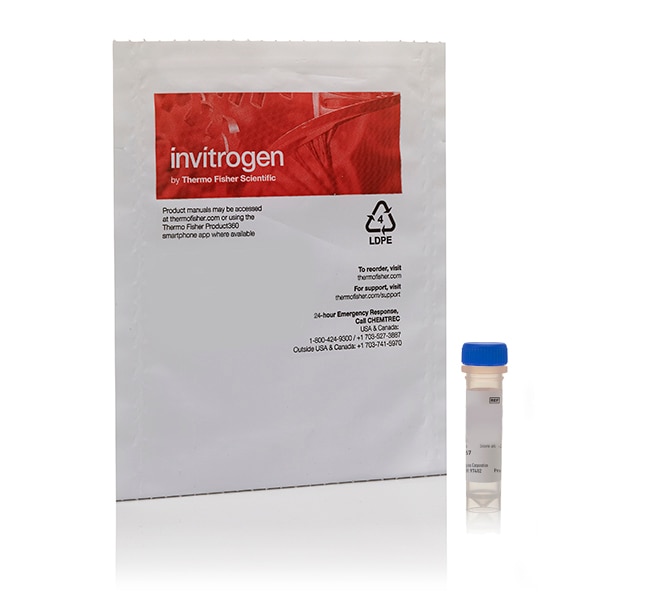
霍乱毒素亚基 B(重组),Alexa Fluor™ 488偶联物
Molecular Probes™ 霍乱毒素偶联物仅由重组形式的 B 亚基组成。这使我们能够提供完全不含有毒 A 亚基的高纯度产品。霍乱毒素 B了解更多信息
Have Questions?
更改视图

| 货号 | 偶联物 | 数量 |
|---|---|---|
| C22841 | Alexa Fluor 488 | 500μg |
| C34776 | Alexa Fluor 555 | 100μg |
| C22843 | Alexa Fluor 555 | 500μg |
| C34777 | Alexa Fluor 594 | 100μg |
| C22842 | Alexa Fluor 594 | 500μg |
| C34778 | Alexa Fluor 647 | 100 μg |
| C34779 | Biotin | 100 μg |
| C34780 又称 C-34780 | HRP (Horseradish Peroxidase) | 100 μg |
货号 C22841
价格(CNY)
9,853.00
飞享价
Ends: 31-Dec-2026
13,684.00共减 3,831.00 (28%)
Each
偶联物:
Alexa Fluor 488
数量:
500μg
价格(CNY)
9,853.00
飞享价
Ends: 31-Dec-2026
13,684.00共减 3,831.00 (28%)
Each
Molecular Probes™ 霍乱毒素偶联物仅由重组形式的 B 亚基组成。这使我们能够提供完全不含有毒 A 亚基的高纯度产品。霍乱毒素 B 亚基 (CT-B) 通过结合神经节苷脂 GM1 附着在细胞上,是强大的神经元逆行标记工具。这种示踪剂已用于多种应用领域,包括追踪大鼠前脑传入、臂旁区域投射及膀胱壁神经元。在神经元示踪应用中使用时,CT-B 通常通过压力注射或通过离子电渗注入神经组织的方式注入。
霍乱毒素 B 亚基规格:
• 标记(激发/发射波长):Alexa Fluor™ 488 (495/519 nm)
• 在中性 pH 下,11.4 kDa B 亚基以 57kDa 五聚体形式存在
• 冻干产品可使用缓冲液(如 PBS)溶解使用
研究人员最近发现,CT-B 可用作脂筏标记物——脂筏是一种膜微结构域,在胆固醇和鞘脂质中含量丰富,被视作研究细胞信号转导的重要工具。脂筏染色时,首先将细胞与荧光素 CT-B 一同孵育,然后加入抗–CT-B 抗体,使脂筏中的 CT-B 交联成质膜上的不同斑块。这些斑块可通过荧光显微镜轻松观察到。除单独的荧光 CT-B 偶联物外,我们还提供含有 Alexa Fluor™ 488、Alexa Fluor™ 555或 Alexa Fluor™ 594 染料的 CT-B 偶联物、抗 –CT-B 抗体及荧光显微检测细胞标记和制备的详细实验方案的 Vybrant™ 脂筏标记试剂盒。
查找更多的 CT-B 偶联物的信息
我们提供了多种 CT-B 偶联物。有关这类示踪剂的更多信息、请参阅《Molecular Probes™ 手册》中的“蛋白偶联物—第14.7节”。
仅供科研使用。不可用于人或动物的治疗或诊断。
霍乱毒素 B 亚基规格:
• 标记(激发/发射波长):Alexa Fluor™ 488 (495/519 nm)
• 在中性 pH 下,11.4 kDa B 亚基以 57kDa 五聚体形式存在
• 冻干产品可使用缓冲液(如 PBS)溶解使用
研究人员最近发现,CT-B 可用作脂筏标记物——脂筏是一种膜微结构域,在胆固醇和鞘脂质中含量丰富,被视作研究细胞信号转导的重要工具。脂筏染色时,首先将细胞与荧光素 CT-B 一同孵育,然后加入抗–CT-B 抗体,使脂筏中的 CT-B 交联成质膜上的不同斑块。这些斑块可通过荧光显微镜轻松观察到。除单独的荧光 CT-B 偶联物外,我们还提供含有 Alexa Fluor™ 488、Alexa Fluor™ 555或 Alexa Fluor™ 594 染料的 CT-B 偶联物、抗 –CT-B 抗体及荧光显微检测细胞标记和制备的详细实验方案的 Vybrant™ 脂筏标记试剂盒。
查找更多的 CT-B 偶联物的信息
我们提供了多种 CT-B 偶联物。有关这类示踪剂的更多信息、请参阅《Molecular Probes™ 手册》中的“蛋白偶联物—第14.7节”。
仅供科研使用。不可用于人或动物的治疗或诊断。
仅供科研使用。不可用于诊断程序。
规格
标签类型Alexa Fluor 染料
产品线Alexa Fluor
蛋白质形式Recombinant
蛋白质子类型霍乱毒素
数量500μg
运输条件室温
偶联物Alexa Fluor 488
形式Lyophilized
重组Recombinant
Unit SizeEach
内容与储存
储存在冰箱(-5 至 -30°C)中并避光。
引用和文献 (53)
引用和文献
Abstract
Intracellular trafficking of Clostridium perfringens iota-toxin b.
Journal:Infect Immun
PubMed ID:22825447
'Clostridium perfringens iota-toxin is composed of an enzymatic component (Ia) and a binding component (Ib). Ib binds to a cell surface receptor, undergoes oligomerization in lipid rafts, and binds Ia. The resulting complex is then endocytosed. Here, we show the intracellular trafficking of iota-toxin. After the binding of the Ib
The B cell-specific major raft protein, Raftlin, is necessary for the integrity of lipid raft and BCR signal transduction.
Journal:EMBO J
PubMed ID:12805216
'Recent evidence indicates that membrane microdomains, termed lipid rafts, have a role in B-cell activation as platforms for B-cell antigen receptor (BCR) signal initiation. To gain an insight into the possible functioning of lipid rafts in B cells, we applied liquid chromatography electrospray ionization tandem mass spectrometry (LC-ESI-MS/MS) methodologies to
Lipid raft microdomains: a gateway for compartmentalized trafficking of Ebola and Marburg viruses.
Journal:J Exp Med
PubMed ID:11877482
'Spatiotemporal aspects of filovirus entry and release are poorly understood. Lipid rafts act as functional platforms for multiple cellular signaling and trafficking processes. Here, we report the compartmentalization of Ebola and Marburg viral proteins within lipid rafts during viral assembly and budding. Filoviruses released from infected cells incorporated raft-associated molecules,
Gbetagamma activation of Src induces caveolae-mediated endocytosis in endothelial cells.
Journal:J Biol Chem
PubMed ID:15345719
'Caveolae-mediated endocytosis in endothelial cells is stimulated by the binding of albumin to gp60, a specific albumin-binding protein localized in caveolae. The activation of gp60 induces its cell surface clustering and association with caveolin-1, the caveolar-scaffolding protein. This interaction leads to G(i)-induced Src kinase activation, which in turn signals dynamin-2-mediated
Identification and characterization of small molecules that inhibit intracellular toxin transport.
Journal:Infect Immun
PubMed ID:17576758
'Shiga toxin (Stx), cholera toxin (Ctx), and the plant toxin ricin are among several toxins that reach their intracellular destinations via a complex route. Following endocytosis, these toxins travel in a retrograde direction through the endosomal system to the trans-Golgi network, Golgi apparatus, and endoplasmic reticulum (ER). There the toxins