Search

Invitrogen™
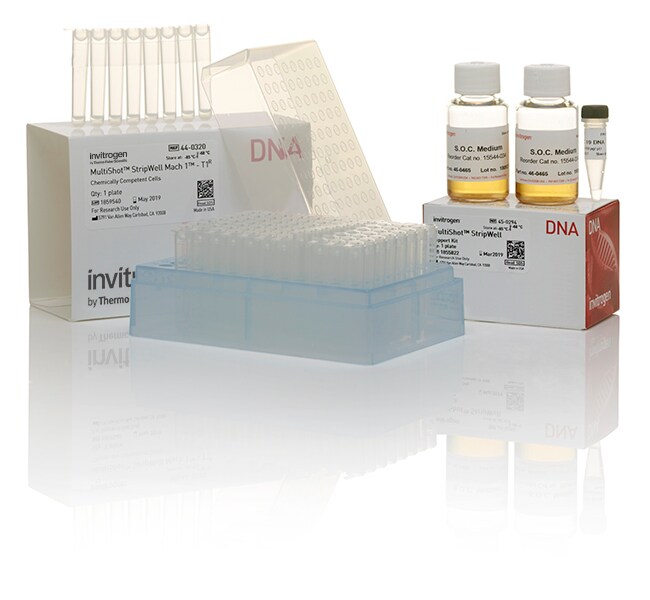
MultiShot™ StripWell Mach1™ T1 噬菌体抗性化学感受态大肠杆菌
MultiShot StripWell Mach1 T1R 化学感受态大肠杆菌细胞是克隆感受态细胞,将其包装在一个含有 12 个 8 联排管的支架中,以提高中等通量细菌转化的生产率。MultiShot了解更多信息
| 货号 | 数量 |
|---|---|
| C869601 | 1 块板 |
货号 C869601
价格(CNY)
6,730.00
飞享价
Ends: 31-Dec-2026
8,413.00共减 1,683.00 (20%)
Each
数量:
1 块板
价格(CNY)
6,730.00
飞享价
Ends: 31-Dec-2026
8,413.00共减 1,683.00 (20%)
Each
MultiShot StripWell Mach1 T1R 化学感受态大肠杆菌细胞是克隆感受态细胞,将其包装在一个含有 12 个 8 联排管的支架中,以提高中等通量细菌转化的生产率。MultiShot StripWell Mach1 T1R 感受态大肠杆菌细胞是生长速度极快的化学感受态细胞,可加快至克隆评估的时间。
所有 T1R 菌株的基因型均缺失 tonA (fhuA),其对 T1 和 T5 噬菌体具有抗性。T1 噬菌体迅速传播并使大肠杆菌宿主裂解,通常用于克隆和文库构建。抗性基因型增加了安全性,以保护宝贵的克隆和文库。这对于基因组和测序中心尤其重要,因为在这些中心,T1 噬菌体感染将是灾难性的。
快速 Mach1 T1R 克隆能力
MultiShot FlexPlate Mach1 T1R 感受态细胞生长快速。Mach1 菌落在平板接种转化混合物的八小时内清晰可见,使您能够在同一天进行平板培养和挑取菌落。只需四小时的生长即可从过夜菌落中进行小提—可为您的实验节省一整天时间。Mach1 T1R 菌株可用于许多克隆应用,且提供的转化效率 > 1 x 10⁸ cfu/µg 对照质粒 DNA。
MultiShot FlexPlate Mach1 T1R 感受态细胞的主要特点包括:
•由于无需进行核酸内切酶 I 的非特异性酶切,endA1 用于在下游应用中获得更清洁的 DNA 制备物和更好的结果
• recA1398 用于降低克隆 DNA 中的非特异性重组
• hsdR 用于通过 PCR 扩增高效转化未甲基化 DNA
• tonA (fhuA) 提供对 T1 和 T5 噬菌体的抗性
• lacZΔM15 用于蓝/白斑筛选重组克隆
MultiShot StripWell 规格-灵活,无浪费
八个连接管的每个 StripWell 设计为与 One Shot 规格管具有相同的单管、单次使用特点。该规格可让您在同一管中完成至平板接种的转化方案的所有步骤,从而帮助您节省时间并防止污染。添加 DNA 后,MultiShot StripWell 感受态细胞可使用水浴器在 42°C 下全部在同一管中通过热激转化。
可切割 StripWell 管从而在单管中进行转化,避免浪费细胞等份试液并避免可能导致转化效率降低的冻融。
MultiShot StripWell 规格的主要特点包括:
•生产率提高—中等通量实验
• 极佳的灵活性—从 StripWell 支架转换至少 1 支至多 96 支管
• 熟悉方便—无需等分,直接向细胞中加入 DNA、热激、回收至同一管中
• 让用户放心无忧—单次使用转化尽可能减少污染
基因型:F- φ80(lacZ)ΔM15 ΔlacX74 hsdR(rK-mK+) ΔrecA1398 endA1 tonA
查找您需要的细胞株和规格
我们提供化学感受态细胞和电转感受态细胞的许多其他大肠杆菌菌株和规格,以帮助满足您的特定转化需求。如果您需要其他高通量转化选项,请从我们的 MultiShot 格式化感受态细胞集合中选择,或通过电子邮箱联系我们自定义格式选项。
所有 T1R 菌株的基因型均缺失 tonA (fhuA),其对 T1 和 T5 噬菌体具有抗性。T1 噬菌体迅速传播并使大肠杆菌宿主裂解,通常用于克隆和文库构建。抗性基因型增加了安全性,以保护宝贵的克隆和文库。这对于基因组和测序中心尤其重要,因为在这些中心,T1 噬菌体感染将是灾难性的。
快速 Mach1 T1R 克隆能力
MultiShot FlexPlate Mach1 T1R 感受态细胞生长快速。Mach1 菌落在平板接种转化混合物的八小时内清晰可见,使您能够在同一天进行平板培养和挑取菌落。只需四小时的生长即可从过夜菌落中进行小提—可为您的实验节省一整天时间。Mach1 T1R 菌株可用于许多克隆应用,且提供的转化效率 > 1 x 10⁸ cfu/µg 对照质粒 DNA。
MultiShot FlexPlate Mach1 T1R 感受态细胞的主要特点包括:
•由于无需进行核酸内切酶 I 的非特异性酶切,endA1 用于在下游应用中获得更清洁的 DNA 制备物和更好的结果
• recA1398 用于降低克隆 DNA 中的非特异性重组
• hsdR 用于通过 PCR 扩增高效转化未甲基化 DNA
• tonA (fhuA) 提供对 T1 和 T5 噬菌体的抗性
• lacZΔM15 用于蓝/白斑筛选重组克隆
MultiShot StripWell 规格-灵活,无浪费
八个连接管的每个 StripWell 设计为与 One Shot 规格管具有相同的单管、单次使用特点。该规格可让您在同一管中完成至平板接种的转化方案的所有步骤,从而帮助您节省时间并防止污染。添加 DNA 后,MultiShot StripWell 感受态细胞可使用水浴器在 42°C 下全部在同一管中通过热激转化。
可切割 StripWell 管从而在单管中进行转化,避免浪费细胞等份试液并避免可能导致转化效率降低的冻融。
MultiShot StripWell 规格的主要特点包括:
•生产率提高—中等通量实验
• 极佳的灵活性—从 StripWell 支架转换至少 1 支至多 96 支管
• 熟悉方便—无需等分,直接向细胞中加入 DNA、热激、回收至同一管中
• 让用户放心无忧—单次使用转化尽可能减少污染
基因型:F- φ80(lacZ)ΔM15 ΔlacX74 hsdR(rK-mK+) ΔrecA1398 endA1 tonA
查找您需要的细胞株和规格
我们提供化学感受态细胞和电转感受态细胞的许多其他大肠杆菌菌株和规格,以帮助满足您的特定转化需求。如果您需要其他高通量转化选项,请从我们的 MultiShot 格式化感受态细胞集合中选择,或通过电子邮箱联系我们自定义格式选项。
仅供科研使用。不可用于诊断程序。
规格
耐抗生素细菌No
蓝色/白色筛查是
是否可克隆甲基化 DNA是
克隆不稳定 DNA不适合克隆不稳定DNA
是否含 F' 附加体缺乏 F’附加体
高通量能力兼容高通量应用
提高质粒质量是
制备无甲基化 DNA不适合制备未甲基化DNA
产品线Mach1, MultiShot
产品类型感受态细胞
数量1 块板
减少克隆重组现象是
运输条件Dry Ice
T1 噬菌体 - 抗性 (tonA)是
转化效率级别高效率 (> 10^9 cfu/μg)
产品规格MultiShot StripWell
种属大肠杆菌
Unit SizeEach
内容与储存
包含:
• Mach1™ T1 噬菌体抗性 (T1R) 化学感受态大肠杆菌:一个 96-stripwell 板,50 µL/孔
• pUC19 DNA (10 pg/µL):1 瓶,50 µL
• S.O.C. 培养基:2 瓶,每瓶 15 mL
感受态细胞储存在 -80°C 下。pUC19 DNA 储存在 -20°C 下。SOC 培养基储存在 4°C 或室温下。
• Mach1™ T1 噬菌体抗性 (T1R) 化学感受态大肠杆菌:一个 96-stripwell 板,50 µL/孔
• pUC19 DNA (10 pg/µL):1 瓶,50 µL
• S.O.C. 培养基:2 瓶,每瓶 15 mL
感受态细胞储存在 -80°C 下。pUC19 DNA 储存在 -20°C 下。SOC 培养基储存在 4°C 或室温下。