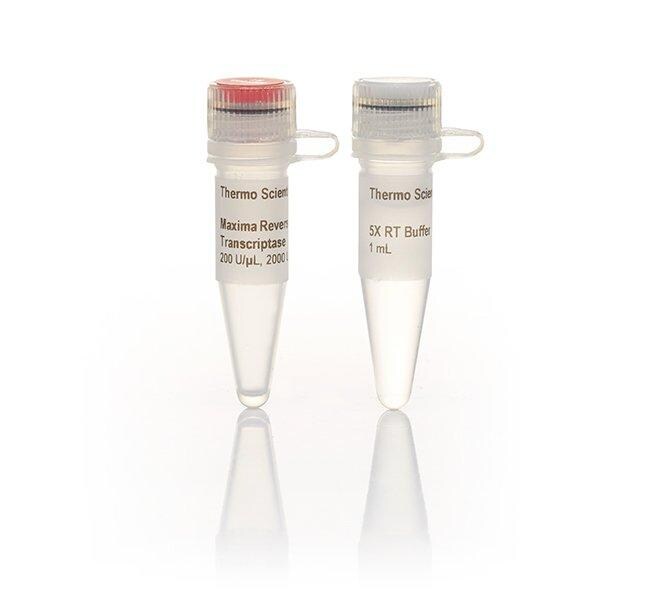
Maxima 反转录酶(200 U/μL)
Thermo Scientific™

Maxima 反转录酶(200 U/μL)

Thermo Scientific Maxima 反转录酶 (RT) 通过 M-MuLV RT 体外进化制成。该酶不仅具有呈了解更多信息
Have Questions?
更改视图buttonViewtableView
货号数量
EP07412,000 单位
EP074210,000 单位
EP07434 x 10,000 单位
货号 EP0741
价格(CNY)
464.00
飞享价
Ends: 31-Dec-2025
663.00
共减 199.00 (30%)
Each
添加至购物车
数量:
2,000 单位
请求批量或定制报价
价格(CNY)
464.00
飞享价
Ends: 31-Dec-2025
663.00
共减 199.00 (30%)
Each
添加至购物车
Thermo Scientific Maxima 反转录酶 (RT) 通过 M-MuLV RT 体外进化制成。该酶不仅具有呈 RNA 依赖性和 DNA 依赖性的聚合酶活性,还具有 RNase H 活性。与野生型 M-MuLV RT 相比,该工程化酶具有显著改善的热稳定性和稳健性,并提高了合成速率。

Maxima 反转录酶能够在较高的温度(50 至 65°C)下从较宽范围的 RNA 总上样量(1 pg 至 5 µg)进行可重现的 cDNA 合成,这使得该酶成为两步法 RT-qPCR 的理想工具(参见支持性数据)。

由于具有较高的热稳定性,Maxima 酶在整个反转录反应过程中保持完整活性,产生较高得率的 cDNA,甚至能够合成长达 20 kb 的 RNA 转录本。反应温度可提升至 65°C,以高效转录具有复杂二级结构的 RNA 区域,或利用基因特异性引物提高特异性。由于其合成速率提高,反转录酶反应可以在15至30分钟内完成。

产品优势

• 获得高得率的长达 20 kb 的全长 cDNA
•活性温度上限达 65°C
• 热稳定性—在 50°C 下孵育60分钟后仍具有 90% 活性
•高灵敏度—可从较宽范围的 RNA 总量(1 pg 至 5 µg)进行可重现的 cDNA 合成
•高效—在15至30分钟内完成 cDNA 合成
•整合修饰的核苷酸

应用

•两步法 RT-PCR
• 两步法 RT-qPCR
• 第一链 cDNA 合成
• 构建全长 cDNA 文库
• DNA 标记
•引物延伸

也可提供:用于RT-qPCR 的Maxima第一链cDNA合成试剂盒
仅供科研使用。不可用于诊断程序。
规格
最终产品类型第一链 cDNA
产品规格管装
最佳反应温度50°C 至 55°C
数量2,000 单位
反应形式单独组分
试剂类型反转录
逆转录酶Maxima
核糖核酸酶 H 活性
运输条件干冰
尺寸(最终产品)长达 20 kb
原始材料RNA
技术反转录
最大浓度200 U/μL
高 GC PCR 扩增效果
反应速度30 min。
Unit SizeEach
内容与储存

• Maxima 逆转录酶,1 x 2,000 单位 (200 U/μL)
• 5X RT 缓冲液

储存在 –20°C 下。

常见问题解答 (FAQ)

When should I choose regular RevertAid RT or Maxima RT vs. RevertAid H-minus RT or Maxima H-minus RT?

It is generally beneficial to minimize RNase H activity when aiming to produce long transcripts for cDNA cloning. RNase H degrades RNA from RNA-DNA duplexes, which can result in truncated cDNA during reverse transcription of long mRNA. It is also recommended to use RNase H-minus RTs for template-independent addition of C nucleotides. In contrast, reverse transcriptases with intrinsic RNase H activity are often favored in qPCR applications.

Do Thermo Scientific reverse transcriptases (RevertAid RT, RevertAid H-minus RT, Maxima RT, and Maxima H-minus RT) possess terminal deoxynucleotidyl (TdT) activity?

All Thermo Scientific reverse transcriptases possess intrinsic TdT activity although at varying degrees depending upon the reaction conditions. For addition of template-independent C nucleotides (as for SMART and RACE experiments), this specific TdT activity can be induced by Mn2+. We would recommend Maxima H- or RevertAid H- minus RTs for this purpose.

Is it preferable to use elevated temperature in the RT reaction when using Maxima reverse transcriptases?

cDNA synthesis at higher temperatures ensures successful transcription of RNA with high levels of secondary structure, reducing issues of primer access to template. Therefore, we do recommend to use RT enzymes with high thermostability, e.g. Maxima and Maxima H Minus Reverse Transcriptases, which provide higher yields of full-length cDNA, better sensitivity, and successful transcription of GC-rich templates.

What steps should I take while performing first strand cDNA synthesis using low purity template (e.g., inhibitors in RNA sample)?

Trace amounts of reagents used in RNA purification protocols may remain in solution and inhibit first-strand synthesis, e.g., SDS, EDTA, guanidine salts, phosphate, pyrophosphate, polyamines, spermidine. To remove trace contaminants, we recommend re-precipitating the RNA with ethanol and washing the pellet with 75% ethanol, or re-purifying the RNA.

For reverse transcription, how important is the quality of RNA template?

RNA purity and integrity are essential for synthesis and quantification of cDNA. Always assess the integrity of RNA prior to cDNA synthesis. Use freshly prepared RNA. Multiple freeze/thaw cycles of the RNA sample and synthesized cDNA is not recommended. Avoid RNase contamination and discard low quality RNA.