Search


引用和文献 (4)
Invitrogen™
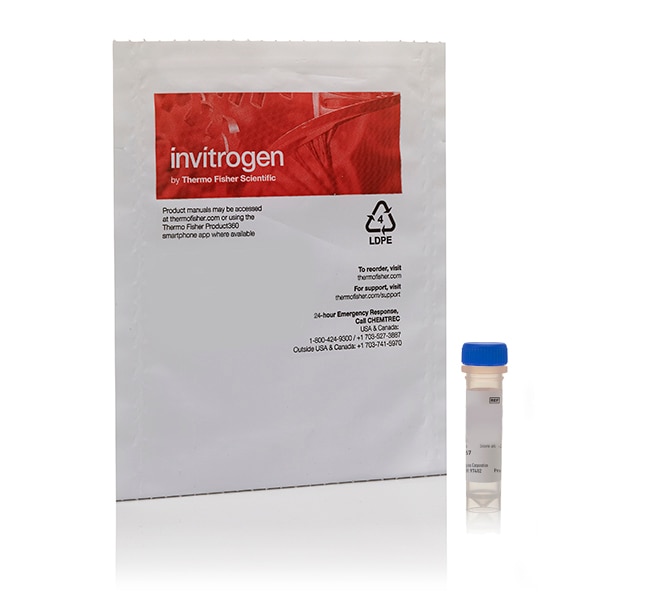
FilmTracer™ FM™ 1-43 Green 生物膜细胞染色剂
FM dyes are lipophilic styryl compounds used in a wide variety of studies involving plasma membrane and vesiculation. The water-soluble了解更多信息
| 货号 | 数量 |
|---|---|
| F10317 | 各 1 |
货号 F10317
价格(CNY)
4,931.00
Online exclusive
Ends: 31-Dec-2026
6,848.00共减 1,917.00 (28%)
Each
数量:
各 1
价格(CNY)
4,931.00
Online exclusive
Ends: 31-Dec-2026
6,848.00共减 1,917.00 (28%)
Each
FM dyes are lipophilic styryl compounds used in a wide variety of studies involving plasma membrane and vesiculation. The water-soluble FM® dyes are virtually nonfluorescent in aqueous media and are believed to insert into the surface membrane where they become intensely fluorescent. FM® 1-43 stain has been used successfully to stain the cell bodies specifically in a complex biofilm mileu, including Pseudomonas aeruginosa, Escherichia coli, Staphylococcus sp., Acidothiobacillus caldus, and Vibrio cholerae.
仅供科研使用。不可用于诊断程序。
规格
颜色绿色
检测方法荧光
染料类型FM 1-43⁄脂质
发射可见光
激发波长范围472⁄580
适用于(设备)共聚焦显微镜、荧光显微镜、流式细胞仪、微孔板读数仪、荧光成像仪
形式实心
产品线FilmTracer、Molecular Probes
数量各 1
运输条件室温
标签类型其他标签或染料
产品类型染料
亚细胞定位细胞膜&脂质, Lipids
Unit SizeEach
内容与储存
室温储存;干燥;避光
常见问题解答 (FAQ)
The product sheet for FM 1-43 Dye states that the maximum for excitation is 510 nm and emissions is 626 nm, but the spectrum on the product page shows a peak at 470 nm and 580 nm. Can you clarify what the excitation and emission maxima is for this dye?
引用和文献 (4)
引用和文献
Abstract
A novel role for enzyme I of the Vibrio cholerae phosphoenolpyruvate phosphotransferase system in regulation of growth in a biofilm.
Journal:J Bacteriol
PubMed ID:17981973
Glucose is a universal energy source and a potent inducer of surface colonization for many microbial species. Highly efficient sugar assimilation pathways ensure successful competition for this preferred carbon source. One such pathway is the phosphoenolpyruvate phosphotransferase system (PTS), a multicomponent sugar transport system that phosphorylates the sugar as it
Fluorescence staining of live cyanobacterial cells suggest non-stringent chromosome segregation and absence of a connection between cytoplasmic and thylakoid membranes.
Journal:BMC Cell Biol
PubMed ID:17767716
BACKGROUND: In spite of their abundance and importance, little is known about cyanobacterial cell biology and their cell cycle. During each cell cycle, chromosomes must be separated into future daughter cells, i.e. into both cell halves, which in many bacteria is achieved by an active machinery that operates during DNA
Genome Sequence and Composition of a Tolyporphin-Producing Cyanobacterium-Microbial Community.
Journal:Appl Environ Microbiol
PubMed ID:28754701
Beta-Defensin 2 and 3 Promote Bacterial Clearance of Pseudomonas aeruginosa by Inhibiting Macrophage Autophagy through Downregulation of Early Growth Response Gene-1 and c-FOS.
Journal:Front Immunol
PubMed ID:29487594