Search

Thermo Scientific™
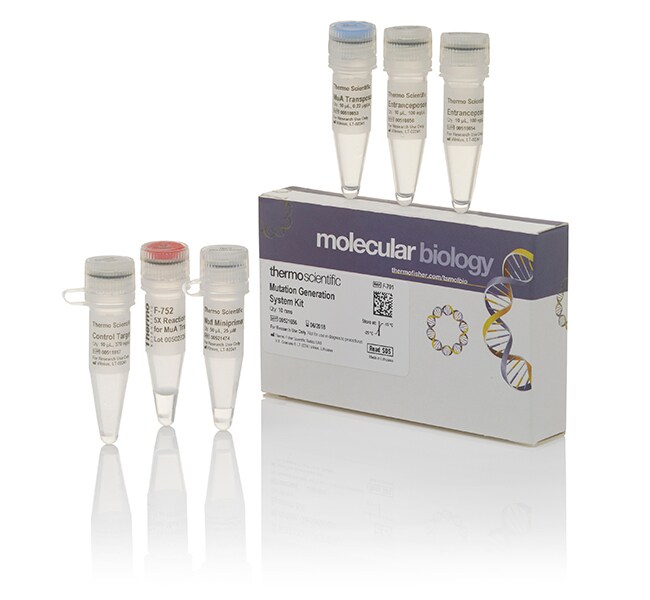
Mutation Generation System 试剂盒
Thermo Scientific 转座子产品是基于噬菌体 Mu 的转座机制。该装置在噬菌体生命周期的溶解阶段通过在宿主基因组内重复转座来复制其基因组。这种 Mu 转座反应已经改进为使用单个酶(MuA了解更多信息
| 货号 | 数量 |
|---|---|
| F701 | 10 reactions |
货号 F701
价格(CNY)
2,961.00
Each
数量:
10 reactions
价格(CNY)
2,961.00
Each
Thermo Scientific 转座子产品是基于噬菌体 Mu 的转座机制。该装置在噬菌体生命周期的溶解阶段通过在宿主基因组内重复转座来复制其基因组。这种 Mu 转座反应已经改进为使用单个酶(MuA 转座酶)催化的体外反应。使用该系统,一次体外反应可以生成超过一百万个转座子插入克隆。
Mutation Generation System(MGS 试剂盒)和Stop Generation System(STOP 试剂盒)专门设计用于蛋白质功能分析。使用这些新的转座子工具,能够在单个反应中创建饱和的突变蛋白文库,所需的手动操作时间少于其他所有方法。通过 PCR 或测序,可以定位转座子插入到每个突变克隆中的位置。借助 MGS 和 STOP 试剂盒,只需2至3天即可制备好数以千计的突变克隆用于表达研究。
MGS 试剂盒包含一整套试剂,可用于任何目标蛋白的转座子接头扫描诱变。MGS Entranceposons 设计用于通过在整个相应目标基因中插入15 bp 框内接头来对目标蛋白结构进行细微改变。这种框内插入可以节省下游序列。
STOPKit Entranceposons 包含转座子序列末端部分的所有三个阅读框内的翻译终止密码子。通过添加不超过三个氨基酸,Stop Generation System的专有修饰能够从几乎任何目标蛋白中生成饱和的 C 末端删除文库。
特点:
•高效—创建用于在单个反应中进行测序和蛋白质分析的饱和插入文库
• 快速—与常规方法相比,可缩短手动操作时间
• 随机—消除目标位点偏好或插入热点
应用
STOP 试剂盒可生成截短蛋白,用于以下物质的功能测定:
•酶
• 受体
• 结构蛋白等。
MGS 试剂盒可在体外将随机生成的15个碱基对插入至任何靶标 DNA 中,用于:
•快速生成任何蛋白质的框内五个氨基酸插入文库用于功能分析
• 克隆启动子和其他调控性 DNA 区域的快速随机诱变
• 将 NotI 限制性酶切位点随机插入任何靶标 DNA 克隆中
优势
MGS 试剂盒
• 单个反应可产生数以千计的不同插入克隆
• 在所有3个阅读框中产生5个氨基酸的随机插入
• 短框内插入;无终止密码子
• 灵活定位感兴趣的突变体:通过 NotI 或 PCR 可以轻松定位诱变
• 比接头扫描诱变更快且更有效
• STOP 试剂盒
• 通过单个反应可在两天内产生饱和的截短蛋白文库
• 所有三个阅读框中的翻译终止密码子
• 目标 DNA 序列可以未知
• 比常规方法更快且更高效
• 无需特定引物
相关产品
MuA 转座酶
MuA 转座酶(浓缩)
Mutation Generation System(MGS 试剂盒)和Stop Generation System(STOP 试剂盒)专门设计用于蛋白质功能分析。使用这些新的转座子工具,能够在单个反应中创建饱和的突变蛋白文库,所需的手动操作时间少于其他所有方法。通过 PCR 或测序,可以定位转座子插入到每个突变克隆中的位置。借助 MGS 和 STOP 试剂盒,只需2至3天即可制备好数以千计的突变克隆用于表达研究。
MGS 试剂盒包含一整套试剂,可用于任何目标蛋白的转座子接头扫描诱变。MGS Entranceposons 设计用于通过在整个相应目标基因中插入15 bp 框内接头来对目标蛋白结构进行细微改变。这种框内插入可以节省下游序列。
STOPKit Entranceposons 包含转座子序列末端部分的所有三个阅读框内的翻译终止密码子。通过添加不超过三个氨基酸,Stop Generation System的专有修饰能够从几乎任何目标蛋白中生成饱和的 C 末端删除文库。
特点:
•高效—创建用于在单个反应中进行测序和蛋白质分析的饱和插入文库
• 快速—与常规方法相比,可缩短手动操作时间
• 随机—消除目标位点偏好或插入热点
应用
STOP 试剂盒可生成截短蛋白,用于以下物质的功能测定:
•酶
• 受体
• 结构蛋白等。
MGS 试剂盒可在体外将随机生成的15个碱基对插入至任何靶标 DNA 中,用于:
•快速生成任何蛋白质的框内五个氨基酸插入文库用于功能分析
• 克隆启动子和其他调控性 DNA 区域的快速随机诱变
• 将 NotI 限制性酶切位点随机插入任何靶标 DNA 克隆中
优势
MGS 试剂盒
• 单个反应可产生数以千计的不同插入克隆
• 在所有3个阅读框中产生5个氨基酸的随机插入
• 短框内插入;无终止密码子
• 灵活定位感兴趣的突变体:通过 NotI 或 PCR 可以轻松定位诱变
• 比接头扫描诱变更快且更有效
• STOP 试剂盒
• 通过单个反应可在两天内产生饱和的截短蛋白文库
• 所有三个阅读框中的翻译终止密码子
• 目标 DNA 序列可以未知
• 比常规方法更快且更高效
• 无需特定引物
相关产品
MuA 转座酶
MuA 转座酶(浓缩)
仅供科研使用。不可用于诊断程序。
规格
产品规格试剂盒
诱变能力在多个位点进行诱变
反应次数10 次反应
产品类型Mutation Generation System 试剂盒
数量10 reactions
原始材料DNA
足够用于10 次反应
形式溶液
反应速度快速
Unit SizeEach