Search

Invitrogen™
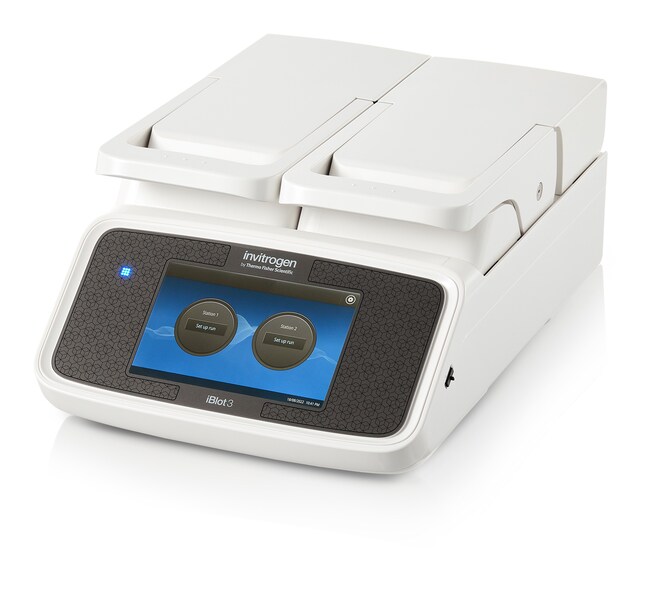
iBlot™ 3 蛋白免疫印迹转印装置
iBlot 3 蛋白免疫印迹转印装置是一款干转印装置,可在短短3分钟内高效可靠地完成 蛋白免疫印迹转印,且无需液体缓冲液。
| 货号 | 质保期 |
|---|---|
| IB31001 | 标准,含 1 年保修期 |
货号 IB31001
价格(CNY)
-
质保期:
标准,含 1 年保修期
iBlot 3 蛋白免疫印迹转印装置是一款干转印装置,可在短短3分钟内高效可靠地完成 蛋白免疫印迹转印,且无需液体缓冲液。iBlot 3 系统与硝酸纤维素和聚偏二氟乙烯 (PVDF) 膜兼容,与传统湿转印方法相比,可在较短的时间内提供同等或更好的性能。iBlot 3 蛋白免疫印迹转印装置是 iBlot 干式转印系统的组成部分,该系统由转印装置和包含所需缓冲液和转印膜(硝酸纤维素或 PVDF)的转印膜组耗材组成。
iBlot 3 蛋白免疫印迹转印装置的特点包括:
• 在短短3分钟内即可完成蛋白质转印
• 高检测灵敏度,可实现均匀一致的蛋白质转印
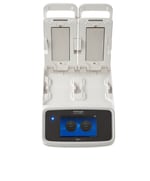
• 两个独立控制的转印站,能够转印多达两个中型或四个小型印迹
• 内置可调冷却功能,确保一致的转印温度
• 针对低、高和广泛的分子量范围优化的预编程转印方法
• 能够创建自定义程序
• 简单、用户友好的界面
iBlot 干式转印系统的工作原理
缓冲液离子库会掺入到转印膜组的凝胶基质中,而非缓冲液槽或浸润滤纸中。凝胶基质中的高密度离子有助于实现蛋白质快速转印。在印迹过程中,铜正极不会因水电解而产生氧气,从而减少了印迹变形(传统的蛋白转印技术,包括湿转、半湿转和半干转,均使用产生氧气的惰性电极)。
使用 iBlot 干式转印系统时,由于电极之间的距离缩短、场强高且电流高,因此可缩短转印时间。在手动制备印迹夹心层的过程中常会产生夹层气泡,而此装置通过有助于均匀、完全转印的独特去气泡设计可轻松避免产生气泡。使用 iBlot 3 系统时,无需制备缓冲液或在印迹后纯化回收。每块印迹的总制备和运行时间通常不到10分钟。
iBlot 3 蛋白免疫印迹转印装置的特点包括:
• 在短短3分钟内即可完成蛋白质转印
• 高检测灵敏度,可实现均匀一致的蛋白质转印
• 两个独立控制的转印站,能够转印多达两个中型或四个小型印迹
• 内置可调冷却功能,确保一致的转印温度
• 针对低、高和广泛的分子量范围优化的预编程转印方法
• 能够创建自定义程序
• 简单、用户友好的界面
iBlot 干式转印系统的工作原理
缓冲液离子库会掺入到转印膜组的凝胶基质中,而非缓冲液槽或浸润滤纸中。凝胶基质中的高密度离子有助于实现蛋白质快速转印。在印迹过程中,铜正极不会因水电解而产生氧气,从而减少了印迹变形(传统的蛋白转印技术,包括湿转、半湿转和半干转,均使用产生氧气的惰性电极)。
使用 iBlot 干式转印系统时,由于电极之间的距离缩短、场强高且电流高,因此可缩短转印时间。在手动制备印迹夹心层的过程中常会产生夹层气泡,而此装置通过有助于均匀、完全转印的独特去气泡设计可轻松避免产生气泡。使用 iBlot 3 系统时,无需制备缓冲液或在印迹后纯化回收。每块印迹的总制备和运行时间通常不到10分钟。
仅供科研使用。不可用于诊断程序。
规格
膜兼容性硝酸纤维素、PVDF
传送模式干式
数量1 device
通量2 块中型或4 块小型凝胶
质保期标准,含 1 年保修期
适用于(应用)蛋白质免疫印迹
适用于(设备)iBlot 3 转印膜组
凝胶兼容性小型或中型:Bis-Tris 凝胶、Tricine 凝胶、Tris-Acetate 凝胶和 Tris-Glycine 凝胶
产品线iBlot™ 3
运行时间约 3 至 10 分钟
类型转印装置
Unit SizeEach
内容与储存
• iBlot 3 凝胶转印装置
• Western Blot 滚轴
室温储存。
• Western Blot 滚轴
室温储存。