Search
 元素搜索
元素搜索 结构搜索
结构搜索

Thermo Scientific Chemicals
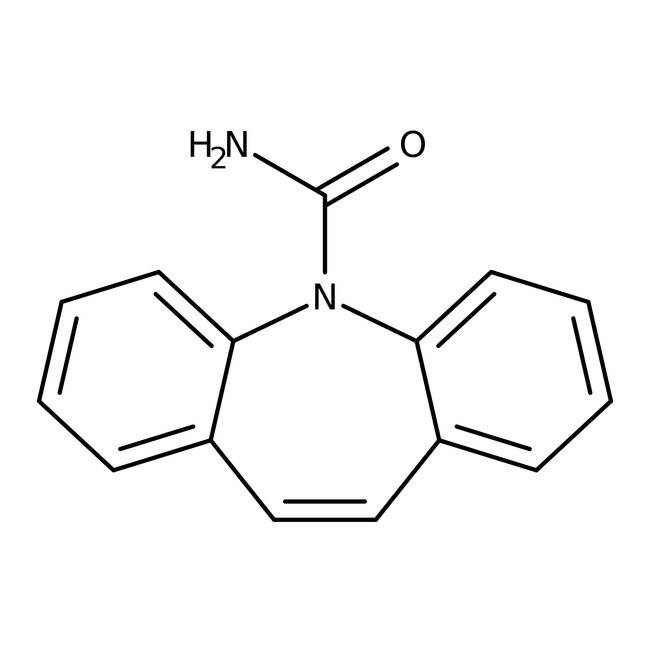
Carbamazepine, 98%
CAS: 298-46-4 | C15H12N2O | 236.27 g/mol
Have Questions?
更改视图




化学标识符
CAS298-46-4
IUPAC Name2-azatricyclo[9.4.0.0³,⁸]pentadeca-1(15),3,5,7,9,11,13-heptaene-2-carboxamide
Molecular FormulaC15H12N2O
InChI KeyFFGPTBGBLSHEPO-UHFFFAOYSA-N
SMILESNC(=O)N1C2=CC=CC=C2C=CC2=CC=CC=C12
查看更多内容
 规格表
规格表Carbamazepine is used as cytochrome P450 3A4 inducing anti-epileptic drug and ligand for the GABA-A receptor benzodiazepine modulatory site. Carbamazepine is typically used for the treatment of seizure disorders and neuropathic pain. It is associated with other medications and used to treat schizophrenia as well as a second line agent in bipolar disorders.
This Thermo Scientific Chemicals brand product was originally part of the Alfa Aesar product portfolio. Some documentation and label information may refer to the legacy brand. The original Alfa Aesar product / item code or SKU reference has not changed as a part of the brand transition to Thermo Scientific Chemicals.
Solubility
Soluble in ethanol, acetone, propylene glycol, chloroform, dimethyl sulfoxide, methanol, dimethyl fluoride,ethylene glycol and monoethyl ether. Slightly soluble in glacial acetic acid. Insoluble in water.
Notes
Store in cool place. Incompatible with strong oxidizing agents.
Soluble in ethanol, acetone, propylene glycol, chloroform, dimethyl sulfoxide, methanol, dimethyl fluoride,ethylene glycol and monoethyl ether. Slightly soluble in glacial acetic acid. Insoluble in water.
Notes
Store in cool place. Incompatible with strong oxidizing agents.
RUO – Research Use Only
General References:
- Tolbert, D.; Cloyd, J.; Biton, V.; Bekersky, I.; Walzer, M.; Wesche, D.; Drummond, R.; Lee, D. Bioequivalence of oral and intravenous carbamazepine formulations in adult patients with epilepsy. Epilepsia. 2015, 56 (6), 915-923.
- Shokry, E.; Villanelli, F.; Malvagia, S.; Rosati, A.; Forni, G.; Funghini, S.; Ombrone, D.; Bona, M. D.; Guerrini, R.; Marca, G. L. Therapeutic drug monitoring of carbamazepine and its metabolite in children from dried blood spots using liquid chromatography and tandem mass spectrometry. J. Pharm. Biomed. Anal. 2015, 109, 164-170.