Search


引用和文献 (17)
Invitrogen™
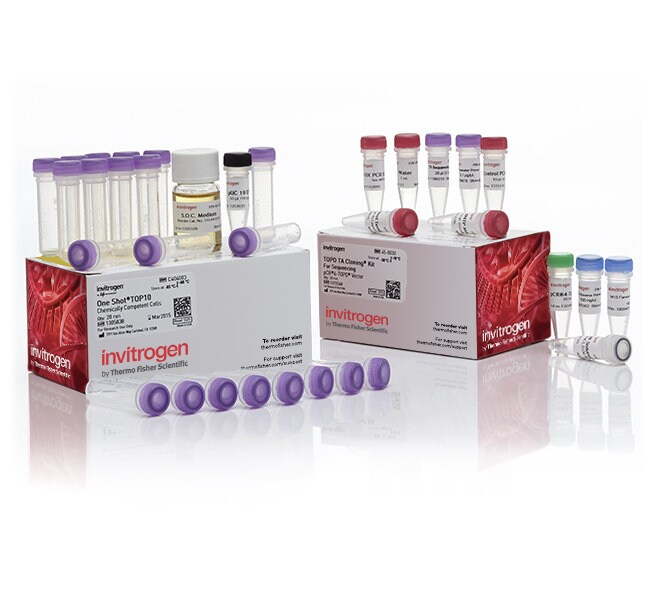
测序用 TOPO™ TA Cloning™ 试剂盒,含 One Shot™ TOP10 化学感受态大肠杆菌
测序用 TOPO™ TA Cloning™试剂盒可提供高效、5 分钟的一步克隆策略(“TOPO™ 克隆”),用于将 Taq了解更多信息
Have Questions?
更改视图

| 货号 | 数量 |
|---|---|
| K457501 | 25 次反应 |
| K4575J10 | 10 次反应 |
| K457540 | 50 次反应 |
货号 K457501
价格(CNY)
4,408.00
Online exclusive
Ends: 31-Dec-2026
8,814.00共减 4,406.00 (50%)
Each
数量:
25 次反应
价格(CNY)
4,408.00
Online exclusive
Ends: 31-Dec-2026
8,814.00共减 4,406.00 (50%)
Each
测序用 TOPO™ TA Cloning™试剂盒可提供高效、5 分钟的一步克隆策略(“TOPO™ 克隆”),用于将 Taq 聚合酶–扩增 PCR 产物直接插入至质粒载体以进行测序。各试剂盒均使用具有经过特殊设计的测序引物位点(可从各反应中获得更多的插入序列和更少的载体序列)的 pCR™4-TOPO™ TA 载体,并可根据您的需要和预算,提供多种感受态细胞或无感受态细胞。这些试剂盒具有克隆和选择包含您首选 PCR 片段的重组载体所需的所有物品。测序用 TOPO™ TA 克隆™试剂盒的特点:
• 获得更多序列—使用标准测序引物时,可获得更多插入序列和更少载体序列
• 快速且简便—从 PCR 至克隆仅需 3 步,手动操作时间减至 5 分钟
• 高效—通过正确插入可获得高达 95% 的克隆
• 成熟—在过去十年中性能可靠,引用次数超过 4,000 次
测序用 TOPO™ TA Cloning™试剂盒—概述
载体:pCR™4-TOPO™ TA 载体—克隆载体经过优化,可改善测序结果
克隆方法:TOPO™ TA Cloning ™—基于–拓扑异构酶 I 的含 3´A 突出端(Taq 扩增)的 PCR 产物与载体的 5 分钟连接
感受态细胞:多种选择—从包含常规、高效、噬菌体 T1-耐受性或快速生长型感受态细胞的试剂盒中选择或使用您自有的细胞
pCR™4-TOPO™ TA 载体—针对测序进行优化
我们从 pCR™4-TOPO™ TA 载体中删除了大量的多克隆位点,以将测序引物位点与插入位点之间的距离缩短至 33 bp。这意味着测序反应具有更少的载体序列和更多的插入序列。pCR™4-TOPO™ TA 载体具有适用于 4 种常见测序引物的位点:M13 正向、M13 反向、T7 和 T3。该试剂盒包括各等份试液。
pCR™4-TOPO™ TA 克隆选择和操作
pCR™4-TOPO™ TA 载体包含氨苄青霉素和卡那霉素抗性标志物以及用于阳性选择和蓝/白斑筛选的 LacZα-ccdB 基因融合。载体的尽可能减少的化多克隆位点仍包括用于克隆 PCR 产物简化切除的旁侧 EcoRI 位点和用于在测序前生成嵌套缺失的唯一 Sse8387I 位点。’T7 和 T3 启动子也用于体外转录。
简化的基于 TOPO™ 的克隆
使用 TOPO™ 克隆技术,无需使用含特异性序列的 PCR 引物、PCR 后程序、载体制备或其他耗时长的 DNA 操作步骤。只需将 PCR 反应物直接添加至提供的拓扑异构酶带电载体中,孵育 5 分钟,并使用提供的大肠杆菌感受态细胞进行转化。
高效克隆
携带所需插入片段的克隆高达 95%,您可以筛选更少的克隆体,节省时间和成本。该试剂盒中使用的 pCR™4-TOPO™ TA 载体含有 3´T 突出端,用于高效连接含 3´A 突出端的 Taq 扩增 PCR 产物。
克隆标准
在克隆方面,TOPO™ 克隆技术已作为一种可靠技术供成千上万的科学家使用达十余年。快速、简单易用且高效的 TOPO™ 克隆已在多种应用中应用于多种不同载体。
测序用 TOPO™ TA Cloning™ 试剂盒—试剂盒选项
根据您的需求,测序用 TOPO™ TA Cloning™ 试剂盒可与提供不同优势的多种感受态细胞一起购买:
• 一般克隆:TOP10(货号 K4575-J10、K4575-01、K4575-40)
• 高效克隆:TOP10 Electrocomp™ 细胞(货号K4580-01、K4580-40)
• 一般克隆,噬菌体 T1 抗性:DH5α-T1R(货号 K4595-01、K4595-40)
• 快速生长:Mach1™-T1R 化学感受态大肠杆菌(货号 K4530-20)
• 自行提供:灵活性高且可节省成本(货号 450030)
我们还提供另一个版本的试剂盒,包括 PureLink™ 快速质粒小提试剂盒(货号 K4575-02)用于分离清洁、已完成测序的重组质粒。
相关链接
• 定制载体构建和克隆服务
• 质粒 DNA 纯化试剂盒选择指南
• PCR 试剂、仪器和耗材
• 获得更多序列—使用标准测序引物时,可获得更多插入序列和更少载体序列
• 快速且简便—从 PCR 至克隆仅需 3 步,手动操作时间减至 5 分钟
• 高效—通过正确插入可获得高达 95% 的克隆
• 成熟—在过去十年中性能可靠,引用次数超过 4,000 次
测序用 TOPO™ TA Cloning™试剂盒—概述
载体:pCR™4-TOPO™ TA 载体—克隆载体经过优化,可改善测序结果
克隆方法:TOPO™ TA Cloning ™—基于–拓扑异构酶 I 的含 3´A 突出端(Taq 扩增)的 PCR 产物与载体的 5 分钟连接
感受态细胞:多种选择—从包含常规、高效、噬菌体 T1-耐受性或快速生长型感受态细胞的试剂盒中选择或使用您自有的细胞
pCR™4-TOPO™ TA 载体—针对测序进行优化
我们从 pCR™4-TOPO™ TA 载体中删除了大量的多克隆位点,以将测序引物位点与插入位点之间的距离缩短至 33 bp。这意味着测序反应具有更少的载体序列和更多的插入序列。pCR™4-TOPO™ TA 载体具有适用于 4 种常见测序引物的位点:M13 正向、M13 反向、T7 和 T3。该试剂盒包括各等份试液。
pCR™4-TOPO™ TA 克隆选择和操作
pCR™4-TOPO™ TA 载体包含氨苄青霉素和卡那霉素抗性标志物以及用于阳性选择和蓝/白斑筛选的 LacZα-ccdB 基因融合。载体的尽可能减少的化多克隆位点仍包括用于克隆 PCR 产物简化切除的旁侧 EcoRI 位点和用于在测序前生成嵌套缺失的唯一 Sse8387I 位点。’T7 和 T3 启动子也用于体外转录。
简化的基于 TOPO™ 的克隆
使用 TOPO™ 克隆技术,无需使用含特异性序列的 PCR 引物、PCR 后程序、载体制备或其他耗时长的 DNA 操作步骤。只需将 PCR 反应物直接添加至提供的拓扑异构酶带电载体中,孵育 5 分钟,并使用提供的大肠杆菌感受态细胞进行转化。
高效克隆
携带所需插入片段的克隆高达 95%,您可以筛选更少的克隆体,节省时间和成本。该试剂盒中使用的 pCR™4-TOPO™ TA 载体含有 3´T 突出端,用于高效连接含 3´A 突出端的 Taq 扩增 PCR 产物。
克隆标准
在克隆方面,TOPO™ 克隆技术已作为一种可靠技术供成千上万的科学家使用达十余年。快速、简单易用且高效的 TOPO™ 克隆已在多种应用中应用于多种不同载体。
测序用 TOPO™ TA Cloning™ 试剂盒—试剂盒选项
根据您的需求,测序用 TOPO™ TA Cloning™ 试剂盒可与提供不同优势的多种感受态细胞一起购买:
• 一般克隆:TOP10(货号 K4575-J10、K4575-01、K4575-40)
• 高效克隆:TOP10 Electrocomp™ 细胞(货号K4580-01、K4580-40)
• 一般克隆,噬菌体 T1 抗性:DH5α-T1R(货号 K4595-01、K4595-40)
• 快速生长:Mach1™-T1R 化学感受态大肠杆菌(货号 K4530-20)
• 自行提供:灵活性高且可节省成本(货号 450030)
我们还提供另一个版本的试剂盒,包括 PureLink™ 快速质粒小提试剂盒(货号 K4575-02)用于分离清洁、已完成测序的重组质粒。
相关链接
• 定制载体构建和克隆服务
• 质粒 DNA 纯化试剂盒选择指南
• PCR 试剂、仪器和耗材
仅供科研使用。不可用于诊断程序。
规格
细菌或酵母菌株TOP10
细胞类型化学感受态
克隆方法TOPO™-TA
适用于(应用)染色质生物学
产品线One Shot
产品类型克隆试剂盒
数量25 次反应
载体TOPO-TA 克隆载体
产品规格试剂盒
促进剂T7、T3
Unit SizeEach
内容与储存
盒 1:
• 拓扑异构酶 I 活化 pCR™4-TOPO™ 载体
• PCR 缓冲液
• 盐溶液
• dNTP
• 对照模板
• T3、T7、M13 正向和 M13 反向引物
• 对照 PCR 引物
• 无菌水
在 -5 至 -30°C 下储存。
所有试剂在适当储存时可保持稳定 6 个月。
盒 2:
• One Shot™ 化学感受态或 Electrocomp™大肠杆菌
• S.O.C. 培养基
• 超螺旋 pUC19 对照质粒
在 -68 至 -85°C 下储存。
• 拓扑异构酶 I 活化 pCR™4-TOPO™ 载体
• PCR 缓冲液
• 盐溶液
• dNTP
• 对照模板
• T3、T7、M13 正向和 M13 反向引物
• 对照 PCR 引物
• 无菌水
在 -5 至 -30°C 下储存。
所有试剂在适当储存时可保持稳定 6 个月。
盒 2:
• One Shot™ 化学感受态或 Electrocomp™大肠杆菌
• S.O.C. 培养基
• 超螺旋 pUC19 对照质粒
在 -68 至 -85°C 下储存。
常见问题解答 (FAQ)
我可将感受态细胞存储在液氮中吗?
我应该如何存储我的感受态E. Coli?
对TOPO TA克隆来说最佳的插入片段:载体比例是多少?是否有公式来计算用量?
插入片段:载体的最佳比例是多少?是否有公式可以进行计算?
Platinum Taq DNA高保真聚合酶混合物是否会在PCR产物中留下3′ A尾,从而可用于之后的TOPO TA 或普通TA 载体克隆?
引用和文献 (17)
引用和文献
Abstract
Identification of a Differentially Expressed Oligopeptide Binding Protein (OppA2) in Streptococcus uberis by Representational Difference Analysis of cDNA.
Journal:J Bacteriol
PubMed ID:12923094
Streptococcus uberis is an increasingly significant cause of intramammary infection in the dairy cow, presently responsible for approximately 33% of all cases of bovine mastitis in the United Kingdom. Following experimentally induced infection of the lactating mammary gland, S. uberis is found predominantly in the luminal areas of secretory alveoli
Characterization of a Novel Drosophila melanogaster Galectin. EXPRESSION IN DEVELOPING IMMUNE, NEURAL, AND MUSCLE TISSUES.
Journal:J Biol Chem
PubMed ID:11809773
'We have cloned and characterized the first galectin to be identified in Drosophila melanogaster. The amino acid sequence of Drosophila galectin showed striking sequence similarity to invertebrate and vertebrate galectins and contained amino acids that are crucial for binding beta-galactoside sugars. Confirming its identity as a galectin family member, the
Cardiac troponin T variants produced by aberrant splicing of multiple exons in animals with high instances of dilated cardiomyopathy.
Journal:J Biol Chem
PubMed ID:12377784
'Adult cardiac muscle normally expresses a single cardiac troponin T (cTnT). As a potential pathogenic mechanism for turkey dilated cardiomyopathy, the splice-out of a normally constitutive exon generates an additional low molecular weight cTnT with altered conformation and function. We further found that aberrant splicing of cTnT also occurs in
Molecular cloning and characterization of Foxp3 in Atlantic salmon (Salmo salar).
Journal:Fish Shellfish Immunol
PubMed ID:21276855
'Foxp3 is a T cell-specific transcription factor and plays a key role in the development of Treg cells and in the immune regulatory process during inflammation. Here we report cloning and characterization of the full-length cDNA of Atlantic salmon Foxp3, which possesses a Forkhead domain, a zinc finger domain and
Alternative splicing of the primary transcript generates heterogeneity within the products of the gene for Bombyx mori chitinase.
Journal:J Biol Chem
PubMed ID:12045191
'The gene of chitinase in the silkworm, Bombyx mori, generates four mRNA products by alternative splicing. Nucleotide sequences of the entire gene for chitinase and respective cDNAs demonstrate that the pre-mRNA undergoes alternative splicing at both the 5'' and 3'' regions. At the 5'' region, the pre-mRNA experienced differential splicing