Search

Invitrogen™
NuPAGE™ Tris-乙酸 SDS 缓冲液试剂盒(用于 Tris-乙酸凝胶)含有1(各含)。LA0041、NP0004、NP0005、NP0007
NuPAGE Tris-乙酸 SDS 电泳缓冲液试剂盒专为在 Tris-乙酸凝胶上分离中大型分子量蛋白质而配制。此试剂盒包含如下缓冲液:• NuPAGE Tris-乙酸 SDS 电泳缓冲液了解更多信息
| 货号 | 数量 |
|---|---|
| LA0050 | 1 kit |
货号 LA0050
价格(CNY)
1,184.00
Each
数量:
1 kit
价格(CNY)
1,184.00
Each
NuPAGE Tris-乙酸 SDS 电泳缓冲液试剂盒专为在 Tris-乙酸凝胶上分离中大型分子量蛋白质而配制。此试剂盒包含如下缓冲液:
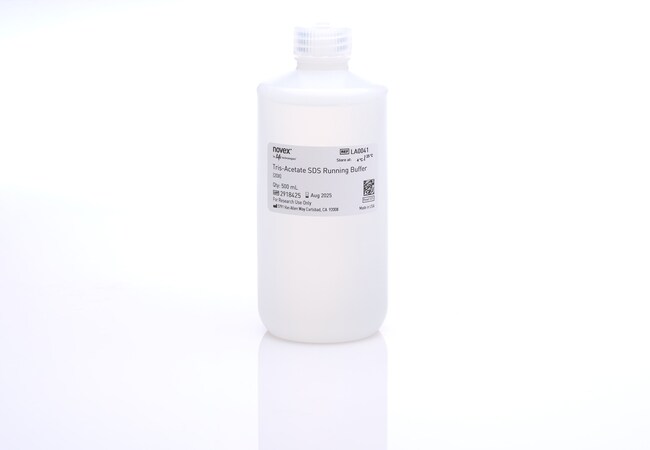
• NuPAGE Tris-乙酸 SDS 电泳缓冲液(20X,货号 LA0041)
• NuPAGE 样品还原剂(10X,250 μL,货号 NP0004)
• NuPAGE 抗氧化剂(货号 NP0005)
• NuPAGE LDS 样品缓冲液(4X,10 mL,货号 NP0007)
查看所有 SDS-PAGE 可用的缓冲液和试剂
• NuPAGE Tris-乙酸 SDS 电泳缓冲液(20X,货号 LA0041)
• NuPAGE 样品还原剂(10X,250 μL,货号 NP0004)
• NuPAGE 抗氧化剂(货号 NP0005)
• NuPAGE LDS 样品缓冲液(4X,10 mL,货号 NP0007)
查看所有 SDS-PAGE 可用的缓冲液和试剂
仅供科研使用。不可用于诊断程序。
规格
凝胶类型SDS PAGE 凝胶
数量1 kit
凝胶兼容性NuPAGE™ Tris-乙酸凝胶
产品线NuPAGE
产品类型缓冲液试剂盒
Unit SizeEach
内容与储存
NuPAGE™ Tris-乙酸 SDS 缓冲液试剂盒(用于 Tris-乙酸凝胶)含有:
•20X NuPAGE™ Tris-醋酸盐 SDS 运行缓冲液 (500 mL):在 4°C 至 25°C 下储存
• 10X NuPAGE™ 样品还原剂 (250 µL):在 2°C 至 8°C 下储存
• NuPAGE™ 抗氧化剂 (15 mL):在 4°C 下储存
• 4X NuPAGE™ LDS 样品缓冲液 (10 mL):储存于 4°C 至 25°C
•20X NuPAGE™ Tris-醋酸盐 SDS 运行缓冲液 (500 mL):在 4°C 至 25°C 下储存
• 10X NuPAGE™ 样品还原剂 (250 µL):在 2°C 至 8°C 下储存
• NuPAGE™ 抗氧化剂 (15 mL):在 4°C 下储存
• 4X NuPAGE™ LDS 样品缓冲液 (10 mL):储存于 4°C 至 25°C