Search

Applied Biosystems™
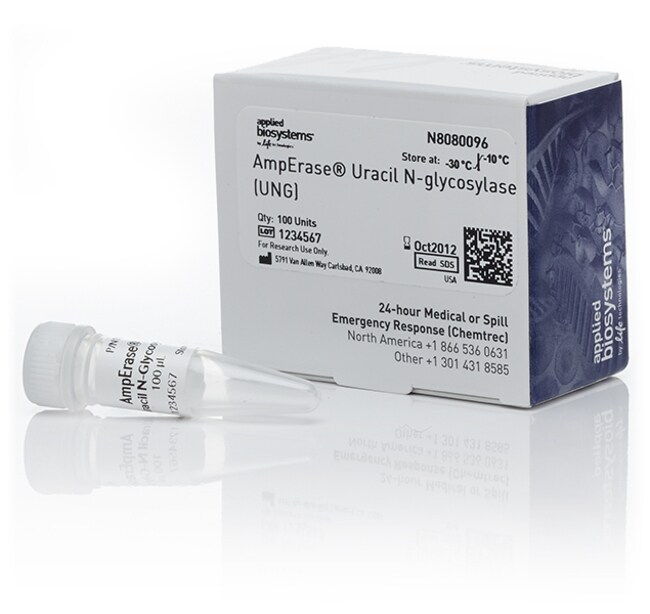
AmpErase™ 尿嘧啶 N-糖基化酶 (UNG)
AmpErase™ 尿嘧啶 N-糖基化酶 (UNG) 属于 GeneAmp™ PCR Carry-over Prevention 试剂盒组分,是一种了解更多信息
| 货号 | 数量 |
|---|---|
| N8080096 | 100 units |
货号 N8080096
价格(CNY)
1,577.00
飞享价
Ends: 31-Dec-2026
2,102.00共减 525.00 (25%)
Each
数量:
100 units
价格(CNY)
1,577.00
飞享价
Ends: 31-Dec-2026
2,102.00共减 525.00 (25%)
Each
AmpErase™ 尿嘧啶 N-糖基化酶 (UNG) 属于 GeneAmp™ PCR Carry-over Prevention 试剂盒组分,是一种 26 kDa 的超纯重组酶,由大肠杆菌中的尿嘧啶 N-糖基化酶基因编码,通过插入大肠杆菌宿主直接表达野生型酶。该酶可去除掺入单链或双链 DNA 中的任何尿嘧啶。
GeneAmp™ PCR Carry-over Prevention 试剂盒
GeneAmp™ PCR Carry-over Prevention 试剂盒(另售)中所提供的试剂可实现一种简单而强大的方法,确保后续 PCR 扩增中不会再次扩增 PCR 产物,从而防止出现假阳性结果。该试剂盒的特性包括:
•酶法防止 PCR 残留物污染,从而避免假阳性结果
• 可降解上游 PCR 扩增的 PCR 产物,又不会降解天然核酸模板,从而提高了扩增质量
• 不会干扰任何 PCR 或实时荧光定量 PCR 应用
• 经优化可用于 GeneAmp™ PCR 核心试剂和 GeneAmp™ 仪器系统
彻底清除 PCR 残留污染
该试剂盒使用类似于细胞的限制性修饰和切除修复系统的酶促反应,特异性降解上游 PCR 扩增中掺入 dUTP 的 PCR 产物,同时又不会降解天然核酸模板。使 PCR 产物易于降解的方法需要用 dUTP 代替 PCR 混合物中的 dTTP,并在 PCR 扩增前使用 AmpErase™ 尿嘧啶 N-糖基化酶 (UNG) 预处理所有后续 PCR 混合物。PCR 扩增产物含有尿嘧啶,可与天然含有胸苷的 DNA 模板轻松区分开来。通过 UNG 去除尿嘧啶残基,并加热降解所得的脱碱基多核苷酸,可彻底清除上游 PCR 扩增的产物。尽管 UNG 对含有 dU 的单链和双链具有活性,但 RNA 和 dUTP 自身的核糖尿嘧啶残基并非 UNG 的底物。AmpliTaq™ DNA 聚合酶、AmpliTaq Gold™ DNA 聚合酶和 PCR 混合物的其他组分在 UNG 处理过程中可保持完整活性,从而实现无 PCR 产物残留的 PCR 扩增。在印迹、克隆、测序和大多数其他 PCR 下游分析中,含 dU 的 PCR 产物的处理与含 dT 的 DNA 类似。
GeneAmp™ PCR Carry-over Prevention 试剂盒
GeneAmp™ PCR Carry-over Prevention 试剂盒(另售)中所提供的试剂可实现一种简单而强大的方法,确保后续 PCR 扩增中不会再次扩增 PCR 产物,从而防止出现假阳性结果。该试剂盒的特性包括:
•酶法防止 PCR 残留物污染,从而避免假阳性结果
• 可降解上游 PCR 扩增的 PCR 产物,又不会降解天然核酸模板,从而提高了扩增质量
• 不会干扰任何 PCR 或实时荧光定量 PCR 应用
• 经优化可用于 GeneAmp™ PCR 核心试剂和 GeneAmp™ 仪器系统
彻底清除 PCR 残留污染
该试剂盒使用类似于细胞的限制性修饰和切除修复系统的酶促反应,特异性降解上游 PCR 扩增中掺入 dUTP 的 PCR 产物,同时又不会降解天然核酸模板。使 PCR 产物易于降解的方法需要用 dUTP 代替 PCR 混合物中的 dTTP,并在 PCR 扩增前使用 AmpErase™ 尿嘧啶 N-糖基化酶 (UNG) 预处理所有后续 PCR 混合物。PCR 扩增产物含有尿嘧啶,可与天然含有胸苷的 DNA 模板轻松区分开来。通过 UNG 去除尿嘧啶残基,并加热降解所得的脱碱基多核苷酸,可彻底清除上游 PCR 扩增的产物。尽管 UNG 对含有 dU 的单链和双链具有活性,但 RNA 和 dUTP 自身的核糖尿嘧啶残基并非 UNG 的底物。AmpliTaq™ DNA 聚合酶、AmpliTaq Gold™ DNA 聚合酶和 PCR 混合物的其他组分在 UNG 处理过程中可保持完整活性,从而实现无 PCR 产物残留的 PCR 扩增。在印迹、克隆、测序和大多数其他 PCR 下游分析中,含 dU 的 PCR 产物的处理与含 dT 的 DNA 类似。
仅供科研使用。不可用于诊断程序。
规格
聚合酶DNA 聚合酶
产品线AmpErase
产品类型用于 PCR 反应的尿嘧啶 N-糖基化酶
数量100 units
运输条件干冰
足够用于100 PCR 扩增
适用于(应用)常规 PCR
PCR 方法qPCR, 常规 PCR
Unit SizeEach
内容与储存
含 AmpErase™ 尿嘧啶 N-糖基化酶 (UNG)(100 单位)。足以进行 100 次 PCR 扩增,每次 100 µL。在 -20°C 下储存。