Search


引用和文献 (7)
Invitrogen™
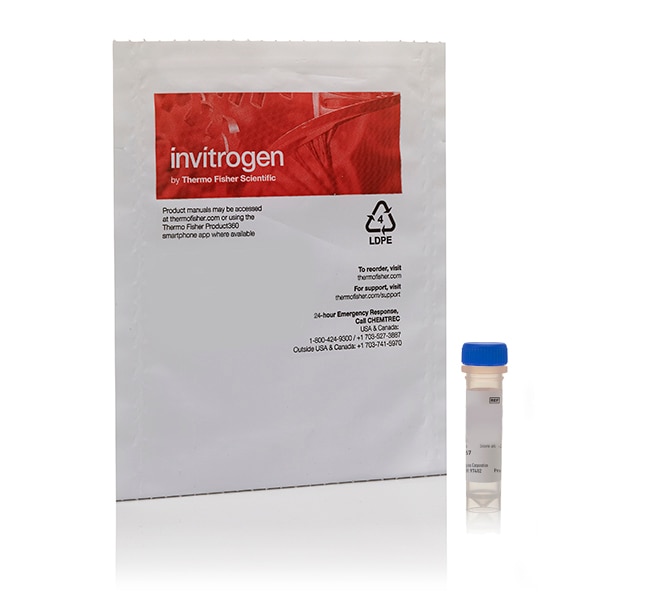
Qdot™ 565 ITK™ 羧基量子点
Qdot™ 565 ITK™ carboxyl quantum dots are the ideal starting material for preparing custom conjugates that require high loading of biomolecules.
| 货号 | 数量 |
|---|---|
| Q21331MP | 250 µL |
货号 Q21331MP
价格(CNY)
8,999.00
Each
数量:
250 µL
价格(CNY)
8,999.00
Each
Qdot™ 565 ITK™ carboxyl quantum dots are the ideal starting material for preparing custom conjugates that require high loading of biomolecules. These materials are carboxylate functionalized and can be coupled to amine groups of proteins and modified oligonucleotides using EDC (Cat. No. E2247)-mediated condensation. The coatings of these probes provides more binding sites than our Qdot™ ITK™ amino quantum dots, but lacks PEG linkers that help to prevent non-specific interactions. These materials can be conjugated to X-PEG-amine bi-functional linkers for custom reactivity and higher specificity. Our Qdot™ ITK™ carboxyl quantum dots are provided as 8 μM solutions and are available in all 9 Qdot™ probe colors.
Qdot™ 565 ITK™ 羧基量子点是制备需要高载量生物分子的定制偶联物的理想起始材料。这些材料添加羧酸盐官能团,可通过 EDC 介导的冷凝与蛋白的胺基团和经修饰寡核苷酸偶联。这些探针的涂层提供的结合位点多于 Qdot™ ITK™ 氨基量子点,但缺乏有助于防止非特异性相互作用的 PEG 连接子。这些材料可与 X-PEG-胺双官能连接子偶联,以获得定制反应性和较高特异性。Qdot™ ITK™ 羧基量子点以8 µM 溶液形式提供,提供所有9种颜色的 Qdot™ 探针。
Qdot™ ITK™ 羧基量子点的重要特点:
•Qdot™ 565 ITK™ 羧基量子点的最大发射波长 ∼565 nm
• 具有极高的光稳定性且荧光明亮
• 可使用单线激发源高效激发
• 发射谱较窄,斯托克斯位移较大
• 多种颜色可供选择
• 适用于标记和示踪应用
Qdot™ 纳米晶体的特性
Qdot™ 探头适用于需要明亮荧光信号和/或实时示踪的成像和标记应用。与其他荧光试剂不同的是,Qdot™ 探针的所有 9 种可用颜色均可以用单一(紫外或蓝绿色)光源同时激发。这一特性使这些试剂非常适合经济且用户友好的多重应用。Qdot™ 标记基于半导体纳米技术,大小与中等分子量的蛋白相似。
关于 Innovator 的工具试剂盒 Qdot™ ITK™ 试剂
这些 Qdot™ ITK™ 探针适用于希望针对其应用制备特异性(无现货)偶联物并且需要可定制偶联功能的研究人员。
可提供其他形式的 Qdot™ 纳米晶体
除羧基衍生形式外,我们还提供具有氨基和脂肪族碳氢化合物修饰的 Qdot™ ITK™ 量子点。我们还开发了多种 Qdot™ 纳米晶体偶联物和标记试剂盒。研究 Qdot™ 纳米晶体的特性或阅读 Molecular Probes™手册第 6.6 节—Qdot™ 纳米晶体获取更多信息。
仅供科研使用。不得用于任何动物或人类的治疗或诊断。
Qdot™ ITK™ 羧基量子点的重要特点:
•Qdot™ 565 ITK™ 羧基量子点的最大发射波长 ∼565 nm
• 具有极高的光稳定性且荧光明亮
• 可使用单线激发源高效激发
• 发射谱较窄,斯托克斯位移较大
• 多种颜色可供选择
• 适用于标记和示踪应用
Qdot™ 纳米晶体的特性
Qdot™ 探头适用于需要明亮荧光信号和/或实时示踪的成像和标记应用。与其他荧光试剂不同的是,Qdot™ 探针的所有 9 种可用颜色均可以用单一(紫外或蓝绿色)光源同时激发。这一特性使这些试剂非常适合经济且用户友好的多重应用。Qdot™ 标记基于半导体纳米技术,大小与中等分子量的蛋白相似。
关于 Innovator 的工具试剂盒 Qdot™ ITK™ 试剂
这些 Qdot™ ITK™ 探针适用于希望针对其应用制备特异性(无现货)偶联物并且需要可定制偶联功能的研究人员。
可提供其他形式的 Qdot™ 纳米晶体
除羧基衍生形式外,我们还提供具有氨基和脂肪族碳氢化合物修饰的 Qdot™ ITK™ 量子点。我们还开发了多种 Qdot™ 纳米晶体偶联物和标记试剂盒。研究 Qdot™ 纳米晶体的特性或阅读 Molecular Probes™手册第 6.6 节—Qdot™ 纳米晶体获取更多信息。
仅供科研使用。不得用于任何动物或人类的治疗或诊断。
仅供科研使用。不可用于诊断程序。
规格
化学反应性胺
最大浓度8 μM
发射565 nm
标签或染料Qdot™ 565
产品类型量子点
数量250 µL
反应一部分羧酸
运输条件室温
标签类型Qdot 纳米晶体
产品线 Qdot, ITK
Unit SizeEach
内容与储存
在冷藏冰箱 (2–8°C) 中储存。
常见问题解答 (FAQ)
有什么好办法可以从ITK Qdot纳米晶中去除白色沉淀?
我在ITK Qdot纳米晶中发现白色沉淀,是否应该引起注意?
为什么我的Qdot纳米晶似乎在闪烁?
Qdot纳米晶在封固样品前荧光很亮,但现在我只能观测到少量的荧光,为什么会发生荧光衰减?
为什么不能冷冻Qdot纳米晶溶液?
引用和文献 (7)
引用和文献
Abstract
A quantum dot-aptamer beacon using a DNA intercalating dye as the FRET reporter: application to label-free thrombin detection.
Journal:Biosens Bioelectron
PubMed ID:21306887
'A new quantum dot (QD)-aptamer (apt) beacon that acts by folding-induced dissociation of a DNA intercalating dye, BOBO-3(B), is demonstrated with label-free thrombin detection. The beacon, denoted as QD-apt:B, is constructed by (1) coupling of a single-stranded thrombin aptamer to Qdot 565 via EDC/Sulfo-NHS chemistry and (2) staining the duplex
In vivo real-time, multicolor, quantum dot lymphatic imaging.
Journal:J Invest Dermatol
PubMed ID:19536144
'The lymphatic network is complex and difficult to visualize in real-time in vivo. Moreover, the direction of flow within lymphatic networks is often unpredictable especially in areas with well-developed '
Simultaneous multicolor imaging of five different lymphatic basins using quantum dots.
Journal:Nano Lett
PubMed ID:17530812
Quantum dots can be used to perform multicolor images with high fluorescent intensity and are of a nanosize suitable for lymphatic imaging via direct interstitial injection. Here simultaneous multicolor in vivo wavelength-resolved spectral fluorescence lymphangiography is shown using five quantum dots with similar physical sizes but different emission spectra. This
Variables influencing interactions of untargeted quantum dot nanoparticles with skin cells and identification of biochemical modulators.
Journal:Nano Lett
PubMed ID:17408303
Skin cells (NHEK) take up untargeted quantum dots (QD) with surface polyethylene glycol (PEG), amines, and carboxylic acids, but the mechanisms are unknown. Time courses of QD-NHEK interactions were determined and effects of QD surface coating, temperature, culture medium supplements and inhibitors of the cell cycle and endocytosis identified. The
In vivo skin penetration of quantum dot nanoparticles in the murine model: the effect of UVR.
Journal:Nano Lett
PubMed ID:18687009
Ultraviolet radiation (UVR) has widespread effects on the biology and integrity of the skin barrier. Research on the mechanisms that drive these changes, as well as their effect on skin barrier function, has been ongoing since the 1980s. However, no studies have examined the impact of UVR on nanoparticle skin