Search


引用和文献 (400)
Invitrogen™
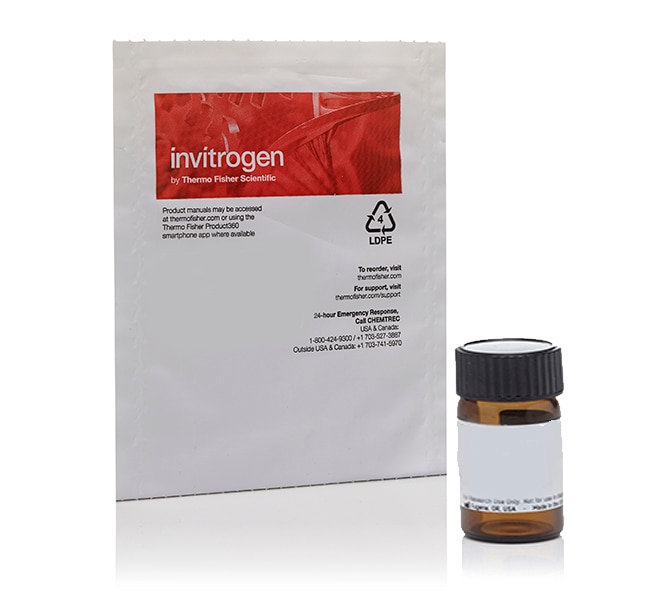
JC-1 染料(线粒体膜电位探针)
JC-1 是一种新型阳离子羰花青染料,可在线粒体中积累。这种染料在低浓度下以单体形式存在并发出绿色荧光,类似于荧光素。在较高浓度下,这种染料形成 J-聚集体,其具有宽激发光谱,发射波长上限为 ∼590 nm。这些特性使得 JC-1 成为线粒体膜电位的灵敏标记物了解更多信息
| 货号 | 数量 |
|---|---|
| T3168 | 5 mg |
货号 T3168
价格(CNY)
6,562.00
飞享价
Ends: 31-Dec-2026
9,113.00共减 2,551.00 (28%)
5 mg
数量:
5 mg
价格(CNY)
6,562.00
飞享价
Ends: 31-Dec-2026
9,113.00共减 2,551.00 (28%)
5 mg
JC-1 是一种新型阳离子羰花青染料,可在线粒体中积累。这种染料在低浓度下以单体形式存在并发出绿色荧光,类似于荧光素。在较高浓度下,这种染料形成 J-聚集体,其具有宽激发光谱,发射波长上限为 ∼590 nm。这些特性使得 JC-1 成为线粒体膜电位的灵敏标记物。另一种具有相似特性的染料是 JC-9 (D-22421)。
仅供科研使用。不可用于诊断程序。
规格
检测方法荧光
数量5 mg
运输条件室温
子细胞定位线粒体
颜色绿色
适用于(设备)荧光显微镜, 流式细胞仪
产品类型染料
Unit Size5 mg
内容与储存
2–6°C避光、防潮储存。
常见问题解答 (FAQ)
当我使用膜电位指示剂时,看到神经元周围出现了较高的背景,如何降低背景干扰?
快反应膜电位探针和慢反应膜电位探针有什么区别?
你们提供哪些类型的膜电位指示剂?我该如何根据自己的试验选择?
I am seeing high background outside of my neuronal cells when using membrane potential indicators. What can I do to reduce background?
What is the difference between fast and slow-response membrane potential probes?
引用和文献 (400)
引用和文献
Abstract
Apoptosis induced by Rac GTPase correlates with induction of FasL and ceramides production.
Journal:Molecular biology of the cell
PubMed ID:11102528
Rho proteins, members of the Ras superfamily of GTPases, are critical elements in signal transduction pathways governing cell proliferation and cell death. Different members of the family of human Rho GTPases, including RhoA, RhoC, and Rac1, participate in the regulation of apoptosis in response to cytokines and serum deprivation in
Large-scale chemical dissection of mitochondrial function.
Journal:Nature biotechnology
PubMed ID:18297058
Mitochondrial oxidative phosphorylation (OXPHOS) is central to physiology and disease pathogenesis. To systematically investigate its activity and regulation, we performed a wide range of assays of OXPHOS physiology and nuclear and mitochondrial gene expression across 2490 chemical perturbations in muscle cells. Through mining of the resulting compendium, we discovered that:
Journal:
PubMed ID:10891486
Mitochondria--potential role in cell life and death.
Journal:Cardiovascular research
PubMed ID:10727650
The mitochondrial death/life regulator in apoptosis and necrosis.
Journal:Annual review of physiology
PubMed ID:9558479
Both physiological cell death (apoptosis) and, in some cases, accidental cell death (necrosis) involve a two-step process. At a first level, numerous physiological and some pathological stimuli trigger an increase in mitochondrial membrane permeability. The mitochondria release apoptogenic factors through the outer membrane and dissipate the electrochemical gradient of the