Search
Invitrogen
Golgin-97 Monoclonal Antibody (CDF4)
{{$productOrderCtrl.translations['antibody.pdp.commerceCard.promotion.promotions']}}
{{$productOrderCtrl.translations['antibody.pdp.commerceCard.promotion.promocode']}}: {{promo.promoCode}} {{promo.promoTitle}} {{promo.promoDescription}}. {{$productOrderCtrl.translations['antibody.pdp.commerceCard.promotion.learnmore']}}
{{$ctrl.translations['antibody.pdp.skuNotes.additionalInformation']}}:
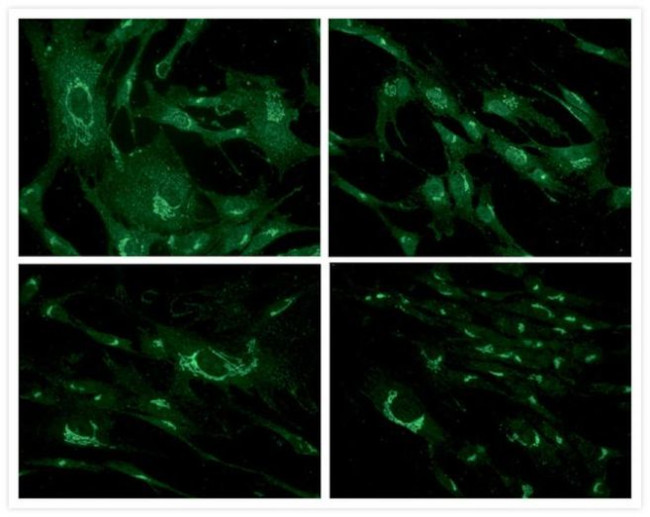
图: 1 / 78
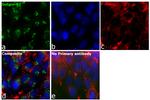
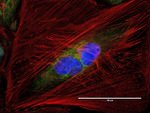
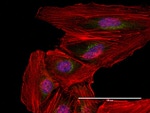
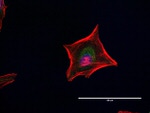
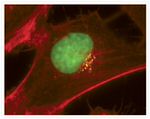
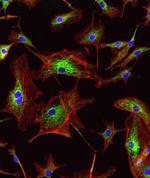
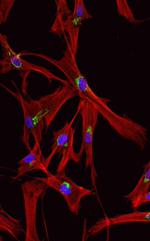
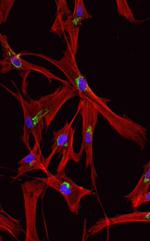
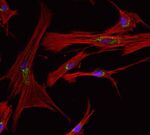
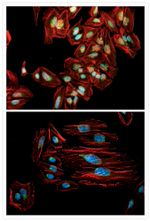
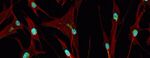
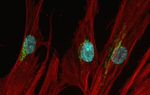
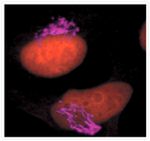
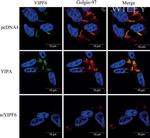
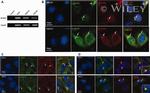
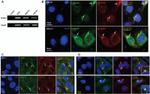
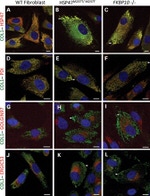
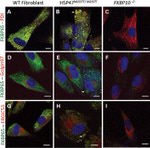
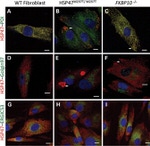
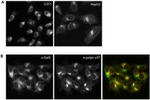
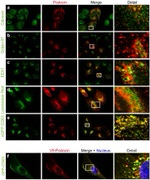
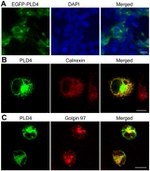
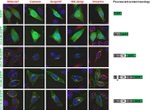
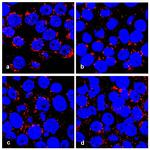
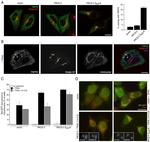
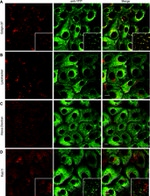
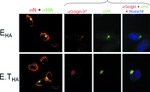
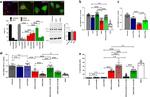
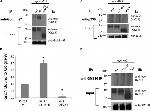
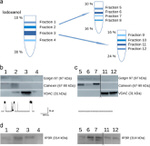
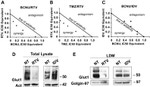
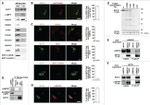
Golgin-97 Antibody (A-21270) in ICC/IF
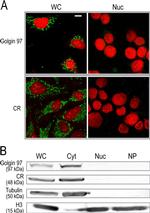
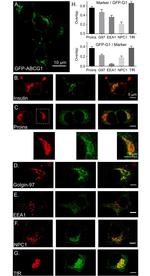
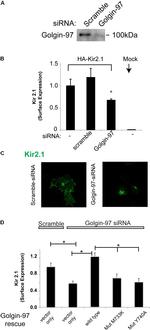
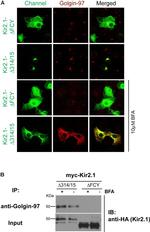
Increased label specificity and resolution afforded by Image-iT® FX signal enhancer. Fixed and permeabilized MRC-5 human lung fibroblast cells were labeled with mouse anti-human Golgin-97 primary antibody (Product # A-21270), then visualized with either FITC-conjugated goat anti-mouse IgG (F2761, top row) or Alexa Fluor® 488 Goat Anti-Mouse IgG (Product # A-11001, bottom row). Cells on the right were treate... View More




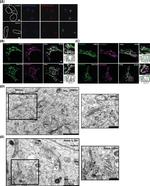
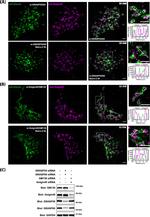
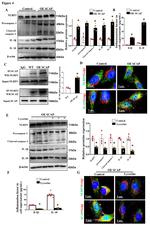
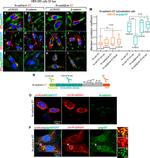
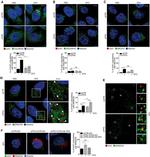
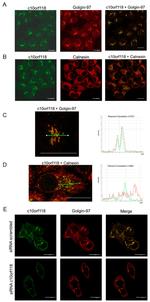
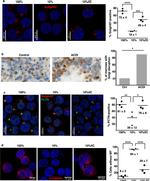
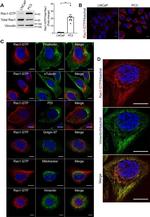
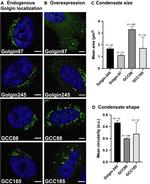
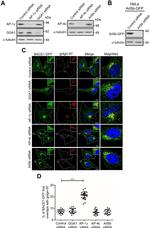
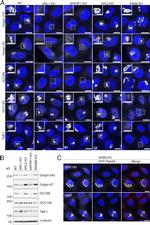
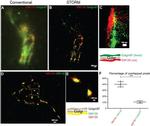

.jpg?time=20240507)
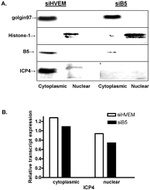
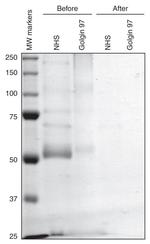
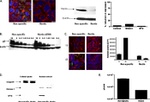
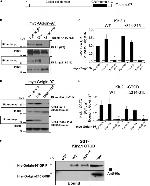

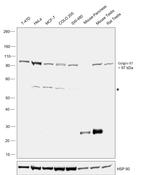
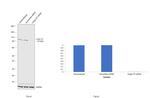
Please note: We are reviewing Western blot images included in the antibody testing data in our catalog, including those provided by third parties. Unless expressly labeled or annotated as “raw-unedited”, Western blot images included in the antibody testing data in our catalog may have been edited, optimized or otherwise adjusted for presentation.


.jpg?time=20240507?time=20240507 "Golgin-97 Antibody (A-21270) in ICC/IF")


产品信息
A-21270
应用
建议稀释比
已发表文章
产品规格
已发表种属
Chicken,
Dog,
Human,
Monkey,
Mouse,
Non-human primate
宿主/亚型
Mouse
/ IgG1
分类
Monoclonal
类型
Antibody
克隆号
CDF4
抗原
Human golgin-97.
偶联物
Unconjugated
Unconjugated
Unconjugated
形式
Lyophilized
规格
100 µg
保存条件
-20°C
运输条件
Ambient
RRID
产品详细信息
Anti-human golgin-97 antibodies were originally isolated from the serum of a patient with the autoimmune disease known as Sjögren's syndrome. These antibodies recognize a 97 kDa protein called golgin-97, a member of the granin family of proteins and a peripheral membrane protein localized on the cytoplasmic face of the Golgi apparatus. Because the antibody recognizes a protein unique to the Golgi apparatus of most vertebrate species, it is useful for immunodetection and identification of the Golgi apparatus in cells.
To prepare a stock solution, reconstitute the antibody in 0.5-1 mL of phosphate-buffered saline, pH 7.4, containing 1% BSA. Store the solution for up to two weeks at 4°C with the addition of 2 mM sodium azide. For longer storage, divide the solution into single-use aliquots and freeze at -20°C.
靶标信息
The Golgi apparatus, which participates in glycosylation and transport of proteins and lipids in the secretory pathway, consists of a series of stacked cisternae (flattened membrane sacs). Interactions between the Golgi and microtubules are thought to be important for the reorganization of the Golgi after it fragments during mitosis. The Golgins are a family of proteins, of which the protein encoded by this gene is a member, that are localized to the Golgi. This encoded protein is associated with Sjogren's syndrome.
仅用于科研。不用于诊断过程。未经明确授权不得转售。
Disclaimer

Clicking the images or links will redirect you to a website hosted by BenchSci that provides third-party scientific content. Neither the content nor the BenchSci technology and processes for selection have been evaluated by us; we are providing them as-is and without warranty of any kind, including for use or application of the Thermo Fisher Scientific products presented.

