Search
Invitrogen
ATP Synthase beta Monoclonal Antibody (4.3E8.D10), Alexa Fluor™ 647
{{$productOrderCtrl.translations['antibody.pdp.commerceCard.promotion.promotions']}}
{{$productOrderCtrl.translations['antibody.pdp.commerceCard.promotion.viewpromo']}}
{{$productOrderCtrl.translations['antibody.pdp.commerceCard.promotion.promocode']}}: {{promo.promoCode}} {{promo.promoTitle}} {{promo.promoDescription}}. {{$productOrderCtrl.translations['antibody.pdp.commerceCard.promotion.learnmore']}}
Additional Information:
{{banner.description}}
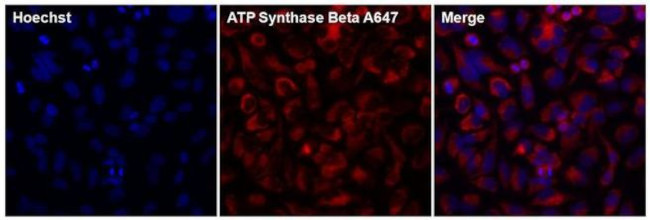
图: 1 / 1
ATP Synthase beta Antibody (MA1-930-A647) in ICC/IF
Immunofluorescent analysis of ATP Synthase Beta (red) in HeLa cells. The cells were permeabilized with 0.1% Triton X-100 in TBS for 15 minutes, and blocked with 3% Blocker BSA in PBS (Product # 37525) for 30 minutes at room temperature. Cells were stained with a ATP Synthase beta mouse monoclonal antibody, AlexaFluor 647 conjugate (Product # MA1-930-A647), at a concentration of 5 µg/mL in blocking buffer fo... View More

产品信息
MA1-930-A647
产品规格
宿主/亚型
Mouse
/ IgG1
分类
Monoclonal
类型
Antibody
克隆号
4.3E8.D10
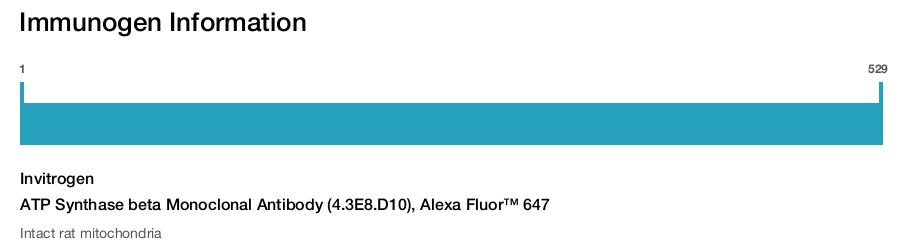
抗原
Intact rat mitochondria
偶联物
Alexa Fluor™ 647
Alexa Fluor™ 647
Alexa Fluor™ 647
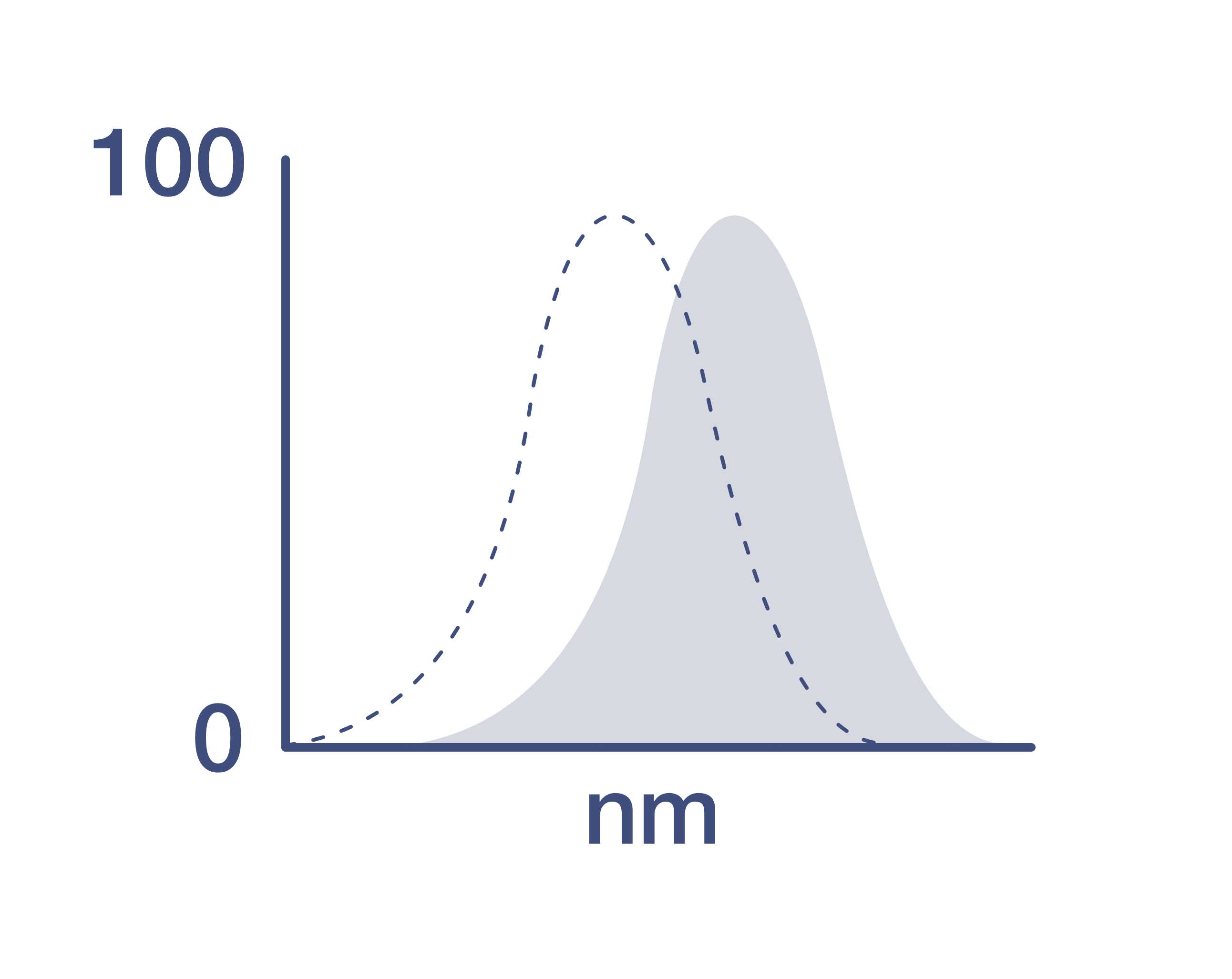
激发/发射光谱
650/671 nm
查看光谱
形式
Liquid
浓度
1 mg/mL
规格
50 µg
保存条件
4°C, store in dark, DO NOT FREEZE!
运输条件
Wet ice
RRID
产品详细信息
MA1930A647 detects the beta subunit of ATP synthase from mouse rat and human samples. This antibody is useful as a mitochondrial marker.
靶标信息
ATP synthase is extremely conserved through evolution and can be found in plants, fungi, bacteria, and animals. The ATP synthase enzyme is a transmembrane protein responsible for driving the reversible reaction from ADP+ phosphate to ATP. This reaction is accomplished by a flux of protons across the membrane as a result of electron transfer. The ATP synthase protein has two main sections; the F1 ATP-ase (soluble) and the F0 ATP-ase (membrane embedded). The F1 section consists of the alpha, beta, gamma, delta, and epsilon subunits. While the F0 consists of a, b, and c subunits.
仅用于科研。不用于诊断过程。未经明确授权不得转售。
篇参考文献 (0)
您是否在文献中引用过该产品?请点击下方按钮邮件告知我们。
Disclaimer

Clicking the images or links will redirect you to a website hosted by BenchSci that provides third-party scientific content. Neither the content nor the BenchSci technology and processes for selection have been evaluated by us; we are providing them as-is and without warranty of any kind, including for use or application of the Thermo Fisher Scientific products presented.

