Search
Common Anion Analysis by U.S. EPA 300.0 & 300.1
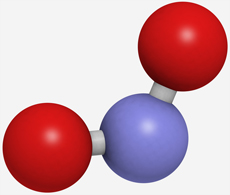
Inorganic anions, common anions, and inorganic disinfection byproducts
Inorganic anions refer to the combination of:
- Common anions: chloride, fluoride, bromide, nitrate, nitrite, sulfate, and phosphate
- Inorganic disinfection byproducts (DBPs): chlorate, chlorite, and bromate
- Other anions, such as perchlorate and chromate.
Chloride and sulfate are also matrix anions due to their high concentration in certain drinking water samples. Chlorate and chlorite are produced after chlorine dioxide disinfection, while bromate is produced after ozonation is used as a disinfectant.
The EPA methods 300.0 and 300.1 measure common anions (Part A) and inorganic disinfection byproducts (Part B).
Regulations of inorganic anions in drinking water

Among the common anions, fluoride, nitrate and nitrite are enforceable regulated contaminants that are on the National Primary Drinking Water Regulations (NPDWR) standard list while fluoride, chloride, and sulfate, which affect the water taste and odor, are on the secondary regulation list. The Maximum Contaminant Level (MCL) for fluoride, nitrate, and nitrite are 4 ppm, 10 ppm, and 1 ppm, respectively.
For inorganic disinfection byproducts (DBPs), chlorite and bromate are currently regulated with an MCL of 1 ppm and 10 ppb, respectively. Although chlorate was required to be monitored for public water systems during the period of Unregulated Contaminant Monitoring Rule 3 (UCMR 3), no regulatory determination on chlorate has been made.
EPA Method 300.1: Inorganic anion analysis using ion chromatography

EPA Method 300.0 was developed in the mid-1980s for compliance monitoring of common anions in drinking water. In 1992, the method was also approved for wastewater common anion monitoring under the National Pollution Discharge Elimination System (NPDES) permits program, although wastewater samples need pretreatment and filtration before loading to the ion chromatograph. EPA Method 300.0 was modified in 1993 to add the inorganic disinfection byproducts as part B. But after a lower level of bromate (10 ppb) was promulgated in the disinfectant and disinfection byproduct stage 1 rule, the EPA Method 300.0 was modified to EPA Method 300.1 to meet the new quantitation requirement.
EPA Method 300.1 uses different injection volumes for Parts A and B. The larger injection volume for Part B is necessary to achieve the method detection limit for analysis of inorganic DBPs. Different Thermo Scientific Dionex IonPac columns can also be used for EPA Method 300.1 to achieve the goal to determine traces of bromate in the presence of even 10,000-fold excess of chloride in the matrix.
Today, EPA Method 300.1 and other equivalent methods in the US are still the most widely used ion chromatography applications for environmental analysis.
EPA Method 300 Parts A & B
*The Dionex ICS-5000+ HPIC system is equivalent to the Dionex ICS-6000 HPIC system.
For more information

Environmental Resource Library
Access a targeted collection of scientific application notes, case studies, videos, webinars and white papers for air quality, contaminant and water quality analysis.
Related resources
Support
Our general purpose product lines, including LC-MS products, are not intended for in vitro diagnostic purposes in accordance with our product documentation, manuals, and labels. They are designated for General Laboratory Use Only.
Our general purpose product lines have not been tested or validated for such applications and their use for in vitro diagnostic purposes may result in health and safety risks. They are designated for Research Use Only Applications.
For Research Use Only - Not For Use In Diagnostic Procedures.