Search
Pesticide Residues Testing Information

Pesticide residue analysis
Pesticide residues testing has to ensure compliance, with regard to maximum residues levels (MRLs) or tolerance levels of pesticides in foods. Analytical laboratories are expected to detect, quantitate and identify hundreds of different pesticides with diverse physicochemical properties in hundreds of different sample types, and this can be challenging.
Global pesticide regulations are constantly being updated. The most widely recognized legislation comes from the United States, Europe, Japan and China, though there are also policies set by other individual countries.
Start-to-finish workflow solutions—from the initial sample preparation techniques of QuEChERS and solid phase extraction methods, through to the analysis of hundreds of pesticides and their metabolites, targeted and non-targeted by GC-MS/MS or LC-MS/MS—demonstrate how Thermo Fisher Scientific solutions ensure reliable and efficient pesticide residue testing results while still complying with the regulatory requirements.
NEW! Anionic Pesticides Explorer Workflow

Streamline compliance, productivity and robustness for anionic pesticides analysis with an integrated IC-MS/MS workflow. Our new Anionic Pesticides Explorer workflow offers reliable quantitation of polar anionic pesticides in a single analysis.
Pesticide Explorer Workflow

Discover our new Pesticide Explorer workflow with compelling productivity and efficiency enhancements for food monitoring and testing laboratories, including added analytical capabilities to address evolving customer and industry demands.
Pesticide residue workflows with LIMS

LIMS provides full traceability of sample data for auditing compliance in a regulated environment helping food producers rapidly identify and withdraw any potentially contaminated foods. LIMS is used to improve efficiencies, productivity and sample integrity. Click the link below to read the poster on how LIMS can be used in the food safety environment.
Pesticides sample preparation techniques
Sample preparation, is a generally used term that is used to transform an original sample into an analytical sample in order for it to be tested. There are several stages involved in order to get from the original sample to the analytical sample. This is especially significant when analysing analysing small quantities of samples in small-scale extraction methods.
Initial sample collection, transportation and storage to avoid cross contamination and potential degradation of residues must be considered. Sample preparation itself is the removal of the parts that should not be included in the analysis, such as soil, stones and bone fragments from the original sample of interest.
Next is a procedure known as sample processing or comminution. This can involve a number of procedures such as cutting, grinding, milling, macerating or mixing, to ensure that the analytical sample is acceptably homogeneous prior to removal of the analytical portion. Once the sample has been prepared the analytes then have to be extracted.
Extraction is the removal of analytes from the sample into the extracting phase, which is usually a solvent. In the case of pesticides residue analysis the most common extraction techniques are QuEChERS (Quick, Easy, Cheap, Effective, Rugged and Safe) and Automated Solvent Extraction (ASE).
Finally, clean-up, which is also incorporated into the QuEChERS technique, is used to remove non-specific matrix co-extractives from the sample.
QuEChERS methods for pesticide analysis
QuEChERS (Quick, Easy, Cheap, Effective, Rugged and Safe) dispersive solid phase extraction (SPE) methods is one of the most common techniques used in modern laboratories offering a convenient and effective approach for extraction and clean-up for multi residue analysis of pesticides and herbicides in food samples such as fruit and vegetables, and other complex matrices such as meat and fish.
The QuEChERS method is a two-step process: extraction followed by clean-up.
There are four variations of the QuEChERS method currently in use:
- The original QuEChERS method for non-base sensitive compounds, uses sodium chloride to enhance extraction.
- Dispersive techniques, such as the AOAC 2007.01 method, Pesticide Residues in Foods by Acetonitrile Extraction and Partitioning with Magnesium Sulfate, uses sodium acetate as a buffer, replacing sodium chloride. This method is used for base sensitive compounds.
- The European Method, EN15662, is similar to the AOAC method, except the extraction uses sodium chloride, sodium citrate dihydrate and disodium citrate sesquihydrate instead of sodium acetate, as demonstrated in the Pesticide Explorer Collection.
Extraction uses salts and organic solvents to separate the analytes of interest from the food matrix. The Thermo Scientific HyperSep Dispersive SPE extraction products use magnesium sulfate (MgSO4), to aid extraction, along with either sodium chloride, sodium citrate, or anhydrous sodium acetate for base-sensitive compounds, such as folpet or captan. Available in a range of pre-prepared sorbent combinations, each kit contains the required sorbents for optimum extraction of analytes using QuEChERS methods. The organic layer is then subject to clean-up to remove any other interferences such as lipids and organic acids.
HyperSep Dispersive SPE Clean-Up products contain PSA (primary and secondary amine) for the removal of organic acids and polar pigments among other compounds. Some products couple the PSA with endcapped C18 for the removal of most lipids and sterols, or GCB (graphitized carbon black) for the removal of sterols and pigments such as chlorophyll. These are available in a range of pre-prepared sorbent combinations, each containing the necessary sorbents for optimum clean-up of analytes extracted using QuEChERS methods. Once the extracted sample is ‘clean’ it is analysed by gas or liquid chromatography / mass spectrometry.
The Table below demonstrates clean-up sorbent selection depending on matrix type:
| Matrix Type | Examples | Sorbent Requirements for Clean-Up |
|---|---|---|
| General Matrices |
| MgSO4, PSA Removal of excess water organic acids, fatty acids, sugar |
| Fatty Matrices |
| MgSO4, PSA, C18 Additional removal of lipids and sterols |
| Pigmented Matrices |
| MgSO4, PSA, C18, GCB Additional removal of pigments and sterols |
| High Pigmented Matrices |
| MgSO4, PSA, C18, GCB, Chlorofiltr™ Additional removal of chlorophyll |
For troubleshooting QuEChERS methods:
| Problem | Causes | Recommended Solutions |
|---|---|---|
| Loss of planar pesticides | Presence of GCB may result in a loss of planar compounds |
|
| Loss of acidic compounds e.g. 2,4-D from starting matrix | Presense of PSA will extract acidic compounds from matrix |
|
| Loss of compounds during subsequent analysis | Some compounds are unstable and can break down during analysis |
|
| Addition of sample to QuEChERS extraction tube containing sorbet causes an exothermic reaction | Exothermic reaction between water in sample and magnesium sulfate |
|
| Poor recovery of pesticide compounds | Sample not in appropriate homogenization state |
|
Automated sample extraction for pesticide testing
Automated sample extraction techniques include accelerated solvent extraction, automated solid phase extraction and automated evaporation.
Accelerated Solvent Extraction (ASE) technique
Accelerated solvent extraction is often used when handling samples with a low water content, such as tea leaves and cereals, and high fat content, such as oyster tissue. It can also be applied to the analysis of fruit and vegetables, by using a polymer, such as the Dionex ASE™ Prep MAP that allows quick and effective water removal.
The technique, ideal for high through-put labs, uses organic acids and aqueous solvents or acids and bases at high temperatures to increase the extraction efficiency of analytes, and high pressures to keep the solvents in a liquid state to extract compounds from solid and semi-solid samples quickly, using small solvent volume ultimately saving time, solvent, and money, and generating results in a fraction of the time compared to traditional techniques such as Soxhlet or sonication.
The ASE technique, as described in the US EPA Method 3545a, takes 15–30 minutes and on average uses only 10-30ml of solvent, infiltrating the matrix more effectively so that certain types of incurred residues are extracted more effectively and thus more accurate results may be obtained.
In pesticide residues analysis, the recovery is typically checked by spiking pesticides onto the surface of the sample or even into the extract, as highlighted in the application note, Accelerated Solvent Extraction of Pesticide Residues in Food Products.
Next, click on step 2, 3 and/or step 4 depending on your preferred analytical instrumentation solution for your pesticide residues application.
For further information on chromatography sample preparation click here.
Featured white paper

This paper focuses on the first steps in the analytical workflow: everything you need to know about sample preparation and the most widely used methods of solvent extraction and clean-up.
Pesticides LC and LC-MS analysis
Food safety is an increasing concern that has resulted in stringent pesticide regulation globally. Food safety regulations require the screening and the quantitation of a large number of pesticides in food at maximum residue levels (MRL’s) generally set in the ppb-ppm range to minimize their possible negative effects on human health.
This has prompted the development of generic and reliable analytical multi-residue methods for the analysis of hundreds of pesticides by chromatography and mass spectrometry, as described in the EU guideline
SANTE/11945/2015.
LC-MS/MS enables highly selective and sensitive quantification and confirmation of hundreds of target pesticides in a single run. This method requires extensive compound-dependent parameter optimization and as such cannot be used to screen for untargeted pesticides.
Using high resolution accurate mass (HRAM) technology, in full scan, MS/MS or both, it is possible to address these and other challenges faced by pesticides residue testing laboratories. A full scan approach, using HRAM, coupled to ultra-high pressure LC (UHPLC) is ideal for rapid and sensitive screening and detection of targeted and non-targeted LC amenable pesticide residues.
HPLC and UHPLC analytical columns provide solutions for challenging multi residue pesticides analysis, standard C18 reversed phase columns are the column of choice. However, when analysing for polar analytes, as is the case with LC-MS for pesticide residues, an aqueous C18 column is usually used—for example the Accucore aQ.
Read The determination of pesticides residues using LC-MS/MS (application note).
Click on Step 5, Data processing, to discover how to analyze your data.
Featured resources
Video
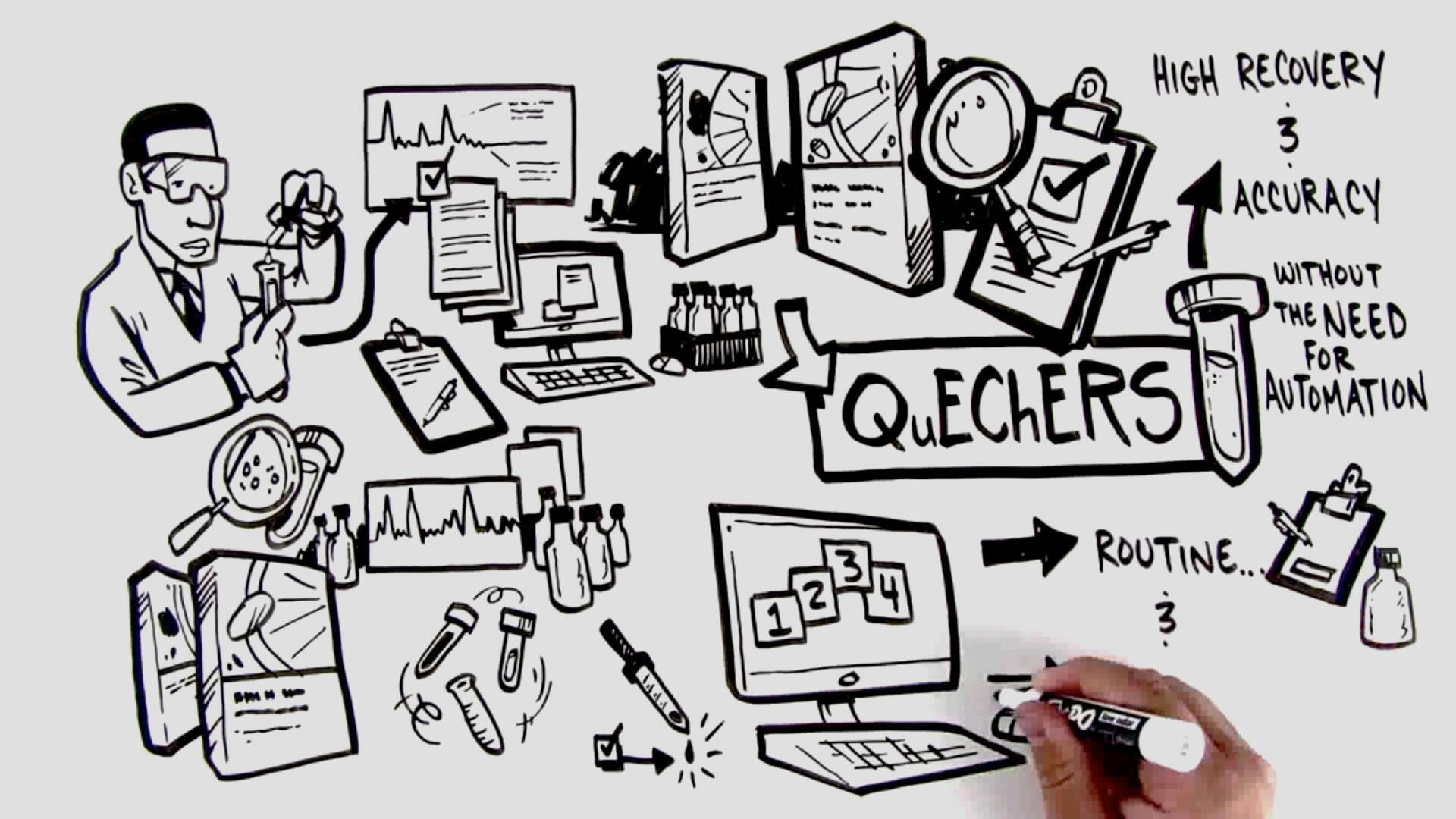
The Pesticide Explorer Collection provides start-to-finish LC-MS/MS workflows for pesticide analysis, from sample prep to data analysis, tailored to help food laboratories reduce startup time and cost.
On-demand webinar

Pesticides IC and IC-MS analysis
Ion chromatography (IC) offers targeted analysis and excels in analyzing ionic and polar pesticides, such as glyphosate, glufosinate and chlorate, which are not amenable to common multi-residue gas and liquid chromatography methods.
Developments in technology have enabled the use of IC-MS/MS for pesticide analysis, specifically highly polar pesticides, thermally unstable compounds and low volatility compounds, that are unable to be resolved by GC-MS techniques.
Analytes of interest are typically extracted using the QuPPe (Quick Polar Pesticides) method. One of the main advantages with IC-MS/MS is that derivatization and multiple extraction steps before analysis are not required.
Find out more in the blog about analyzing polar pesticides including glyphosate, the world’s most widely used herbicide.
In order to obtain sufficient chromatographic retention and acceptable peak shapes, individual extracts are analyzed multiple times using different chromatographic conditions, this however does add to the overall cost of sample analysis. Overall, the use of suppressed ion chromatography coupled to an MS/MS can help to provide a more effective solution to polar pesticide residue analysis.
Click on Step 5, Data processing, to discover how to analyze your data.
Featured resources
On demand webinar
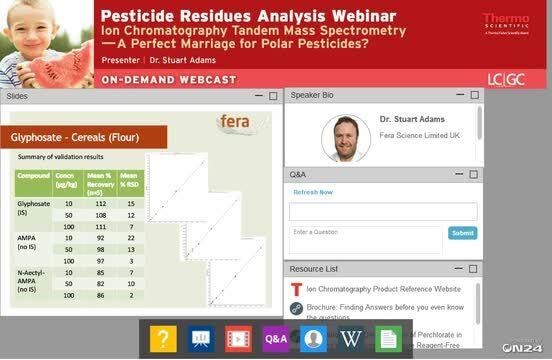
Listen to Fera Science Ltd experience, challenges and successes in the development, validation, and implementation of this approach. Learn about the critical aspects for optimization of IC-MS/MS methods for pesticides analysis.
On demand

Challenges of Pesticides analysis using Ion Chromatography.
Article

Glyphosate is the most used pesticide throughout the world –its toxicity has been hitting the headlines recently. Glyphosate is also one of the most difficult compounds to analyze. Fortunately, it is amphoteric (can exist in different ionic forms) and that triggered a question: why not use IC?
Pesticides GC and GC-MS analysis
GC-MS/MS is by far the most common approach to pesticide residue analysis. One of the main challenges with pesticide residue analysis is the ability to analyze a vast and diverse group of pesticides in a number of matrices, from simple fruits to complex matrices such as herbs, spices and tea, while at the same time having have high throughput, fast turn around and a low cost of analysis .
The benefit of using GC-MS/MS is its ability to evaluate a wide scope of multi analyte residues for pesticides offering good separations for targeted quantitative analysis.
Currently, more than 300 regulated pesticides can be analyzed by this technique. International regulations on the maximum residue levels of pesticides in food (MRLs) cover hundreds of individual target components at very low maximum residue limits—in the range of 10 ppb or lower, achieved by GC-MS/MS. Baby food, for example is of particular importance because babies are more vulnerable to adverse health effects from these chemicals. Read the application note.
GC-MS/MS HRAM offers full scan targeted and non-targeted acquisition and provides the required sensitivity and selectivity in complex matrices for routine pesticides screening and quantification. It enables the detection and identification of unknown compounds. The use of GC coupled with HRAM offers fast, high-throughput pesticide residues analysis in baby food samples for example, with an almost unlimited scope in the analysis through full scan acquisition. Quantitative performance is comparable to GC-MS/MS and in compliance with SANTE/11945/2015 guidelines.
GC columns specifically designed for pesticides analysis allow the separation of compounds of interest, with high performance, sensitivity, and reproducibility.
Click on Step 5, Data processing, to discover how to analyze your data.
Featured resources
Application note

Targeted screening methods require optimization of acquisition parameters for compounds. The scope of analysis can be increased using high-resolution full-scan mass spectrometry.
Application note

Read how the latest technology is used to identify pesticides inline with current guidelines.
On-demand webinar
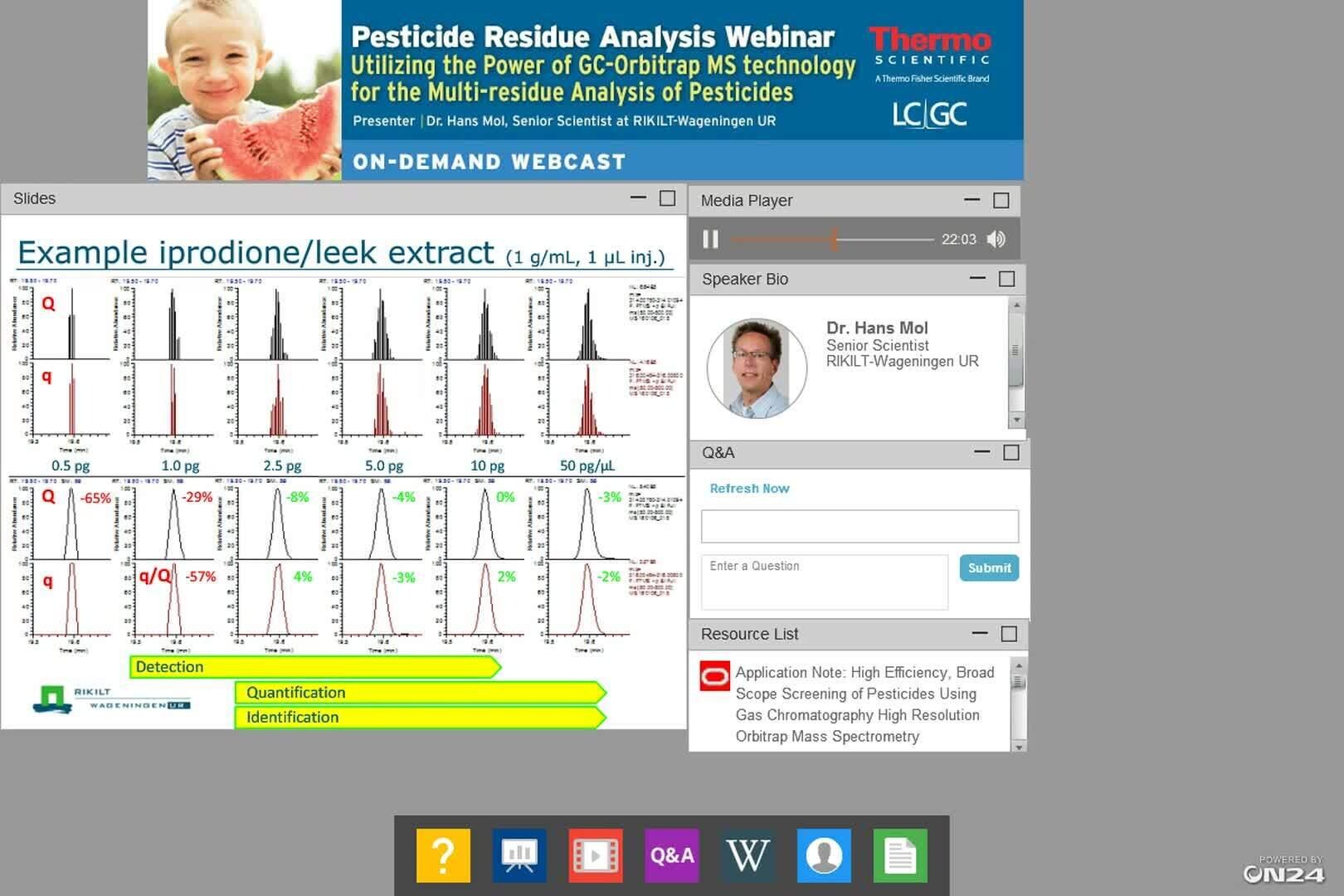
Learn the capabilities and potential application of GC-HRAM technology for the analysis of pesticide residues in QuEChERS extracts of food and validation of the methods in compliance with international criteria.
Data processing
Fully automated chromatography data system (CDS) software is now common place in routine pesticide analysis laboratories. This software allows instrument control, automation, data processing, and more.
CDS unifies the workflows for chromatography and routine quantitative MS analysis. It provides full integration of GC-MS/MS, LC-MS/MS, and IC-MS/MS instruments and analyses can be run from method creation to final reporting.
Read the blog: How to Find the Most Suitable Method for the Analysis of Pesticides.
Data processing for pesticide residue analysis allows for streamlined targeted screening and quantitation for all compound types. An example of data processing software for quantitative and qualitative purposes in pesticide residues testing is shown in the application note.
Easy access to all necessary information for hundreds of compounds in seconds and allows the transformation of any data from anywhere into a method. It also can be tailored for food safety applications and provides the ability to meet worldwide regulations.
Compound Discoverer Software allows for data analysis for small molecule identification. Researchers are able to strategically collect, organize, store and report data for both targeted and untargeted high resolution analyses.
Featured resources
Video
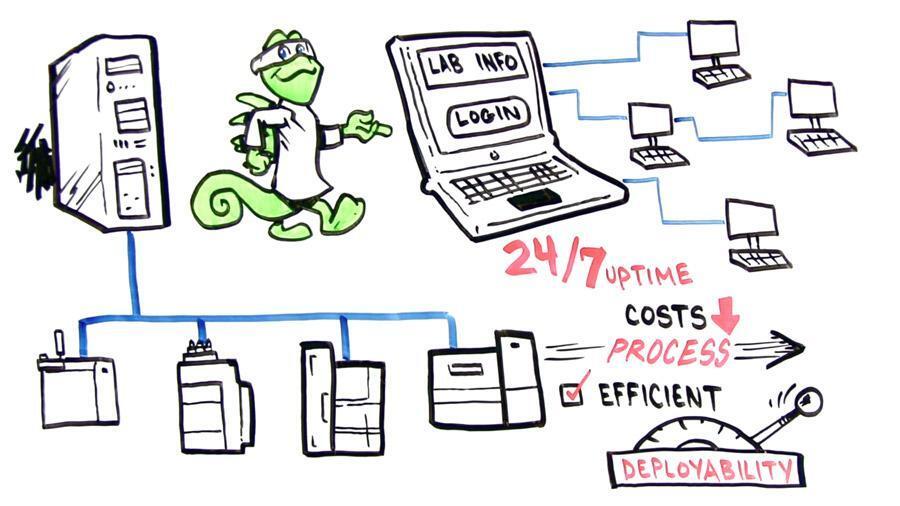
Run instruments using the same intuitive user interface, with the same methods, and provide results in the same format. Operate any instrument, any time.
Tutorials
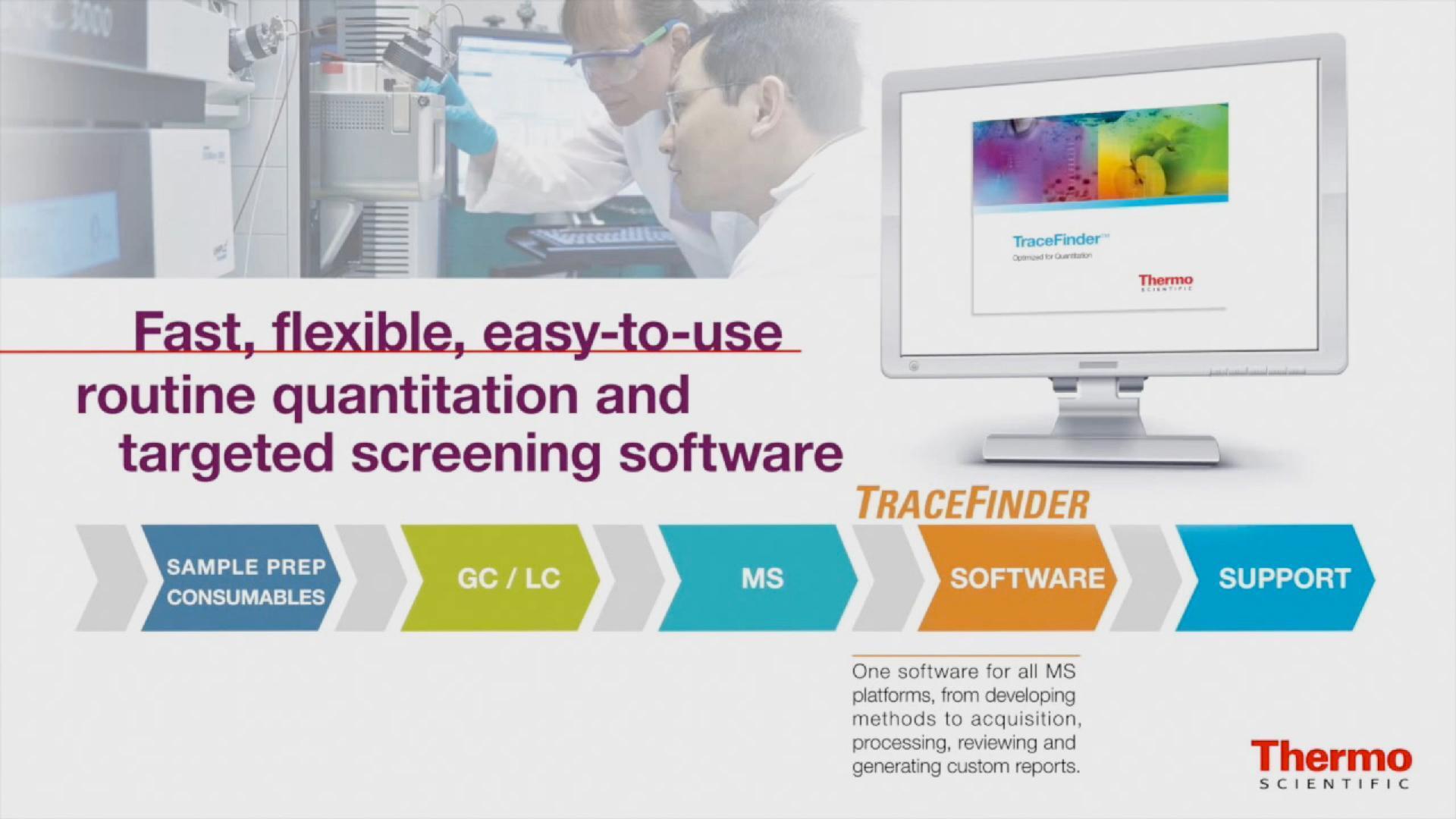
Compound databases for SRM and HRAM workflows and the software’s Method Forge™ ensures easy access to hundreds of molecules in seconds. Learn more about TraceFinder software.
Brochure

The only small molecule analysis solution able to make full use of the high-resolution accurate-mass (HRAM) data.
Pesticides sample preparation techniques
Sample preparation, is a generally used term that is used to transform an original sample into an analytical sample in order for it to be tested. There are several stages involved in order to get from the original sample to the analytical sample. This is especially significant when analysing analysing small quantities of samples in small-scale extraction methods.
Initial sample collection, transportation and storage to avoid cross contamination and potential degradation of residues must be considered. Sample preparation itself is the removal of the parts that should not be included in the analysis, such as soil, stones and bone fragments from the original sample of interest.
Next is a procedure known as sample processing or comminution. This can involve a number of procedures such as cutting, grinding, milling, macerating or mixing, to ensure that the analytical sample is acceptably homogeneous prior to removal of the analytical portion. Once the sample has been prepared the analytes then have to be extracted.
Extraction is the removal of analytes from the sample into the extracting phase, which is usually a solvent. In the case of pesticides residue analysis the most common extraction techniques are QuEChERS (Quick, Easy, Cheap, Effective, Rugged and Safe) and Automated Solvent Extraction (ASE).
Finally, clean-up, which is also incorporated into the QuEChERS technique, is used to remove non-specific matrix co-extractives from the sample.
QuEChERS methods for pesticide analysis
QuEChERS (Quick, Easy, Cheap, Effective, Rugged and Safe) dispersive solid phase extraction (SPE) methods is one of the most common techniques used in modern laboratories offering a convenient and effective approach for extraction and clean-up for multi residue analysis of pesticides and herbicides in food samples such as fruit and vegetables, and other complex matrices such as meat and fish.
The QuEChERS method is a two-step process: extraction followed by clean-up.
There are four variations of the QuEChERS method currently in use:
- The original QuEChERS method for non-base sensitive compounds, uses sodium chloride to enhance extraction.
- Dispersive techniques, such as the AOAC 2007.01 method, Pesticide Residues in Foods by Acetonitrile Extraction and Partitioning with Magnesium Sulfate, uses sodium acetate as a buffer, replacing sodium chloride. This method is used for base sensitive compounds.
- The European Method, EN15662, is similar to the AOAC method, except the extraction uses sodium chloride, sodium citrate dihydrate and disodium citrate sesquihydrate instead of sodium acetate, as demonstrated in the Pesticide Explorer Collection.
Extraction uses salts and organic solvents to separate the analytes of interest from the food matrix. The Thermo Scientific HyperSep Dispersive SPE extraction products use magnesium sulfate (MgSO4), to aid extraction, along with either sodium chloride, sodium citrate, or anhydrous sodium acetate for base-sensitive compounds, such as folpet or captan. Available in a range of pre-prepared sorbent combinations, each kit contains the required sorbents for optimum extraction of analytes using QuEChERS methods. The organic layer is then subject to clean-up to remove any other interferences such as lipids and organic acids.
HyperSep Dispersive SPE Clean-Up products contain PSA (primary and secondary amine) for the removal of organic acids and polar pigments among other compounds. Some products couple the PSA with endcapped C18 for the removal of most lipids and sterols, or GCB (graphitized carbon black) for the removal of sterols and pigments such as chlorophyll. These are available in a range of pre-prepared sorbent combinations, each containing the necessary sorbents for optimum clean-up of analytes extracted using QuEChERS methods. Once the extracted sample is ‘clean’ it is analysed by gas or liquid chromatography / mass spectrometry.
The Table below demonstrates clean-up sorbent selection depending on matrix type:
| Matrix Type | Examples | Sorbent Requirements for Clean-Up |
|---|---|---|
| General Matrices |
| MgSO4, PSA Removal of excess water organic acids, fatty acids, sugar |
| Fatty Matrices |
| MgSO4, PSA, C18 Additional removal of lipids and sterols |
| Pigmented Matrices |
| MgSO4, PSA, C18, GCB Additional removal of pigments and sterols |
| High Pigmented Matrices |
| MgSO4, PSA, C18, GCB, Chlorofiltr™ Additional removal of chlorophyll |
For troubleshooting QuEChERS methods:
| Problem | Causes | Recommended Solutions |
|---|---|---|
| Loss of planar pesticides | Presence of GCB may result in a loss of planar compounds |
|
| Loss of acidic compounds e.g. 2,4-D from starting matrix | Presense of PSA will extract acidic compounds from matrix |
|
| Loss of compounds during subsequent analysis | Some compounds are unstable and can break down during analysis |
|
| Addition of sample to QuEChERS extraction tube containing sorbet causes an exothermic reaction | Exothermic reaction between water in sample and magnesium sulfate |
|
| Poor recovery of pesticide compounds | Sample not in appropriate homogenization state |
|
Automated sample extraction for pesticide testing
Automated sample extraction techniques include accelerated solvent extraction, automated solid phase extraction and automated evaporation.
Accelerated Solvent Extraction (ASE) technique
Accelerated solvent extraction is often used when handling samples with a low water content, such as tea leaves and cereals, and high fat content, such as oyster tissue. It can also be applied to the analysis of fruit and vegetables, by using a polymer, such as the Dionex ASE™ Prep MAP that allows quick and effective water removal.
The technique, ideal for high through-put labs, uses organic acids and aqueous solvents or acids and bases at high temperatures to increase the extraction efficiency of analytes, and high pressures to keep the solvents in a liquid state to extract compounds from solid and semi-solid samples quickly, using small solvent volume ultimately saving time, solvent, and money, and generating results in a fraction of the time compared to traditional techniques such as Soxhlet or sonication.
The ASE technique, as described in the US EPA Method 3545a, takes 15–30 minutes and on average uses only 10-30ml of solvent, infiltrating the matrix more effectively so that certain types of incurred residues are extracted more effectively and thus more accurate results may be obtained.
In pesticide residues analysis, the recovery is typically checked by spiking pesticides onto the surface of the sample or even into the extract, as highlighted in the application note, Accelerated Solvent Extraction of Pesticide Residues in Food Products.
Next, click on step 2, 3 and/or step 4 depending on your preferred analytical instrumentation solution for your pesticide residues application.
For further information on chromatography sample preparation click here.
Featured white paper
This paper focuses on the first steps in the analytical workflow: everything you need to know about sample preparation and the most widely used methods of solvent extraction and clean-up.
Pesticides LC and LC-MS analysis
Food safety is an increasing concern that has resulted in stringent pesticide regulation globally. Food safety regulations require the screening and the quantitation of a large number of pesticides in food at maximum residue levels (MRL’s) generally set in the ppb-ppm range to minimize their possible negative effects on human health.
This has prompted the development of generic and reliable analytical multi-residue methods for the analysis of hundreds of pesticides by chromatography and mass spectrometry, as described in the EU guideline
SANTE/11945/2015.
LC-MS/MS enables highly selective and sensitive quantification and confirmation of hundreds of target pesticides in a single run. This method requires extensive compound-dependent parameter optimization and as such cannot be used to screen for untargeted pesticides.
Using high resolution accurate mass (HRAM) technology, in full scan, MS/MS or both, it is possible to address these and other challenges faced by pesticides residue testing laboratories. A full scan approach, using HRAM, coupled to ultra-high pressure LC (UHPLC) is ideal for rapid and sensitive screening and detection of targeted and non-targeted LC amenable pesticide residues.
HPLC and UHPLC analytical columns provide solutions for challenging multi residue pesticides analysis, standard C18 reversed phase columns are the column of choice. However, when analysing for polar analytes, as is the case with LC-MS for pesticide residues, an aqueous C18 column is usually used—for example the Accucore aQ.
Read The determination of pesticides residues using LC-MS/MS (application note).
Click on Step 5, Data processing, to discover how to analyze your data.
Featured resources
Video
The Pesticide Explorer Collection provides start-to-finish LC-MS/MS workflows for pesticide analysis, from sample prep to data analysis, tailored to help food laboratories reduce startup time and cost.
On-demand webinar
Pesticides IC and IC-MS analysis
Ion chromatography (IC) offers targeted analysis and excels in analyzing ionic and polar pesticides, such as glyphosate, glufosinate and chlorate, which are not amenable to common multi-residue gas and liquid chromatography methods.
Developments in technology have enabled the use of IC-MS/MS for pesticide analysis, specifically highly polar pesticides, thermally unstable compounds and low volatility compounds, that are unable to be resolved by GC-MS techniques.
Analytes of interest are typically extracted using the QuPPe (Quick Polar Pesticides) method. One of the main advantages with IC-MS/MS is that derivatization and multiple extraction steps before analysis are not required.
Find out more in the blog about analyzing polar pesticides including glyphosate, the world’s most widely used herbicide.
In order to obtain sufficient chromatographic retention and acceptable peak shapes, individual extracts are analyzed multiple times using different chromatographic conditions, this however does add to the overall cost of sample analysis. Overall, the use of suppressed ion chromatography coupled to an MS/MS can help to provide a more effective solution to polar pesticide residue analysis.
Click on Step 5, Data processing, to discover how to analyze your data.
Featured resources
On demand webinar
Listen to Fera Science Ltd experience, challenges and successes in the development, validation, and implementation of this approach. Learn about the critical aspects for optimization of IC-MS/MS methods for pesticides analysis.
On demand
Challenges of Pesticides analysis using Ion Chromatography.
Article
Glyphosate is the most used pesticide throughout the world –its toxicity has been hitting the headlines recently. Glyphosate is also one of the most difficult compounds to analyze. Fortunately, it is amphoteric (can exist in different ionic forms) and that triggered a question: why not use IC?
Pesticides GC and GC-MS analysis
GC-MS/MS is by far the most common approach to pesticide residue analysis. One of the main challenges with pesticide residue analysis is the ability to analyze a vast and diverse group of pesticides in a number of matrices, from simple fruits to complex matrices such as herbs, spices and tea, while at the same time having have high throughput, fast turn around and a low cost of analysis .
The benefit of using GC-MS/MS is its ability to evaluate a wide scope of multi analyte residues for pesticides offering good separations for targeted quantitative analysis.
Currently, more than 300 regulated pesticides can be analyzed by this technique. International regulations on the maximum residue levels of pesticides in food (MRLs) cover hundreds of individual target components at very low maximum residue limits—in the range of 10 ppb or lower, achieved by GC-MS/MS. Baby food, for example is of particular importance because babies are more vulnerable to adverse health effects from these chemicals. Read the application note.
GC-MS/MS HRAM offers full scan targeted and non-targeted acquisition and provides the required sensitivity and selectivity in complex matrices for routine pesticides screening and quantification. It enables the detection and identification of unknown compounds. The use of GC coupled with HRAM offers fast, high-throughput pesticide residues analysis in baby food samples for example, with an almost unlimited scope in the analysis through full scan acquisition. Quantitative performance is comparable to GC-MS/MS and in compliance with SANTE/11945/2015 guidelines.
GC columns specifically designed for pesticides analysis allow the separation of compounds of interest, with high performance, sensitivity, and reproducibility.
Click on Step 5, Data processing, to discover how to analyze your data.
Featured resources
Application note
Targeted screening methods require optimization of acquisition parameters for compounds. The scope of analysis can be increased using high-resolution full-scan mass spectrometry.
Application note
Read how the latest technology is used to identify pesticides inline with current guidelines.
On-demand webinar
Learn the capabilities and potential application of GC-HRAM technology for the analysis of pesticide residues in QuEChERS extracts of food and validation of the methods in compliance with international criteria.
Data processing
Fully automated chromatography data system (CDS) software is now common place in routine pesticide analysis laboratories. This software allows instrument control, automation, data processing, and more.
CDS unifies the workflows for chromatography and routine quantitative MS analysis. It provides full integration of GC-MS/MS, LC-MS/MS, and IC-MS/MS instruments and analyses can be run from method creation to final reporting.
Read the blog: How to Find the Most Suitable Method for the Analysis of Pesticides.
Data processing for pesticide residue analysis allows for streamlined targeted screening and quantitation for all compound types. An example of data processing software for quantitative and qualitative purposes in pesticide residues testing is shown in the application note.
Easy access to all necessary information for hundreds of compounds in seconds and allows the transformation of any data from anywhere into a method. It also can be tailored for food safety applications and provides the ability to meet worldwide regulations.
Compound Discoverer Software allows for data analysis for small molecule identification. Researchers are able to strategically collect, organize, store and report data for both targeted and untargeted high resolution analyses.
Featured resources
Video
Run instruments using the same intuitive user interface, with the same methods, and provide results in the same format. Operate any instrument, any time.
Tutorials
Compound databases for SRM and HRAM workflows and the software’s Method Forge™ ensures easy access to hundreds of molecules in seconds. Learn more about TraceFinder software.
Brochure
The only small molecule analysis solution able to make full use of the high-resolution accurate-mass (HRAM) data.

Pesticide residues testing toolkit
Access this Toolkit to learn from application and industry experts about workflows and innovations that you can implement to advance your analysis of pesticide residues. Explore eBooks, application notes, white papers, case studies, webinars, how-to videos and more to optimize your sample processing and analysis.
Search all pesticide residues testing resources
No records were found matching your criteria

Listen to Ann-Kathrin Wachtler of CVUA Stuttgart, discuss her EU reference laboratory's approach to polar pesticide analysis and why they made the switch from HPLC to IC-MS.

食品 & 饮料资源库
获取有针对性的科学应用资料、案例研究、视频、网络研讨会和白皮书,用于食品微生物学、制造和加工、饮料检测、分析检测和真伪信息。
Related products
Resources
Support
Governing organizations
Share
General Laboratory Equipment – Not For Diagnostic Procedures. © 2026 Thermo Fisher Scientific Inc. All rights reserved. Thermo Scientific™ products are designated as General Laboratory Equipment and are not intended for use in diagnostic procedures or for in vitro diagnostic purposes. These products are intended for general laboratory use only and have not been tested or validated for diagnostic applications; use for such purposes may result in inaccurate results and may pose health and safety risks. They are designed for research, academic, and industrial applications and for general-purpose analytical use, including high-resolution and accurate-mass measurements, without reference to specific clinical conditions, analytes, or diagnostic decisions.
Thermo Scientific Orbitrap Exploris 与 Excedion 系列质谱仪为配备大气压电离(API)源的 Orbitrap 仪器,适用于液相色谱(LC)-质谱(MS)的高通量应用。该类仪器设计为置于实验室台面,并能在色谱峰处保持质量准确度(mass accuracy),通过高分辨率、准确质量(high‑resolution accurate‑mass)检测支持可靠的鉴定与定量。