Search

Thermo Scientific™
CarboxyLink™ 偶联树脂
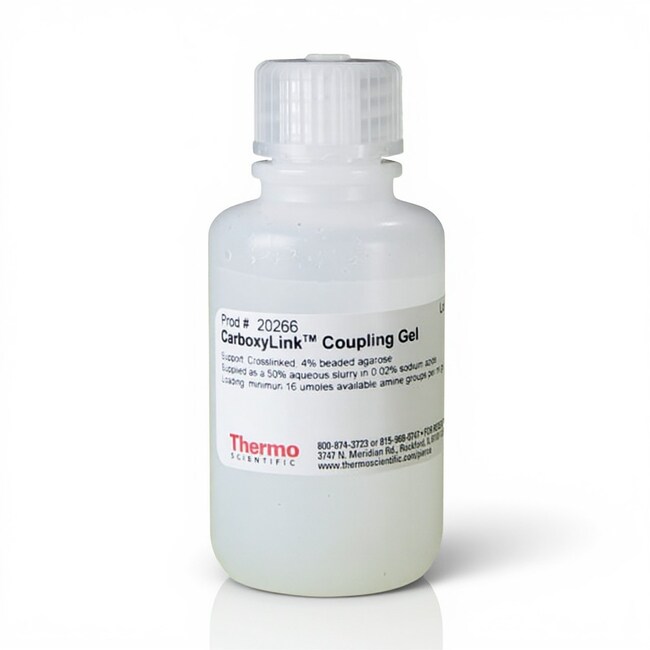
Thermo Scientific CarboxyLink 偶联树脂用于共价固定肽或其他含羧基 (—COOH) 分子至多孔微珠状树脂,用于亲和纯化程序。CarboxyLink 树脂是交联微珠状琼脂糖,该琼脂糖已经使用二氨基二丙基胺 (DADPA) 活化,以包含长间隔臂,每种间隔臂末端均具有一个伯胺了解更多信息
| 货号 | 数量 |
|---|---|
| 20266 | 25 mL |
货号 20266
价格(CNY)
3,302.00
Each
数量:
25 mL
价格(CNY)
3,302.00
Each
Thermo Scientific CarboxyLink 偶联树脂用于共价固定肽或其他含羧基 (—COOH) 分子至多孔微珠状树脂,用于亲和纯化程序。
CarboxyLink 树脂是交联微珠状琼脂糖,该琼脂糖已经使用二氨基二丙基胺 (DADPA) 活化,以包含长间隔臂,每种间隔臂末端均具有一个伯胺。与树脂和碳二亚胺交联剂 EDC(CarboxyLink 固定试剂盒中包含)的共同孵育时,含羧基的分子通过稳定酰胺键永久连接至支持物。偶联一个分子后,可在典型的蛋白亲和纯化程序中多次使用制备好的亲和柱。CarboxyLink 偶联树脂还可用于利用替代胺反应性交联化学品固定其他种类的分子。
CarboxyLink 偶联树脂的特点:
•CarboxyLink 偶联树脂— DADPA 活化交联 4% 微珠状琼脂糖
•有效固定—偶联 1 至 2 mg 肽/毫升树脂(使用大于 16 μMol 胺毫升树脂活化的 CarboxyLink 琼脂糖树脂;使用大于 40 μMol 胺毫升树脂活化的 UltraLink 支持物)
•稳定键—固定可通过酰胺键进行羧基的共价结合,因此可使用单批制备的树脂进行多轮亲和纯化
•灵活而温和的偶联条件—固定反应可在简单的 MES 或其他非胺基和非羧基、含或不含有机溶剂的近中性缓冲液中完成。
•适用于未修饰多肽—以高容量和无空间位阻的多种位向固定多肽,可高效应用于特异性抗体的亲和纯化
由于 EDC 将羧酸盐交联至伯胺、肽和其他含这两种官能团的分子,所以将被不同聚合并固定至 CarboxyLink 树脂。对于末端只有羧基和氨基的肽,与 CarboxyLink 试剂盒的偶联将产生通过 C 端连接至支持物的肽的端端链。通常,该结构可提供高容量和低空间位阻,用于亲和纯化。然而,如果是在序列中间含有多种伯胺(赖氨酸)或羧酸盐(谷氨酸和天冬氨酸)的肽,CarboxyLink 偶联方法可能会导致封闭关键结合位点,进而产生高偶联容量,但亲和纯化的结合能力较差。固定替代方法包括 AminoLink Plus 偶联树脂、UltraLink Biosupport 和 SulfoLink 偶联树脂。
相关产品
CarboxyLink™ 固定试剂盒,2 mL
CarboxyLink™ 固定试剂盒(含 UltraLink™支持物),2 mL
CarboxyLink 树脂是交联微珠状琼脂糖,该琼脂糖已经使用二氨基二丙基胺 (DADPA) 活化,以包含长间隔臂,每种间隔臂末端均具有一个伯胺。与树脂和碳二亚胺交联剂 EDC(CarboxyLink 固定试剂盒中包含)的共同孵育时,含羧基的分子通过稳定酰胺键永久连接至支持物。偶联一个分子后,可在典型的蛋白亲和纯化程序中多次使用制备好的亲和柱。CarboxyLink 偶联树脂还可用于利用替代胺反应性交联化学品固定其他种类的分子。
CarboxyLink 偶联树脂的特点:
•CarboxyLink 偶联树脂— DADPA 活化交联 4% 微珠状琼脂糖
•有效固定—偶联 1 至 2 mg 肽/毫升树脂(使用大于 16 μMol 胺毫升树脂活化的 CarboxyLink 琼脂糖树脂;使用大于 40 μMol 胺毫升树脂活化的 UltraLink 支持物)
•稳定键—固定可通过酰胺键进行羧基的共价结合,因此可使用单批制备的树脂进行多轮亲和纯化
•灵活而温和的偶联条件—固定反应可在简单的 MES 或其他非胺基和非羧基、含或不含有机溶剂的近中性缓冲液中完成。
•适用于未修饰多肽—以高容量和无空间位阻的多种位向固定多肽,可高效应用于特异性抗体的亲和纯化
由于 EDC 将羧酸盐交联至伯胺、肽和其他含这两种官能团的分子,所以将被不同聚合并固定至 CarboxyLink 树脂。对于末端只有羧基和氨基的肽,与 CarboxyLink 试剂盒的偶联将产生通过 C 端连接至支持物的肽的端端链。通常,该结构可提供高容量和低空间位阻,用于亲和纯化。然而,如果是在序列中间含有多种伯胺(赖氨酸)或羧酸盐(谷氨酸和天冬氨酸)的肽,CarboxyLink 偶联方法可能会导致封闭关键结合位点,进而产生高偶联容量,但亲和纯化的结合能力较差。固定替代方法包括 AminoLink Plus 偶联树脂、UltraLink Biosupport 和 SulfoLink 偶联树脂。
相关产品
CarboxyLink™ 固定试剂盒,2 mL
CarboxyLink™ 固定试剂盒(含 UltraLink™支持物),2 mL
仅供科研使用。不可用于诊断程序。
规格
色谱柱类型亲和,琼脂糖树脂
描述CarboxyLink偶联树脂
产品规格瓶装
数量25 mL
固定相胺
靶标伯胺
容量(公制)25 mL
形式液体
产品线CarboxyLink
类型树脂
Unit SizeEach
内容与储存
储存于 4°C。