Search


引用和文献 (3)
Thermo Scientific™
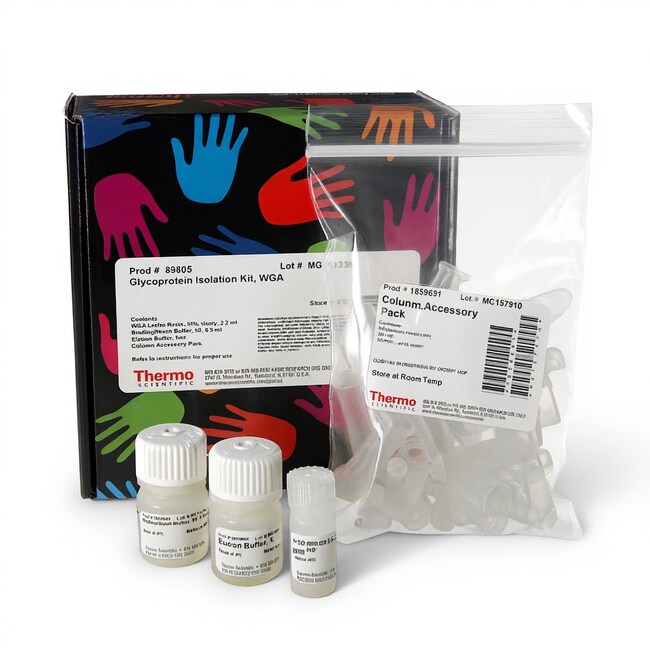
Pierce™ 糖蛋白分离试剂盒,WGA
Thermo Scientific Pierce 糖蛋白分离试剂盒(麦胚凝集素)可从包括血清、组织和培养细胞裂解物在内的复杂混合物中分离糖蛋白。该程序使用麦胚凝集素 (WGA) 作为配体,以便结合来自复杂蛋白质样品中的特定类别糖蛋白—含了解更多信息
| 货号 | 数量 |
|---|---|
| 89805 | 1 个试剂盒 |
货号 89805
价格(CNY)
7,968.00
Each
数量:
1 个试剂盒
价格(CNY)
7,968.00
Each
Thermo Scientific Pierce 糖蛋白分离试剂盒(麦胚凝集素)可从包括血清、组织和培养细胞裂解物在内的复杂混合物中分离糖蛋白。该程序使用麦胚凝集素 (WGA) 作为配体,以便结合来自复杂蛋白质样品中的特定类别糖蛋白—含 N-乙酰葡萄糖胺 (GlcNAc) 基团或唾液酸的糖蛋白。该试剂盒已用于在大约 50 分钟内从血清以及 HeLa 和 CHO 细胞裂解物中分离糖蛋白。
该糖蛋白分离试剂盒的特点:
•高回收率— 糖蛋白回收率与竞争试剂盒和外源凝集素树脂相当或更高
• 快速—在不到一小时内完成糖蛋白纯化
• 通用— 从各种样品类型(例如人血清和细胞裂解物)中分离糖蛋白。
•稳健—在处理样品时外源凝集素不会从树脂中浸出
• 便利—全套试剂盒提供外源凝集素树脂、离心柱以及所有必要试剂
• 与基于 Bradford 的蛋白检测兼容—在蛋白检测之前,无需对回收的糖蛋白进行透析或蛋白质沉淀
相关产品
Pierce™ 糖蛋白分离试剂盒,ConA
该糖蛋白分离试剂盒的特点:
•高回收率— 糖蛋白回收率与竞争试剂盒和外源凝集素树脂相当或更高
• 快速—在不到一小时内完成糖蛋白纯化
• 通用— 从各种样品类型(例如人血清和细胞裂解物)中分离糖蛋白。
•稳健—在处理样品时外源凝集素不会从树脂中浸出
• 便利—全套试剂盒提供外源凝集素树脂、离心柱以及所有必要试剂
• 与基于 Bradford 的蛋白检测兼容—在蛋白检测之前,无需对回收的糖蛋白进行透析或蛋白质沉淀
相关产品
Pierce™ 糖蛋白分离试剂盒,ConA
仅供科研使用。不可用于诊断程序。
规格
色谱柱类型亲和,琼脂糖树脂
描述Pierce 糖蛋白分离试剂盒,WGA
产品规格试剂盒、微量离心机、离心柱
数量1 个试剂盒
固定相外源凝集素
足够用于10 次反应
靶标糖蛋白
产品线Pierce
类型糖蛋白分离试剂盒
Unit SizeEach
内容与储存
足够用于:从 10 份分别高达 640 μL(1 至 1.5 mg 总蛋白)的样品中分离对 WGA 具有强亲和力的糖蛋白
• WGA 外源凝集素树脂,1.1 mL
• 结合/洗涤缓冲液 (5X),6.5 mL
• 洗脱缓冲液,5 mL
• 离心柱,10 个柱
• 收集管,20 个管
在 4°C 下储存。
• WGA 外源凝集素树脂,1.1 mL
• 结合/洗涤缓冲液 (5X),6.5 mL
• 洗脱缓冲液,5 mL
• 离心柱,10 个柱
• 收集管,20 个管
在 4°C 下储存。
常见问题解答 (FAQ)
What is the difference between your Pierce Glycoprotein Isolation Kit, ConA and WGA?
Can I isolate my proteins based on their post-translational modification (PTM) or active binding site?
引用和文献 (3)
引用和文献
Abstract
Lectin affinity as an approach to the proteomic analysis of membrane glycoproteins.
Journal:J Proteome Res
PubMed ID:15359739
The aim was to determine the proportion of membrane glycoproteins captured using concanavalin A or wheat germ agglutinin lectin affinity chromatography. Digests of the isolated proteins were separated by reversed-phase liquid chromatography and analyzed by matrix-assisted laser desorption tandem mass spectrometry. The two lectins identified different groups of proteins with
Identification of Potential Glycoprotein Biomarkers in Estrogen Receptor Positive (ER+) and Negative (ER-) Human Breast Cancer Tissues by LC-LTQ/FT-ICR Mass Spectrometry.
Journal:J Cancer
PubMed ID:22773931
Breast cancer is the second most fatal cancer in American women. To increase the life expectancy of patients with breast cancer new diagnostic and prognostic biomarkers and drug targets must be identified. A change in the glycosylation on a glycoprotein often causes a change in the function of that glycoprotein;
GlycoSuiteDB: a new curated relational database of glycoprotein glycan structures and their biological sources.
Journal:Nucleic Acids Res
PubMed ID:11125129
GlycoSuiteDB is a relational database that curates information from the scientific literature on glyco-protein derived glycan structures, their biological sources, the references in which the glycan was described and the methods used to determine the glycan structure. To date, the database includes most published O:-linked oligosaccharides from the last 50