Search

Thermo Scientific™
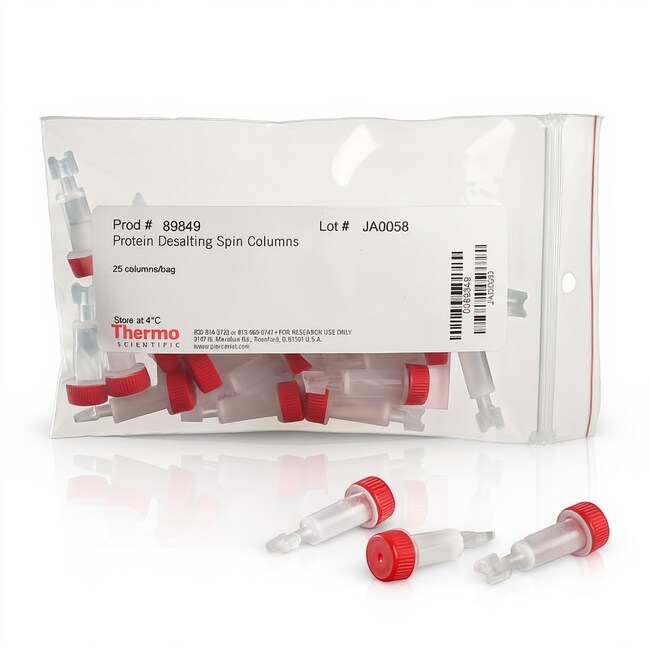
Pierce™ 聚丙烯酰胺脱盐离心柱,7K MWCO,0.7 mL
Thermo Scientific Pierce 1.8K MWCO(截留分子量)聚丙烯酰胺脱盐柱为即用型、一次性凝胶过滤色谱柱,适用于从低分子量缓冲盐和试剂中分离蛋白和其他大分子。Pierce 1.8K了解更多信息
Have Questions?
更改视图

| 货号 | 数量 |
|---|---|
| 89849 | 25柱 |
| 89862 | 50柱 |
货号 89849
价格(CNY)
3,557.00
Each
数量:
25柱
价格(CNY)
3,557.00
Each
Thermo Scientific Pierce 1.8K MWCO(截留分子量)聚丙烯酰胺脱盐柱为即用型、一次性凝胶过滤色谱柱,适用于从低分子量缓冲盐和试剂中分离蛋白和其他大分子。
Pierce 1.8K MWCO 聚丙烯酰胺脱盐柱预填充多孔聚丙烯酰胺珠,并基于 1800 截留分子量 (MWCO) 进行蛋白和其他大分子样品的缓冲液置换和脱盐。与其他尺寸排阻树脂不同,聚丙烯酰胺树脂不会被酶降解,也不会为微生物生长提供营养物。树脂非常亲水,因而较大程度减少树脂与样品分子之间不当的相互结合作用。使用聚丙烯酰胺树脂时,低分子量糖(可能发生交联葡聚糖树脂)的污染并不造成问题。可在不破坏载体的情况下消除氧化剂。在极端 pH 值条件下,该树脂易受酰胺基团的水解,因此建议在室温 pH 值介于 2 - 10 时操作。聚丙烯酰胺树脂还可在 120°C、pH 为 5.5-6.5 条件下,高压灭菌30分钟。
这些柱所用树脂的微珠湿直径为 45–90 µM,适用于从缓冲盐和其他化合物(小于 500 MW)分离多肽和小分子(大于 1.8kDa)。
聚丙烯酰胺树脂特点:
• 在水、盐溶液、有机溶剂、碱或酸性条件下保持稳定
• 较好的流速特性
• 热稳定性
应用:
•从蛋白溶液中去除盐
•从核酸制剂中去除苯酚
•从偶联物制剂中分离多余交联剂
•从修饰蛋白中去除多余衍生化试剂
•从荧光抗体中去除未反应的染料
•从标记蛋白中去除游离的放射性标记物
•将缓冲液置换为另一种
重力流树脂过滤涉及基于不同尺寸的分子渗透进入合适固定相的相对能力进行色谱分离。脱盐柱由层析介质(通常为尺寸较小、不带电荷的多孔颗粒的水溶液)填充,用于样品的分离。根据脱盐柱中填充的介质孔径不同,可实现不同水平的分离。可以选择合适的介质来完全排除蛋白或大分子物质,同时仍保留小分子溶质。大分子无法进入凝胶内部小孔,较先从柱中洗脱出来。较小分子能够渗透至凝胶孔隙中,因此在柱中流速较慢。这些较小分子随后用额外的缓冲液通过色谱柱冲洗。
脱盐和缓冲液置换是树脂过滤色谱应用中较广泛使用的两种应用。
相关产品
Pierce™ 聚丙烯酰胺脱盐离心柱,7K MWCO,0.7 mL
聚丙烯酰胺脱盐色谱柱,6K MWCO,10 mL
Pierce 1.8K MWCO 聚丙烯酰胺脱盐柱预填充多孔聚丙烯酰胺珠,并基于 1800 截留分子量 (MWCO) 进行蛋白和其他大分子样品的缓冲液置换和脱盐。与其他尺寸排阻树脂不同,聚丙烯酰胺树脂不会被酶降解,也不会为微生物生长提供营养物。树脂非常亲水,因而较大程度减少树脂与样品分子之间不当的相互结合作用。使用聚丙烯酰胺树脂时,低分子量糖(可能发生交联葡聚糖树脂)的污染并不造成问题。可在不破坏载体的情况下消除氧化剂。在极端 pH 值条件下,该树脂易受酰胺基团的水解,因此建议在室温 pH 值介于 2 - 10 时操作。聚丙烯酰胺树脂还可在 120°C、pH 为 5.5-6.5 条件下,高压灭菌30分钟。
这些柱所用树脂的微珠湿直径为 45–90 µM,适用于从缓冲盐和其他化合物(小于 500 MW)分离多肽和小分子(大于 1.8kDa)。
聚丙烯酰胺树脂特点:
• 在水、盐溶液、有机溶剂、碱或酸性条件下保持稳定
• 较好的流速特性
• 热稳定性
应用:
•从蛋白溶液中去除盐
•从核酸制剂中去除苯酚
•从偶联物制剂中分离多余交联剂
•从修饰蛋白中去除多余衍生化试剂
•从荧光抗体中去除未反应的染料
•从标记蛋白中去除游离的放射性标记物
•将缓冲液置换为另一种
重力流树脂过滤涉及基于不同尺寸的分子渗透进入合适固定相的相对能力进行色谱分离。脱盐柱由层析介质(通常为尺寸较小、不带电荷的多孔颗粒的水溶液)填充,用于样品的分离。根据脱盐柱中填充的介质孔径不同,可实现不同水平的分离。可以选择合适的介质来完全排除蛋白或大分子物质,同时仍保留小分子溶质。大分子无法进入凝胶内部小孔,较先从柱中洗脱出来。较小分子能够渗透至凝胶孔隙中,因此在柱中流速较慢。这些较小分子随后用额外的缓冲液通过色谱柱冲洗。
脱盐和缓冲液置换是树脂过滤色谱应用中较广泛使用的两种应用。
相关产品
Pierce™ 聚丙烯酰胺脱盐离心柱,7K MWCO,0.7 mL
聚丙烯酰胺脱盐色谱柱,6K MWCO,10 mL
仅供科研使用。不可用于诊断程序。
重力流凝胶过滤根据不同尺寸分子穿透适当固定相的相对能力来对其进行色谱分离。脱盐柱由层析介质(通常为尺寸较小、不带电荷的多孔颗粒的水溶液)填充,用于样品的分离。根据脱盐柱中填充的介质孔径不同,可实现不同水平的分离。可以选择合适的介质来完全排除蛋白或大分子物质,同时仍保留小分子溶质。大分子无法进入凝胶内部小孔,最先从柱中洗脱出来。较小分子能够穿过凝胶孔隙,在柱中的流动速度较慢。当加入缓冲液后,这些较小的分子从脱盐色谱柱中洗脱出来。
规格
描述Pierce™ 聚丙烯酰胺脱盐离心柱,7K MWCO,0.7 mL
产品类型脱盐离心柱
纯化目标缓冲液置换,蛋白质
数量25柱
色谱柱类型尺寸排阻,聚丙烯酰胺树脂
产品规格15 mL 锥形离心柱
截留分子量 (MWCO)7.0 kDa
产品线Pierce
样品体积(公制)30–120 µL
Unit SizeEach
内容与储存
接收后,储存在 4°C 下。