Search

Thermo Scientific™
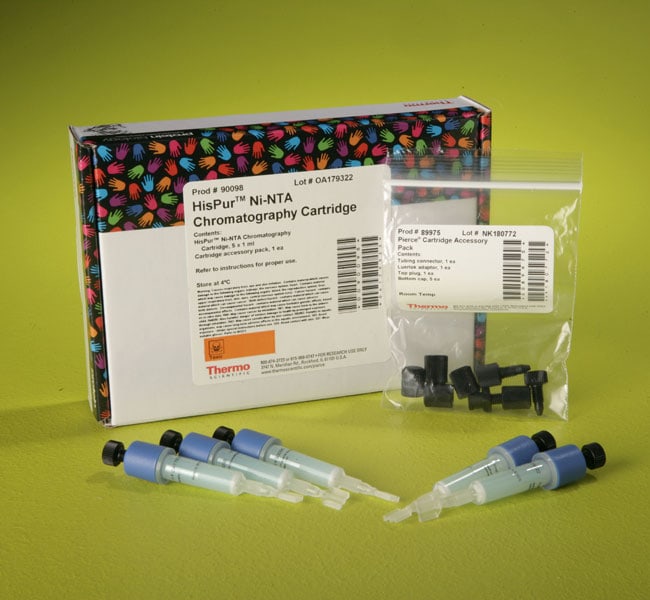
HisPur™ Ni-NTA 色谱纯化柱,1 mL
Thermo Scientific HisPur Ni-NTA 色谱纯化柱含高容量、高性能镍-IMAC 树脂,用于常规亲和纯化 His 标签融合蛋白。HisPur了解更多信息
Have Questions?
更改视图

| 货号 | 数量 |
|---|---|
| 90098 | 5筒 |
| 90099 | 2 x 5 mL |
货号 90098
价格(CNY)
3,211.00
Each
数量:
5筒
价格(CNY)
3,211.00
Each
Thermo Scientific HisPur Ni-NTA 色谱纯化柱含高容量、高性能镍-IMAC 树脂,用于常规亲和纯化 His 标签融合蛋白。
HisPur Ni-NTA 树脂的特点:
•高容量—每毫升树脂可结合高达 60 mg 的 6xHis-标签蛋白
• 通用—可在天然或变性条件下纯化蛋白
• 兼容—与 Thermo Scientific 细胞裂解试剂和各种缓冲液添加剂配合使用
• 高性价比—一批树脂可重复使用至少五次
• 易于使用—试剂盒规格提供预配制缓冲液
• 灵活—具有多种形式,包括散装树脂、离心柱、色谱纯化柱和 96 孔过滤板
特殊制备的支持物含有微珠状琼脂糖,使用次氮基三乙酸 (NTA) 螯合部分进行衍生化,并带有螯合二价镍离子 (Ni2+)。固定化金属亲和色谱 (IMAC) 树脂拥有用于重组 His 标签蛋白纯化的绝佳结合容量和性能。
重组蛋白的表达和纯化对于蛋白调节、结构和功能研究至关重要。大部分的重组蛋白都以短亲和标记的融合表达,最流行的是聚组氨酸(6xHis)标记。用于纯化重组 His 标签蛋白的方法是固定化金属亲和色谱 (IMAC),由带镍或钴离子的螯合树脂组成,镍或钴离子与组氨酸侧链配位。
HisPur Ni-NTA 树脂能从细菌裂解物(如使用 Thermo Scientific B-PER 细菌蛋白提取试剂获得的裂解物)中有效纯化高水平过表达 His 标签融合蛋白。该树脂在各种容量的批连结和离心柱程序中表现很好。性能等同于或超过来自其他供应商的各种常用镍-NTA树脂。HisPur镍-NTA树脂是一种高品质、稳定而有弹性的亲和载体。各种试验证实在至少五次重复使用后,其性能不会降低。这些数据显示在正常使用中,该树脂能高度抵抗结构降解或镍离子浸出。
HisPur Ni-NTA 树脂和 HisPur 钴树脂是 IMAC 的替代形式,前者使用镍,后者使用钴作为负责 His-标签结合的螯合金属离子。由于其在螯合上的四个能高蛋白连结和低金属离子滤去的金属连结点,镍-NTA树脂已经成为6xHis标记蛋白纯化最常用的IMAC树脂选择。钴连结不太强健,因此更有区分性,使其在 His 标签蛋白纯化中有更高的纯度但常常更低的得率。
可用形式:
•树脂浆—交联的 6% 微珠状琼脂糖;10 mL,100 mL,500 mL 瓶装
• 离心柱—0.2 mL(微量离心机),1 mL 和 3 mL 色谱柱
• 纯化试剂盒—全部三种柱规格的全套试剂盒
• 色谱纯化柱—更多信息,请参阅 HisPur 色谱纯化柱数据
• 96 孔离心板
相关产品
HisPur™ Ni-NTA 色谱分析纯化柱,5 mL
HisPur™ Ni-NTA 离心纯化试剂盒,1 mL
HisPur™ Ni-NTA 树脂
HisPur Ni-NTA 树脂的特点:
•高容量—每毫升树脂可结合高达 60 mg 的 6xHis-标签蛋白
• 通用—可在天然或变性条件下纯化蛋白
• 兼容—与 Thermo Scientific 细胞裂解试剂和各种缓冲液添加剂配合使用
• 高性价比—一批树脂可重复使用至少五次
• 易于使用—试剂盒规格提供预配制缓冲液
• 灵活—具有多种形式,包括散装树脂、离心柱、色谱纯化柱和 96 孔过滤板
特殊制备的支持物含有微珠状琼脂糖,使用次氮基三乙酸 (NTA) 螯合部分进行衍生化,并带有螯合二价镍离子 (Ni2+)。固定化金属亲和色谱 (IMAC) 树脂拥有用于重组 His 标签蛋白纯化的绝佳结合容量和性能。
重组蛋白的表达和纯化对于蛋白调节、结构和功能研究至关重要。大部分的重组蛋白都以短亲和标记的融合表达,最流行的是聚组氨酸(6xHis)标记。用于纯化重组 His 标签蛋白的方法是固定化金属亲和色谱 (IMAC),由带镍或钴离子的螯合树脂组成,镍或钴离子与组氨酸侧链配位。
HisPur Ni-NTA 树脂能从细菌裂解物(如使用 Thermo Scientific B-PER 细菌蛋白提取试剂获得的裂解物)中有效纯化高水平过表达 His 标签融合蛋白。该树脂在各种容量的批连结和离心柱程序中表现很好。性能等同于或超过来自其他供应商的各种常用镍-NTA树脂。HisPur镍-NTA树脂是一种高品质、稳定而有弹性的亲和载体。各种试验证实在至少五次重复使用后,其性能不会降低。这些数据显示在正常使用中,该树脂能高度抵抗结构降解或镍离子浸出。
HisPur Ni-NTA 树脂和 HisPur 钴树脂是 IMAC 的替代形式,前者使用镍,后者使用钴作为负责 His-标签结合的螯合金属离子。由于其在螯合上的四个能高蛋白连结和低金属离子滤去的金属连结点,镍-NTA树脂已经成为6xHis标记蛋白纯化最常用的IMAC树脂选择。钴连结不太强健,因此更有区分性,使其在 His 标签蛋白纯化中有更高的纯度但常常更低的得率。
可用形式:
•树脂浆—交联的 6% 微珠状琼脂糖;10 mL,100 mL,500 mL 瓶装
• 离心柱—0.2 mL(微量离心机),1 mL 和 3 mL 色谱柱
• 纯化试剂盒—全部三种柱规格的全套试剂盒
• 色谱纯化柱—更多信息,请参阅 HisPur 色谱纯化柱数据
• 96 孔离心板
相关产品
HisPur™ Ni-NTA 色谱分析纯化柱,5 mL
HisPur™ Ni-NTA 离心纯化试剂盒,1 mL
HisPur™ Ni-NTA 树脂
仅供科研使用。不可用于诊断程序。
规格
容积(公制)1 mL
色谱柱类型亲和,琼脂糖树脂
数量5筒
固定相二价镍、金属螯合物
靶标His 标签蛋白
形式悬浮液
产品线HisPur
类型色谱柱
Unit SizeEach
内容与储存
在 4°C 至 8°C 下储存。切勿冷冻。