Search


引用和文献 (8)
Invitrogen™
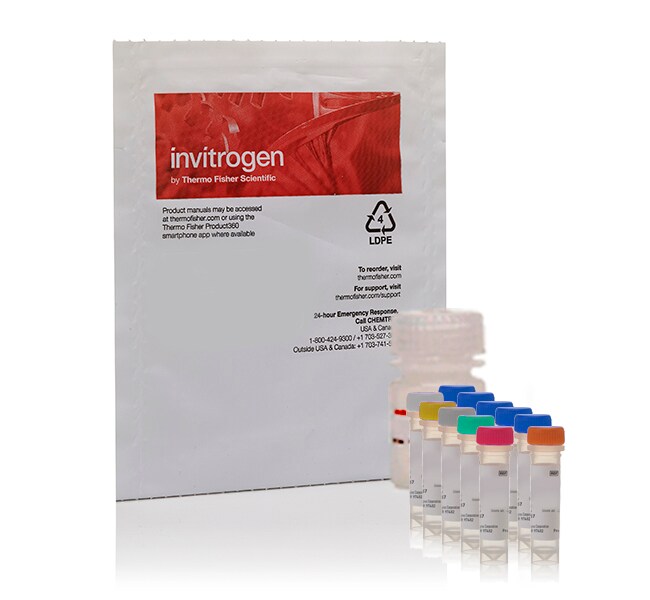
Amplex™ 乙酰胆碱/乙酰胆碱酯酶检测试剂盒
Amplex™ Red 乙酰胆碱/乙酰胆碱酯酶检测试剂盒为检测乙酰胆碱酯酶 (AChE) 活性提供了一种超高灵敏度的方法,可使用荧光微孔板读数仪或荧光计进行检测。查看我们完整的荧光微孔板检测产品线。•在一小时内检测到低至 0.002 U/mL 的了解更多信息
| 货号 | 数量 |
|---|---|
| A12217 | 500 Assays |
货号 A12217
价格(CNY)
5,920.00
Each
数量:
500 Assays
价格(CNY)
5,920.00
Each
Amplex™ Red 乙酰胆碱/乙酰胆碱酯酶检测试剂盒为检测乙酰胆碱酯酶 (AChE) 活性提供了一种超高灵敏度的方法,可使用荧光微孔板读数仪或荧光计进行检测。
查看我们完整的荧光微孔板检测产品线。
•在一小时内检测到低至 0.002 U/mL 的 AChE 活性水平
•使用过量 AChE 检测到低至 0.3 µM 的乙酰胆碱水平
•实现 0.3 µM 至100 µM 乙酰胆碱的检测范围
•产品规格允许在多个时间点测量
•设计用于尽可能减少自发荧光干扰
AChE 活性可以使用 10-乙酰基-3,7-二羟基吩嗪(Amplex™ Red 试剂)进行间接监测,这是一种针对过氧化氢的灵敏荧光探针。AChE 将乙酰胆碱底物转化为胆碱,后者然后被胆碱氧化酶氧化为甜菜碱和过氧化氢。在存在辣根过氧化物酶的情况下,过氧化氢与 Amplex™ Red 试剂以 1:1 的化学计量比发生反应,生成具有强烈荧光的产物试卤灵。
因为试卤灵的最大吸收和荧光发射波长分别约为 571 nm 和 585 nm,所以大多数生物样品的自发荧光对其几乎没有干扰。采用纯化自电鳗的 AChE 的实验表明,Amplex™ Red 乙酰胆碱/乙酰胆碱酯酶检测试剂盒可以检测低至 0.002 U/mL 的 AChE,反应时间为 1 小时。通过在检测中提供过量的 AChE,该试剂盒还可用于检测低至 0.3 µM 的乙酰胆碱水平,检测范围为 0.3 µM 到 100 µM 乙酰胆碱。
Amplex™ Red 测定试剂盒可用于广泛的研究范围
可提供一系列经过验证的 Amplex™ Red 测定试剂盒进行细胞信号转导和脂质、神经生物学、炎症和免疫功能以及代谢方面的研究。我们还提供具有更高灵敏度和更明亮荧光的第二代试剂——Amplex™ UltraRed 试剂(货号 A36006)—具有更高灵敏度和更明亮荧光的第二代试剂以及 Amplex™ Red/UltraRed 终止试剂(货号:A33855)。Amplex™ Red/UltraRed 终止试剂允许使用者在确定的时间点轻松控制和终止荧光信号生成反应。加入终止试剂之后,荧光信号能够保持稳定状态至少 3 个小时。还提供定制检测设计和包装。
查看我们完整的荧光微孔板检测产品线。
•在一小时内检测到低至 0.002 U/mL 的 AChE 活性水平
•使用过量 AChE 检测到低至 0.3 µM 的乙酰胆碱水平
•实现 0.3 µM 至100 µM 乙酰胆碱的检测范围
•产品规格允许在多个时间点测量
•设计用于尽可能减少自发荧光干扰
AChE 活性可以使用 10-乙酰基-3,7-二羟基吩嗪(Amplex™ Red 试剂)进行间接监测,这是一种针对过氧化氢的灵敏荧光探针。AChE 将乙酰胆碱底物转化为胆碱,后者然后被胆碱氧化酶氧化为甜菜碱和过氧化氢。在存在辣根过氧化物酶的情况下,过氧化氢与 Amplex™ Red 试剂以 1:1 的化学计量比发生反应,生成具有强烈荧光的产物试卤灵。
因为试卤灵的最大吸收和荧光发射波长分别约为 571 nm 和 585 nm,所以大多数生物样品的自发荧光对其几乎没有干扰。采用纯化自电鳗的 AChE 的实验表明,Amplex™ Red 乙酰胆碱/乙酰胆碱酯酶检测试剂盒可以检测低至 0.002 U/mL 的 AChE,反应时间为 1 小时。通过在检测中提供过量的 AChE,该试剂盒还可用于检测低至 0.3 µM 的乙酰胆碱水平,检测范围为 0.3 µM 到 100 µM 乙酰胆碱。
Amplex™ Red 测定试剂盒可用于广泛的研究范围
可提供一系列经过验证的 Amplex™ Red 测定试剂盒进行细胞信号转导和脂质、神经生物学、炎症和免疫功能以及代谢方面的研究。我们还提供具有更高灵敏度和更明亮荧光的第二代试剂——Amplex™ UltraRed 试剂(货号 A36006)—具有更高灵敏度和更明亮荧光的第二代试剂以及 Amplex™ Red/UltraRed 终止试剂(货号:A33855)。Amplex™ Red/UltraRed 终止试剂允许使用者在确定的时间点轻松控制和终止荧光信号生成反应。加入终止试剂之后,荧光信号能够保持稳定状态至少 3 个小时。还提供定制检测设计和包装。
仅供科研使用。不可用于诊断程序。
规格
检测方法荧光强度
数量500 Assays
运输条件室温
底物属性分子底物
底物类型HRP(辣根过氧化物酶)底物、乙酰胆碱酯酶底物
目标酶乙酰胆碱酯酶
适用于(应用)乙酰胆碱/乙酰胆碱酯酶测定试剂盒
适用于(设备)荧光微孔板读数仪
产品线Amplex
产品类型乙酰胆碱⁄乙酰胆碱酯酶检测
Unit SizeEach
内容与储存
在冷冻冰箱(-5°C 至 -30°C)中避光储存。
常见问题解答 (FAQ)
I'm using an Amplex Red kit, the reagent changes color to pink almost immediately in my own Krebs-Ringer buffer but not in HBSS. Why is this?
Can Amplex Red Assays be performed using cell lysates?
引用和文献 (8)
引用和文献
Abstract
G-CSF rescues the memory impairment of animal models of Alzheimer's disease.
Journal:J Exp Med
PubMed ID:17517969
'Most of the current clinical treatments for Alzheimer''s disease (AD) are largely symptomatic and can have serious side effects. We have tested the feasibility of using the granulocyte colony-stimulating factor (G-CSF), which is known to mobilize hematopoietic stem cells (HSCs) from the bone marrow into the peripheral blood, as a
The effects of anticholinergic insecticides on human mesenchymal stem cells.
Journal:Toxicol Sci
PubMed ID:16960032
'Mesenchymal stem cells (MSCs) are located primarily in the bone marrow and are characterized by their capacity to differentiate into mesenchymal lineages such as bone, fat, and cartilage in response to appropriate signals. Several signaling mechanisms act to control MSC survival, proliferation, and differentiation, and failure or disruption of these
Enhanced purinergic contractile responses and P2X1 receptor expression in detrusor muscle during cycles of hypoxia-glucopenia and reoxygenation.
Journal:
PubMed ID:23975903
'Bladders from patients with detrusor overactivity have an increased atropine-resistant contractile response to nerve stimulation. The bladder has also been shown to be very susceptible to hypoxia-glucopenia and reperfusion injury, leading to the hypothesis that episodes of hypoxia-glucopenia and reoxygenation result in increased atropine-resistant responses to nerve stimulation in the
Role of pancreatic cancer-derived exosomes in salivary biomarker development.
Journal:
PubMed ID:23880764
'Recent studies have demonstrated that discriminatory salivary biomarkers can be readily detected upon the development of systemic diseases such as pancreatic cancer, breast cancer, lung cancer, and ovarian cancer. However, the utility of salivary biomarkers for the detection of systemic diseases has been undermined due to the absence of the
Butyrate enemas enhance both cholinergic and nitrergic phenotype of myenteric neurons and neuromuscular transmission in newborn rat colon.
Journal:Am J Physiol Gastrointest Liver Physiol
PubMed ID:22492692
'Postnatal changes in the enteric nervous system (ENS) are involved in the establishment of colonic motility. In adult rats, butyrate induced neuroplastic changes in the ENS, leading to enhanced colonic motility. Whether butyrate can induce similar changes during the postnatal period remains unknown. Enemas (Na-butyrate) were performed daily in rat