Search


引用和文献 (56)
Invitrogen™
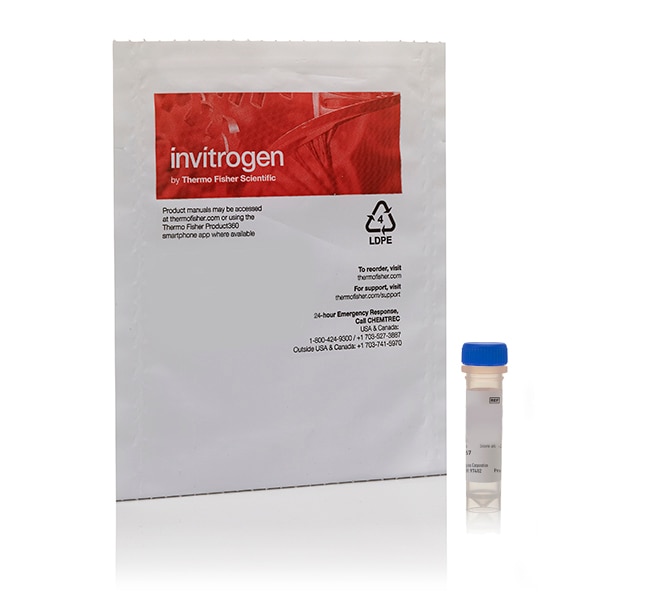
霍乱毒素亚基 B(重组),Alexa Fluor™ 594偶联物
Molecular Probes™ 霍乱毒素偶联物仅由重组形式的 B 亚基组成。这使我们能够提供完全不含有毒 A 亚基的高纯度产品。霍乱毒素 B了解更多信息
Have Questions?
更改视图

| 货号 | 数量 |
|---|---|
| C34777 | 100μg |
| C22842 | 500μg |
货号 C34777
价格(CNY)
3,123.00
飞享价
Ends: 31-Dec-2026
4,337.00共减 1,214.00 (28%)
Each
数量:
100μg
价格(CNY)
3,123.00
飞享价
Ends: 31-Dec-2026
4,337.00共减 1,214.00 (28%)
Each
Molecular Probes™ 霍乱毒素偶联物仅由重组形式的 B 亚基组成。这使我们能够提供完全不含有毒 A 亚基的高纯度产品。霍乱毒素 B 亚基 (CT-B) 通过结合神经节苷脂 GM1 附着在细胞上,是强大的神经元逆行标记工具。这种示踪剂已用于多种应用领域,包括追踪大鼠前脑传入、臂旁区域投射及膀胱壁神经元。在神经元示踪应用中使用时,CT-B 通常通过压力注射或通过离子电渗注入神经组织的方式注入。
霍乱毒素 B 亚基规格:
• 标记(激发/发射波长):Alexa Fluor™ 594 (590/617 nm)
• 在中性 pH 下,11.4 kDa B 亚基以 57kDa 五聚体形式存在
• 冻干产品可使用缓冲液(如 PBS)溶解使用
研究人员最近发现,CT-B 可用作脂筏标记物——脂筏是一种膜微结构域,在胆固醇和鞘脂质中含量丰富,被视作研究细胞信号转导的重要工具。脂筏染色时,首先将细胞与荧光素 CT-B 一同孵育,然后加入抗–CT-B 抗体,使脂筏中的 CT-B 交联成质膜上的不同斑块。这些斑块可通过荧光显微镜轻松观察到。除单独的荧光 CT-B 偶联物外,我们还提供含有 Alexa Fluor™ 488、Alexa Fluor™ 555或 Alexa Fluor™ 594 染料的 CT-B 偶联物、抗 –CT-B 抗体及荧光显微检测细胞标记和制备的详细实验方案的 Vybrant™ 脂筏标记试剂盒。
查找更多的 CT-B 偶联物的信息
我们提供了多种 CT-B 偶联物。有关这类示踪剂的更多信息、请参阅《Molecular Probes™ 手册》中的“蛋白偶联物—第14.7节”。
仅供科研使用。不可用于人或动物的治疗或诊断。
霍乱毒素 B 亚基规格:
• 标记(激发/发射波长):Alexa Fluor™ 594 (590/617 nm)
• 在中性 pH 下,11.4 kDa B 亚基以 57kDa 五聚体形式存在
• 冻干产品可使用缓冲液(如 PBS)溶解使用
研究人员最近发现,CT-B 可用作脂筏标记物——脂筏是一种膜微结构域,在胆固醇和鞘脂质中含量丰富,被视作研究细胞信号转导的重要工具。脂筏染色时,首先将细胞与荧光素 CT-B 一同孵育,然后加入抗–CT-B 抗体,使脂筏中的 CT-B 交联成质膜上的不同斑块。这些斑块可通过荧光显微镜轻松观察到。除单独的荧光 CT-B 偶联物外,我们还提供含有 Alexa Fluor™ 488、Alexa Fluor™ 555或 Alexa Fluor™ 594 染料的 CT-B 偶联物、抗 –CT-B 抗体及荧光显微检测细胞标记和制备的详细实验方案的 Vybrant™ 脂筏标记试剂盒。
查找更多的 CT-B 偶联物的信息
我们提供了多种 CT-B 偶联物。有关这类示踪剂的更多信息、请参阅《Molecular Probes™ 手册》中的“蛋白偶联物—第14.7节”。
仅供科研使用。不可用于人或动物的治疗或诊断。
仅供科研使用。不可用于诊断程序。
规格
标签类型Alexa Fluor 染料
产品线Alexa Fluor
蛋白质形式Recombinant
蛋白质子类型霍乱毒素
数量100μg
运输条件室温
偶联物Alexa Fluor 594
形式Lyophilized
重组Recombinant
Unit SizeEach
内容与储存
储存在冰箱(-5 至 -30°C)中并避光。
常见问题解答 (FAQ)
我注入了荧光示踪剂,但在组织固定并切片后无法检测到它,哪个环节出了问题?
你们有只能逆向示踪的示踪剂吗?
我该如何为自己的试验选择示踪对象?
你们有哪些神经元示踪产品?
I injected a fluorescent tracer, but cannot detect it after tissue is fixed and sectioned. What am I doing wrong?
引用和文献 (56)
引用和文献
Abstract
Cocaine evokes projection-specific synaptic plasticity of lateral habenula neurons.
Journal:J Neurosci
PubMed ID:22956853
Addictive drugs share the ability to increase dopamine (DA) levels and trigger synaptic adaptations in the mesocorticolimbic system, two cellular processes engaged in the early stages of drug seeking. Neurons located in the lateral habenula (LHb) modulate the activity of DA neurons and DA release, and adaptively tune goal-directed behaviors.
Localization of cystic fibrosis transmembrane conductance regulator to lipid rafts of epithelial cells is required for Pseudomonas aeruginosa-induced cellular activation.
Journal:J Immunol
PubMed ID:14688350
'The cystic fibrosis (CF) transmembrane conductance regulator (CFTR) protein is an epithelial cell receptor for the outer core oligosaccharide of the Pseudomonas aeruginosa LPS. Bacterial binding leads to CFTR-dependent bacterial internalization, initiation of NF-kappaB nuclear translocation, cellular desquamation, and eventual apoptosis of the infected cells, all of which are critical
Chondrocytes utilize a cholesterol-dependent lipid translocator to externalize phosphatidylserine.
Journal:Biochemistry
PubMed ID:16519527
'During endochondral ossification, growth plate chondrocytes release plasma membrane (PM) derived matrix vesicles (MV), which are the site of initial hydroxyapatite crystal formation. MV constituents which facilitate the mineralization process include the integral membrane ectoenzymes alkaline phosphatase (ALPase) and nucleotide pyrophosphatase phosphodiesterase (NPP1/PC-1), along with a phosphatidylserine- (PS-) rich membrane
Inhibition of caveolar uptake, SV40 infection, and beta1-integrin signaling by a nonnatural glycosphingolipid stereoisomer.
Journal:J Cell Biol
PubMed ID:17371832
'Caveolar endocytosis is an important mechanism for the uptake of certain pathogens and toxins and also plays a role in the internalization of some plasma membrane (PM) lipids and proteins. However, the regulation of caveolar endocytosis is not well understood. We previously demonstrated that caveolar endocytosis and beta1-integrin signaling are
Plasticity of B cell receptor internalization upon conditional depletion of clathrin.
Journal:Mol Biol Cell
PubMed ID:15716350
'B cell antigen receptor (BCR) association with lipid rafts, the actin cytoskeleton, and clathrin-coated pits influences B cell signaling and antigen presentation. Although all three cellular structures have been separately implicated in BCR internalization, the relationship between them has not been clearly defined. In this study, internalization pathways were characterized