Search


引用和文献 (23)
Invitrogen™
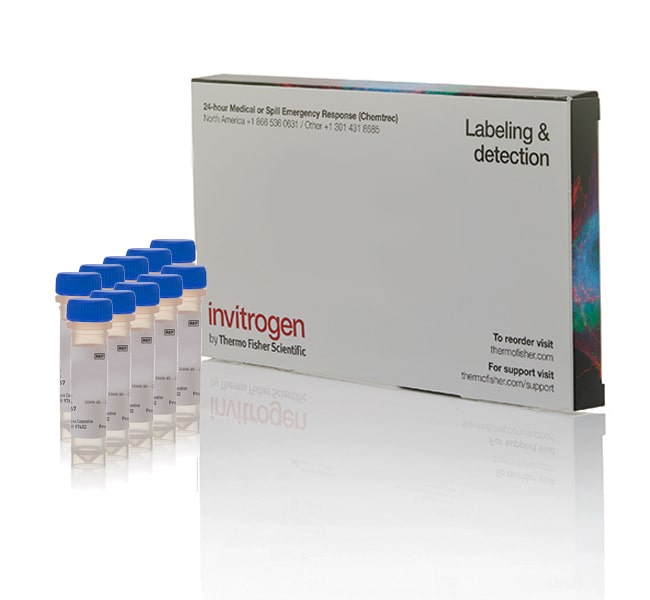
FM™ 4-64FX,FM™ 4-64 膜染色剂的可固定类似物
亲脂性探针 FM™ 4-64FX 在水中发弱荧光,但在与质膜外膜结合后会发出强烈的荧光,使质膜分散染色。此结合过程快速可逆,“FX”表示该类似物可采用醛类固定剂固定。此产品还是一种出色的试剂,可用于鉴定主动应激神经元,研究活性依赖性囊泡循环机制。了解更多信息
| 货号 | 数量 |
|---|---|
| F34653 | 10 x 100 μg |
货号 F34653
价格(CNY)
6,188.00
飞享价
Ends: 31-Dec-2026
8,594.00共减 2,406.00 (28%)
Each
数量:
10 x 100 μg
价格(CNY)
6,188.00
飞享价
Ends: 31-Dec-2026
8,594.00共减 2,406.00 (28%)
Each
亲脂性探针 FM™ 4-64FX 在水中发弱荧光,但在与质膜外膜结合后会发出强烈的荧光,使质膜分散染色。此结合过程快速可逆,“FX”表示该类似物可采用醛类固定剂固定。此产品还是一种出色的试剂,可用于鉴定主动应激神经元,研究活性依赖性囊泡循环机制。
仅供科研使用。不可用于诊断程序。
规格
颜色红外的
检测方法荧光
适用于(设备)荧光显微镜
产品线FM
数量10 x 100 μg
运输条件室温
标签类型Fluorescent Dye
产品类型亲脂性探针
亚细胞定位细胞膜
Unit SizeEach
内容与储存
室温避光储存。
常见问题解答 (FAQ)
I want to study endosomes trafficking using FM 4-64. Will the label be retained after fixation? And can I label already-fixed cells?
I want to study endosome trafficking using FM 4-64 dye. Will the label be retained after fixation? And can I label cells that have already been fixed?
引用和文献 (23)
引用和文献
Abstract
Crystal structure of the complete integrin alphaVbeta3 ectodomain plus an alpha/beta transmembrane fragment.
Journal:J Cell Biol
PubMed ID:19704023
'We determined the crystal structure of 1TM-alphaVbeta3, which represents the complete unconstrained ectodomain plus short C-terminal transmembrane stretches of the alphaV and beta3 subunits. 1TM-alphaVbeta3 is more compact and less active in solution when compared with DeltaTM-alphaVbeta3, which lacks the short C-terminal stretches. The structure reveals a bent conformation and
Endocytic trafficking from the small intestinal brush border probed with FM dye.
Journal:Am J Physiol Gastrointest Liver Physiol
PubMed ID:19679822
The small intestinal brush border functions as the body's main portal for uptake of dietary nutrients and simultaneously acts as the largest permeability barrier against pathogens. To enable this, the digestive enzymes of the brush border are organized in lipid raft microdomains stabilized by cross-linking galectins and intelectin, but little
A stochastic mechanism for biofilm formation by Mycoplasma pulmonis.
Journal:J Bacteriol
PubMed ID:17142389
Bacterial biofilms are communities of bacteria that are enclosed in an extracellular matrix. Within a biofilm the bacteria are protected from antimicrobials, environmental stresses, and immune responses from the host. Biofilms are often believed to have a highly developed organization that is derived from differential regulation of the genes that
Activity-induced rapid synaptic maturation mediated by presynaptic cdc42 signaling.
Journal:Neuron
PubMed ID:16675395
Maturation of presynaptic transmitter secretion machinery is a critical step in synaptogenesis. Here we report that a brief train of presynaptic action potentials rapidly converts early nonfunctional contacts between cultured hippocampal neurons into functional synapses by enhancing presynaptic glutamate release. The enhanced release was confirmed by a marked increase in
Helical disposition of proteins and lipopolysaccharide in the outer membrane of Escherichia coli.
Journal:J Bacteriol
PubMed ID:15743937
In bacteria, several physiological processes once thought to be the products of uniformly dispersed reactions are now known to be highly asymmetric, with some exhibiting interesting geometric localizations. In particular, the cell envelope of Escherichia coli displays a form of subcellular differentiation in which peptidoglycan and outer membrane proteins at