Search


引用和文献 (6)
Invitrogen™
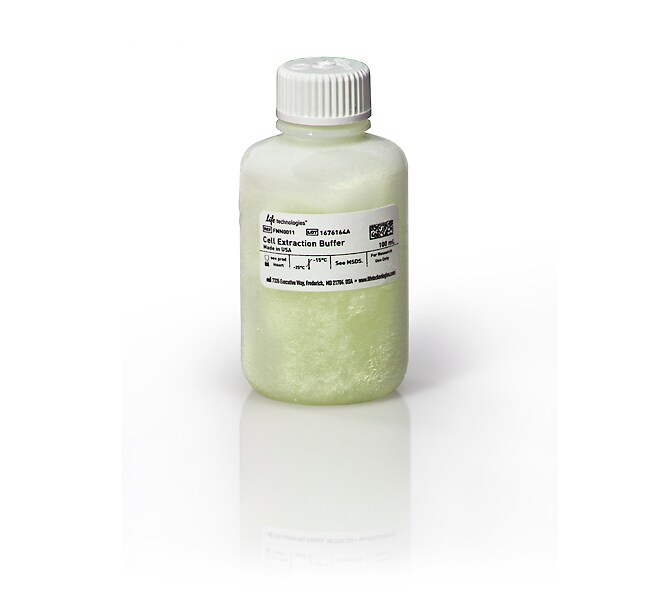
细胞裂解缓冲液
细胞裂解缓冲液是一种用于 ELISA 和 Western 印迹应用的即用型裂解缓冲液,用于从哺乳动物细胞中提取总蛋白。该缓冲液使用基于去污剂的裂解方式,无需机械性细胞破碎,在从细胞培养物中分离蛋白时提供更温和且更简便的替代方法。该制剂有助于保留酶检测或免疫检测所需的蛋白结构和功能。缓冲液配方:10 mM Tris了解更多信息
| 货号 | 数量 |
|---|---|
| FNN0011 | 100 mL |
货号 FNN0011
价格(CNY)
1,541.00
飞享价
Ends: 31-Dec-2026
2,032.00共减 491.00 (24%)
Each
数量:
100 mL
价格(CNY)
1,541.00
飞享价
Ends: 31-Dec-2026
2,032.00共减 491.00 (24%)
Each
细胞裂解缓冲液是一种用于 ELISA 和 Western 印迹应用的即用型裂解缓冲液,用于从哺乳动物细胞中提取总蛋白。该缓冲液使用基于去污剂的裂解方式,无需机械性细胞破碎,在从细胞培养物中分离蛋白时提供更温和且更简便的替代方法。该制剂有助于保留酶检测或免疫检测所需的蛋白结构和功能。
缓冲液配方:10 mM Tris(pH 值 7.4)、100 mM NaCl、1 mM EDTA、1 mM EGTA、1 mM NaF、20 mM Na4P2O7
2 mM Na3VO4、1% Triton X-100、10% 甘油、0.1% SDS、0.5% 去氧胆酸盐
该细胞提取缓冲液不含蛋白酶抑制剂,应在即将使用前补充 1 mM PMSF 和蛋白酶抑制剂混合物。
查看所有可用的 ELISA 裂解缓冲液和试剂。
缓冲液配方:10 mM Tris(pH 值 7.4)、100 mM NaCl、1 mM EDTA、1 mM EGTA、1 mM NaF、20 mM Na4P2O7
2 mM Na3VO4、1% Triton X-100、10% 甘油、0.1% SDS、0.5% 去氧胆酸盐
该细胞提取缓冲液不含蛋白酶抑制剂,应在即将使用前补充 1 mM PMSF 和蛋白酶抑制剂混合物。
查看所有可用的 ELISA 裂解缓冲液和试剂。
仅供科研使用。不可用于诊断程序。
规格
适用于(应用)Western 印迹、ELISA 用样品制备
产品类型细胞提取缓冲液
数量100 mL
运输条件Ambient
Unit SizeEach
内容与储存
Store at 2°C to 8°C
常见问题解答 (FAQ)
在我的 ProcartaPlex 检测数据分析过程中,我收到一条警告消息,指出存在高度聚集的珠子。我应该怎么办?
在我的 ProcartaPlex 检测数据分析期间,珠子落在珠子图上珠子区域的下方或左下方。为什么是这样?
在我的 ProcartaPlex 检测数据分析期间,珠子没有出现在门控区域中。发生了什么?
我所有的 ProcartaPlex 检测孔的珠数都不稳定。什么地方出了错?
我的 ProcartaPlex 检测标准曲线的微珠计数正确且规则,但对于我的样品,微珠计数不稳定,我收到一条警告消息,提示“采集中至少有一个区域未达到最大计数”。我应该怎么办?
引用和文献 (6)
引用和文献
Abstract
Imaging EGFR phosphorylation in intact human pancreatic carcinoma cells.
Journal:In Vivo
PubMed ID:22773576
'Carcinoma of the pancreatic duct is a highly malignant tumor characterized by aggressive and early metastastatic growth. A high rate of tumor recurrence after surgical resection and the lack of effective chemotherapeutic approaches result in low 5-year survival rates. Overexpression of epidermal growth factor (EGF) and its receptor have been
Induction of apoptosis pathways in several cell lines following exposure to the marine algal toxin azaspiracid.
Journal:Chem Res Toxicol
PubMed ID:22725096
'Azaspiracids (AZAs) are polyether marine dinoflagellate toxins that accumulate in shellfish and represent an emerging human health risk. Although there have been no deaths associated with the AZA toxins, humans exposed to AZAs experience severe gastrointestinal symptoms. This toxin class has been shown to be highly cytotoxic, a teratogen to
Subtoxic levels hydrogen peroxide-induced production of interleukin-6 by retinal pigment epithelial cells.
Journal:Mol Vis
PubMed ID:21031020
To study the effect of subtoxic levels of hydrogen peroxide (H(2)O(2)) on the expression and release of interleukin-6 (IL-6) by cultured retinal pigment epithelial (RPE) cells and to explore the relevant signal pathways.
Interleukin-1beta increases baseline expression and secretion of interleukin-6 by human uveal melanocytes in vitro via the p38 MAPK/NF-kappaB pathway.
Journal:Invest Ophthalmol Vis Sci
PubMed ID:21398280
Melanocyte is the major cell component in the uvea. Interleukin (IL)-6 is a proinflammatory cytokine. The authors studied the expression of IL-6 in cultured human uveal melanocytes (UMs) and their modulation by IL-1ß and explored the relevant signal pathways.
Twist modulates human trophoblastic cell invasion via regulation of N-cadherin.
Journal:Endocrinology
PubMed ID:22166980
The invasion of extravillous cytotrophoblasts (EVT) into the underlying maternal tissues and vasculature is a key step in human placentation. The molecular mechanisms involved in the development of the invasive phenotype of EVT include many that were first discovered for their role in cancer cell metastasis. Previous studies have demonstrated