Search


引用和文献 (7)
Invitrogen™
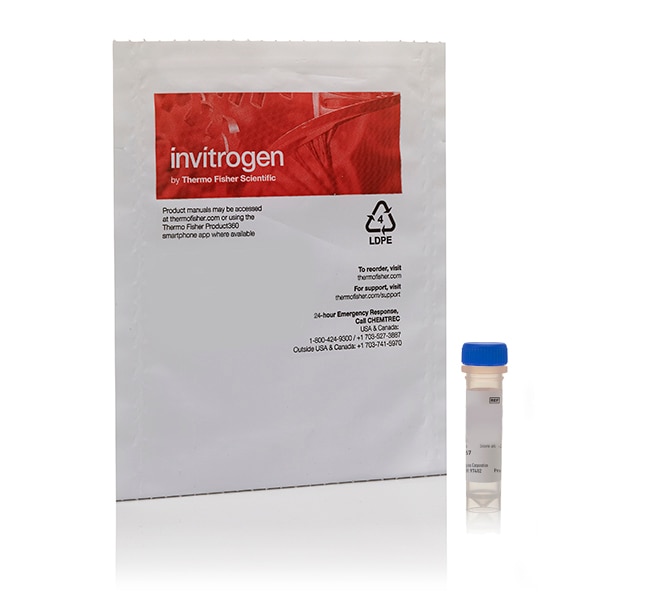
HCS LipidTOX™ 红色磷脂沉积检测试剂 (1000X),用于细胞成像
HCS LipidTOX™ 红色磷脂沉积检测试剂开发用于表征化合物对哺乳动物细胞系中脂质代谢的潜在毒副作用。本款试剂可通过荧光显微镜或配备可检测最大激发/发射波长为 ∼595/615 nm 的滤光片的 HCS 读数仪轻松检测。LipidTOX™了解更多信息
| 货号 | 数量 |
|---|---|
| H34351 | 1 each |
货号 H34351
价格(CNY)
5,884.00
Each
数量:
1 each
价格(CNY)
5,884.00
Each
HCS LipidTOX™ 红色磷脂沉积检测试剂开发用于表征化合物对哺乳动物细胞系中脂质代谢的潜在毒副作用。本款试剂可通过荧光显微镜或配备可检测最大激发/发射波长为 ∼595/615 nm 的滤光片的 HCS 读数仪轻松检测。LipidTOX™ 磷脂沉积检测试剂不会影响细胞的正常生长,在活细胞中孵育后观察到的染色经甲醛固定后仍可保持。本款探针与 HCS LipidTOX™ 中性脂质染料兼容(H34475、H34476 和 H34477)。
仅供科研使用。不可用于诊断程序。
规格
检测方法荧光
染料类型其他标记或染料
产品规格96 孔板
数量1 each
运输条件室温
适用于(设备)高内涵分析仪
产品线LipidTOX
产品类型磷脂沉积检测试剂
Unit SizeEach
内容与储存
在冷冻冰箱(-5°C 至 -30°C)中避光储存。
引用和文献 (7)
引用和文献
Abstract
Fluorescent high-content imaging allows the discrimination and quantitation of E-LDL-induced lipid droplets and Ox-LDL-generated phospholipidosis in human macrophages.
Journal:Cytometry A
PubMed ID:20014301
'Macrophage foam cells formed during uptake of atherogenic lipoproteins are a hallmark of atherosclerotic lesion development. In this study, human macrophages were incubated with two prototypic atherogenic LDL modifications enzymatically degraded LDL (E-LDL) and oxidized LDL (Ox-LDL) prepared from the same donor LDL. To detect differences in macrophage lipid storage,
In vitro detection of drug-induced phospholipidosis using gene expression and fluorescent phospholipid based methodologies.
Journal:Toxicol Sci
PubMed ID:17567588
'Phospholipidosis (PLD) is characterized by the excessive intracellular accumulation of phospholipids. It is well established that a large number of cationic amphiphilic drugs have the potential to induce PLD. In the present study, we describe two facile in vitro methods to determine the PLD-inducing potential of a molecule. The first
Comparative analysis of lipotoxicity induced by endocrine, pharmacological, and innate immune stimuli in rat basophilic leukemia cells.
Journal:J Immunotoxicol
PubMed ID:25539471
Time-restricted feeding delays the emergence of the age-associated, neoplastic-prone tissue landscape.
Journal:Aging (Albany NY)
PubMed ID:31188781
Silencing of solute carrier family 13 member 5 disrupts energy homeostasis and inhibits proliferation of human hepatocarcinoma cells.
Journal:J Biol Chem
PubMed ID:28655760