Search


引用和文献 (19)
Invitrogen™
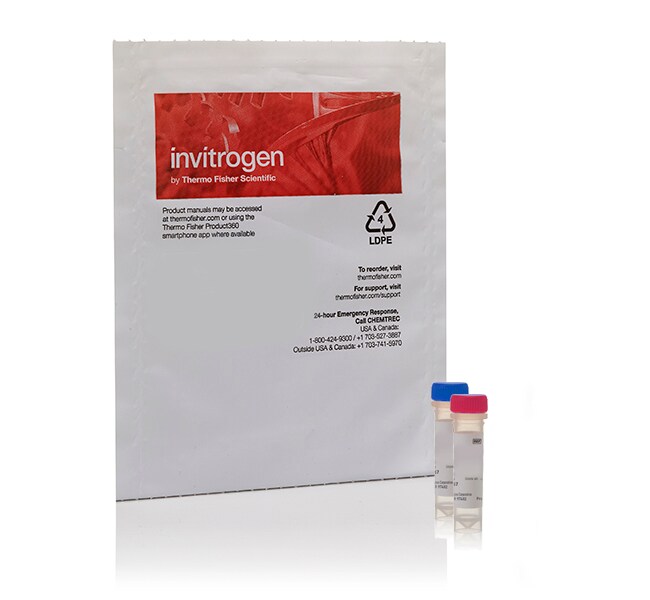
LC3B 自噬抗体试剂盒
LC3 自噬抗体试剂盒包含兔抗 LC3B 多克隆抗体,已经过验证可用于荧光显微镜检查和高内涵成像及分析。还包含二磷酸氯喹——使用这种化合物处理后,正常自噬通量被破坏,进而导致自噬体积累。了解更多信息
| 货号 | 数量 |
|---|---|
| L10382 | 1 kit |
货号 L10382
价格(CNY)
4,167.00
飞享价
Ends: 31-Dec-2026
5,787.00共减 1,620.00 (28%)
Each
数量:
1 kit
价格(CNY)
4,167.00
飞享价
Ends: 31-Dec-2026
5,787.00共减 1,620.00 (28%)
Each
LC3 自噬抗体试剂盒包含兔抗 LC3B 多克隆抗体,已经过验证可用于荧光显微镜检查和高内涵成像及分析。还包含二磷酸氯喹——使用这种化合物处理后,正常自噬通量被破坏,进而导致自噬体积累。
仅供科研使用。不可用于诊断程序。
规格
检测方法荧光
染料类型未标记
产品规格96 孔板、玻片
数量1 kit
运输条件干冰
适用于(设备)共聚焦显微镜, 荧光显微镜, 高内涵分析仪
产品类型染料
Unit SizeEach
内容与储存
试剂盒包含兔抗 LC3B 多克隆抗体和二磷酸氯喹。在 ≤ -20°C 下储存
常见问题解答 (FAQ)
How does the LC3B Antibody Kit for Autophagy work?
引用和文献 (19)
引用和文献
Abstract
WIPI1 coordinates melanogenic gene transcription and melanosome formation via TORC1 inhibition.
Journal:J Biol Chem
PubMed ID:21317285
'Recent studies implicate a role for WD repeat domain, phosphoinositide-interacting 1 (WIPI1) in the biogenesis of melanosomes, cell type-specific lysosome-related organelles. In this study, we determined that WIPI1, an ATG18 homologue that is shown to localize to both autophagosomes and early endosomes, inhibited mammalian target of rapamycin (MTOR) signaling, leading
Membrane fusion-mediated autophagy induction enhances morbillivirus cell-to-cell spread.
Journal:J Virol
PubMed ID:22647692
In the context of viral infections, autophagy induction can be beneficial or inhibitory. Within the Paramyxoviridae family, only morbilliviruses have been investigated and are reported to induce autophagy. Here we show that morbilliviruses rapidly induce autophagy and require this induction for efficient cell-to-cell spread. Coexpression of both glycoproteins in cells
Hormonally active vitamin D3 (1alpha,25-dihydroxycholecalciferol) triggers autophagy in human macrophages that inhibits HIV-1 infection.
Journal:J Biol Chem
PubMed ID:21454634
Autophagy is a self-digestion pathway essential for maintaining cellular homeostasis and cell survival and for degrading intracellular pathogens. Human immunodeficiency virus-1 (HIV-1) may utilize autophagy for replication as the autophagy-related protein-7 (ATG-7), microtubule-associated protein 1 light chain 3, ATG-12, and ATG-16L2 are required for productive HIV-1 infection; however, the effects
Galectin-8 Senses Phagosomal Damage and Recruits Selective Autophagy Adapter TAX1BP1 To Control Mycobacterium tuberculosis Infection in Macrophages.
Journal:MBio
PubMed ID:34225486
Malpighian Tubule Cells in Overwintering Cave Crickets Troglophilus cavicola (Kollar, 1833) and T. neglectus Krauss, 1879 (Rhaphidophoridae, Ensifera).
Journal:PLoS One
PubMed ID:27379687
'During winter, cave cricket larvae undergo dormancy in subterranean habitats; this dormancy is termed diapause in second year Troglophilus cavicola larvae because they mature during this time, and termed quiescence in T. neglectus, because they mature after dormancy. Here we used electron microscopy to analyze ultrastructural changes in the epithelial