Search


引用和文献 (19)
Invitrogen™
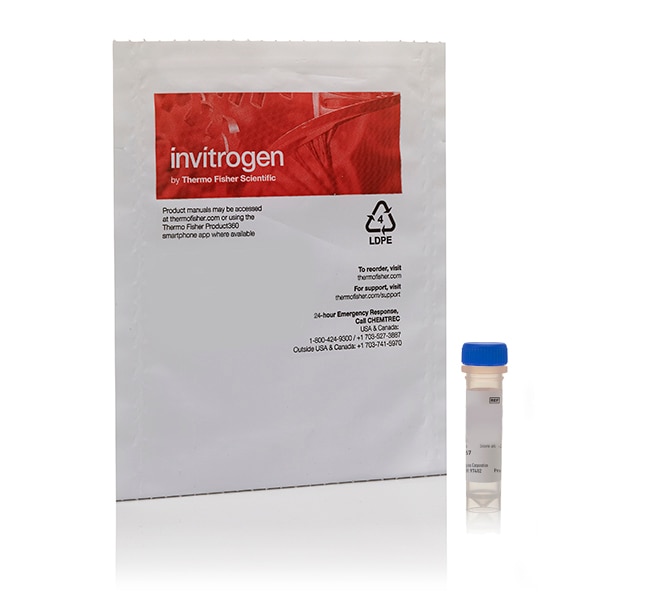
来自人血浆的低密度脂蛋白,乙酰化,Alexa Fluor™ 488 偶联物 (Alexa Fluor™ 488 AcLDL)
人低密度脂蛋白 (LDL) 是大蛋白复合物 (∼500,000 Da),其可与脊椎动物细胞表面的特定受体结合,通过受体介导的内吞作用传递胆固醇 — 标记的 LDL 复合物是研究这一现象的有用工具。这些实验通常通过加入荧光标记的了解更多信息
| 货号 | 数量 |
|---|---|
| L23380 | 200 μL |
货号 L23380
价格(CNY)
9,773.00
Each
数量:
200 μL
价格(CNY)
9,773.00
Each
人低密度脂蛋白 (LDL) 是大蛋白复合物 (∼500,000 Da),其可与脊椎动物细胞表面的特定受体结合,通过受体介导的内吞作用传递胆固醇 — 标记的 LDL 复合物是研究这一现象的有用工具。这些实验通常通过加入荧光标记的 LDL 来培养细胞,并通过显微镜或流式细胞术进行分析。或者,荧光标记的 LDL 可注入检测动物,并且可在指定的时间段后分析标记的分布。我们提供一个未标记的 LDL 和两类标记的 LDL:含有未修饰载脂蛋白的 LDL(用于研究正常胆固醇传递和内吞)和含有乙酰化 (Ac) 载脂蛋白的 LDL(用于研究特异性表达这种乙酰化 LDL 的受体的细胞类型(即内皮细胞和小胶质细胞))。
LDL 规格:
•标记 (Ex/Em):Alexa Fluor™ 488 (495/519)
• 乙酰化:是
• 数量:200 µL (1.0 mg/mL)
持续制备新鲜的 LDL
我们大约每两个月采用新鲜人血浆制备 LDL 和 AcLDL 产品。非乙酰化 LDL 产品在其制备后两周内发货。所有的乙酰化 LDL 产品均持续供应。
非乙酰化与乙酰化 LDL
含未修饰载脂蛋白的 LDL 可用于研究正常胆固醇传递和内吞。如果 LDL 的载脂蛋白的赖氨酸残基被乙酰化,则 LDL 复合物不再与 LDL 受体结合,而是由拥有特异性针对该修饰形式的“清道夫”受体的内皮细胞和小胶质细胞摄取。
标记的 LDL 的主要应用
LDL 复合物的其中一些应用包括:
•细胞表面 LDL 受体的计数以及内吞后分析其运动和聚集
• 在成纤维细胞中定量分析 LDL 受体活性(替代放射性标记的 LDL 测定)
• 研究不同细胞系中的 LDL 表达并识别 LDL 受体缺陷
仅供研究使用。不得用于任何动物或人类的治疗或诊断。
LDL 规格:
•标记 (Ex/Em):Alexa Fluor™ 488 (495/519)
• 乙酰化:是
• 数量:200 µL (1.0 mg/mL)
持续制备新鲜的 LDL
我们大约每两个月采用新鲜人血浆制备 LDL 和 AcLDL 产品。非乙酰化 LDL 产品在其制备后两周内发货。所有的乙酰化 LDL 产品均持续供应。
非乙酰化与乙酰化 LDL
含未修饰载脂蛋白的 LDL 可用于研究正常胆固醇传递和内吞。如果 LDL 的载脂蛋白的赖氨酸残基被乙酰化,则 LDL 复合物不再与 LDL 受体结合,而是由拥有特异性针对该修饰形式的“清道夫”受体的内皮细胞和小胶质细胞摄取。
标记的 LDL 的主要应用
LDL 复合物的其中一些应用包括:
•细胞表面 LDL 受体的计数以及内吞后分析其运动和聚集
• 在成纤维细胞中定量分析 LDL 受体活性(替代放射性标记的 LDL 测定)
• 研究不同细胞系中的 LDL 表达并识别 LDL 受体缺陷
仅供研究使用。不得用于任何动物或人类的治疗或诊断。
仅供科研使用。不可用于诊断程序。
规格
最大浓度1 mg⁄ml
检测方法荧光
染料类型Alexa Fluor 染料
形式液体
数量200 μL
运输条件湿冰
产品线Alexa Fluor
产品类型补充剂
Unit SizeEach
内容与储存
请避光冷藏 (2–8°C) 储存。
常见问题解答 (FAQ)
If the Low Density Lipoprotein (LDL) from Human Plasma was accidentally frozen, can I still use it?
Can I use Low Density Lipoprotein (LDL) from Human Plasma on other species?
引用和文献 (19)
引用和文献
Abstract
Somatic cell plasticity and Niemann-Pick type C2 protein: fibroblast activation.
Journal:J Biol Chem
PubMed ID:21084287
A growing body of evidence points toward activated fibroblasts, also known as myofibroblasts, as one of the leading mediators in several major human pathologies including proliferative fibrotic disorders, invasive tumor growth, rheumatoid arthritis, and atherosclerosis. Niemann-Pick Type C2 (NPC2) protein has been recently identified as a product of the second
Silence of TRIB3 suppresses atherosclerosis and stabilizes plaques in diabetic ApoE-/-/LDL receptor-/- mice.
Journal:Diabetes
PubMed ID:22275087
'Insulin resistance triggers the developments of diabetes mellitus and atherosclerosis. Tribbles homolog 3 (TRIB3) is involved in insulin resistance. We aimed to investigate whether TRIB3 is implicated in diabetic atherosclerosis. Sixty 3-week-old apolipoprotein E (ApoE-/-)/LDR receptor (LDLR-/-) mice were randomly divided into chow and diabetes groups. Diabetes was induced by
Deficient p27 phosphorylation at serine 10 increases macrophage foam cell formation and aggravates atherosclerosis through a proliferation-independent mechanism.
Journal:Arterioscler Thromb Vasc Biol
PubMed ID:21885849
Genetic ablation of the growth suppressor p27(Kip1) (p27) in the mouse aggravates atherosclerosis coinciding with enhanced arterial cell proliferation. However, it is unknown whether molecular mechanisms that limit p27's protective function contribute to atherosclerosis development and whether p27 exerts proliferation-independent activities in the arterial wall. This study aims to provide
cGMP increases antioxidant function and attenuates oxidant cell death in mouse lung microvascular endothelial cells by a protein kinase G-dependent mechanism.
Journal:Am J Physiol Lung Cell Mol Physiol
PubMed ID:20453163
Increasing evidence suggests that endothelial cytotoxicity from reactive oxygen species (ROS) contributes to the pathogenesis of acute lung injury. Treatments designed to increase intracellular cGMP attenuate ROS-mediated apoptosis and necrosis in several cell types, but the mechanisms are not understood, and the effect of cGMP on pulmonary endothelial cell death
ILK mediates LPS-induced vascular adhesion receptor expression and subsequent leucocyte trans-endothelial migration.
Journal:Cardiovasc Res
PubMed ID:20164118
The inflammatory response to injurious agents is tightly regulated to avoid adverse consequences of inappropriate leucocyte accumulation or failed resolution. Lipopolysaccharide (LPS)-activated endothelium recruits leucocytes to the inflamed tissue through controlled expression of membrane-associated adhesion molecules. LPS responses in macrophages are known to be regulated by integrin-linked kinase (ILK); in