Search

Thermo Scientific™
PiKo PCR 板,96 孔,白色
Thermo Scientific 96 孔 Piko PCR 板(白色)是具有一个显微镜玻片大小占用空间的 PCR了解更多信息
Have Questions?
更改视图

| 货号 | 数量 |
|---|---|
| SPL0961 | 200/Cs. |
| SPL096150 | 50 Plates |
货号 SPL0961
价格(CNY)
2,087.00
飞享价
Ends: 31-Dec-2026
3,355.00共减 1,268.00 (38%)
数量:
200/Cs.
价格(CNY)
2,087.00
飞享价
Ends: 31-Dec-2026
3,355.00共减 1,268.00 (38%)
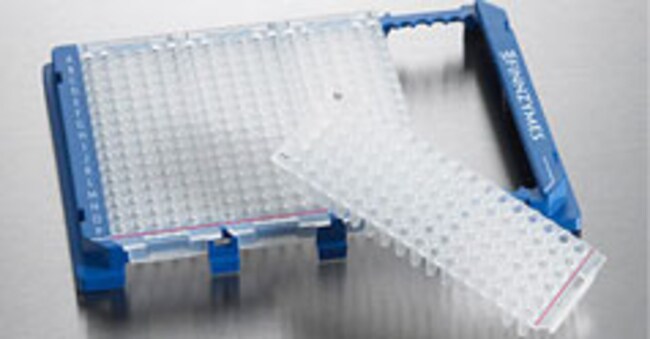
Thermo Scientific 96 孔 Piko PCR 板(白色)是具有一个显微镜玻片大小占用空间的 PCR 板系列。我们利用我们申请专利的超薄壁 (UTW) 技术,不仅缩小了板的尺寸,还显著减少了孔壁厚度。
可将 4 个显微镜玻片大小的板逆向卡入刚性框架中,得到标准 384 孔微孔板的等效产品。
特点
• 适用于快速 PCR/qPCR 应用的超薄壁 (UTW)
• 矮型
• 设计用于与 Piko 和 PikoReal 96 孔热循环仪配合使用
• 可将板卡入板框架中以形成标准 384 孔板
• 与标准多通道移液器和液体处理平台兼容
• 孔间距和占用空间符合行业 (ANSI) 尺寸
应用
• qPCR/实时荧光定量 PCR
相关产品
Piko PCR 板(96 孔,透明)
Piko PCR 板(96 孔,白色)
96 孔 Piko PCR 板(白色)的板框架
可将 4 个显微镜玻片大小的板逆向卡入刚性框架中,得到标准 384 孔微孔板的等效产品。
特点
• 适用于快速 PCR/qPCR 应用的超薄壁 (UTW)
• 矮型
• 设计用于与 Piko 和 PikoReal 96 孔热循环仪配合使用
• 可将板卡入板框架中以形成标准 384 孔板
• 与标准多通道移液器和液体处理平台兼容
• 孔间距和占用空间符合行业 (ANSI) 尺寸
应用
• qPCR/实时荧光定量 PCR
相关产品
Piko PCR 板(96 孔,透明)
Piko PCR 板(96 孔,白色)
96 孔 Piko PCR 板(白色)的板框架
仅供科研使用。不可用于诊断程序。
规格
认证/合规经过认证,无 RNA 酶/无 DNA 酶
适用于(设备)Piko 热循环仪、PikoReal 实时荧光定量 PCR 系统
包装200 块板
产品类型PCR 微孔板
数量200/Cs.
反应速度标准
条形码无条形码
颜色白色
材质聚丙烯
孔数量96
产品线Piko