Search


引用和文献 (7)
Thermo Scientific™
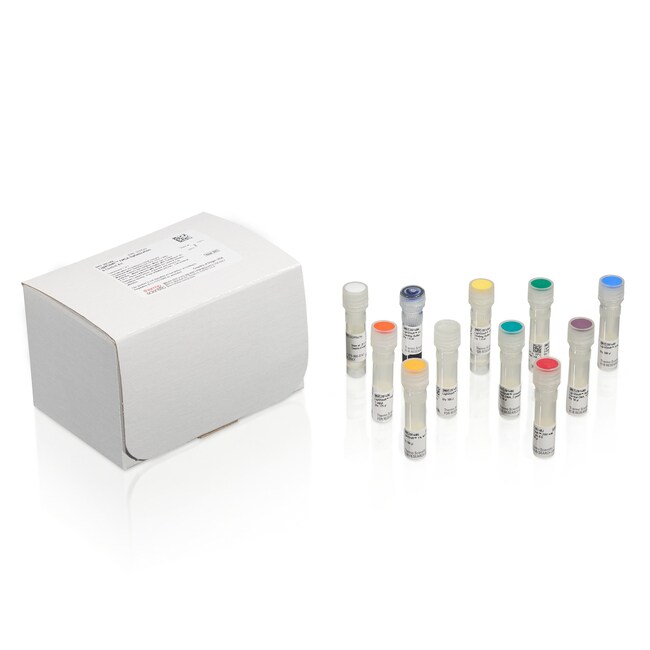
LightShift™ EMSA 优化和控制试剂盒
The Thermo Scientific LightShift EMSA Optimization and Control Kit is an extraordinarily robust and sensitive system for performing electrophoretic mobility了解更多信息
| 货号 | 数量 |
|---|---|
| 20148X | 100 次反应 |
货号 20148X
价格(CNY)
1,788.00
飞享价
Ends: 31-Dec-2026
2,134.00共减 346.00 (16%)
Each
数量:
100 次反应
价格(CNY)
1,788.00
飞享价
Ends: 31-Dec-2026
2,134.00共减 346.00 (16%)
Each
The Thermo Scientific LightShift EMSA Optimization and Control Kit is an extraordinarily robust and sensitive system for performing electrophoretic mobility shift assays (EMSA) to identify and characterize protein-DNA binding interactions. The kit includes reagents for setting up and customizing DNA binding reactions and a control set of DNA and protein extract to test the kit system.
Features of theLightShift EMSA Optimization and Control Kit:
• Excellent for detecting low-abundance proteins in nuclear extracts
• Sensitivity that surpasses radioactive and digoxigenin methods
• Compatible with previously established binding conditions for popular DNA-protein interactions
• Includes EBNA control system to help new users develop a working assay and understand the methods used to confirm binding interaction specificity
The principle for LightShift EMSA Detection is similar to a Western blot. Biotin end-labeled duplex DNA is incubated with a nuclear extract or purified factor and electrophoresed on a native gel. The DNA is then rapidly (30 minutes) transferred to a positive nylon membrane, UV crosslinked, probed with streptavidin-HRP conjugate and incubated with the substrate. The protocol from labeling to results can be accomplished in a single day.
The interaction of proteins with DNA is central to the control of many cellular processes including DNA replication, recombination and repair, transcription, and viral assembly. One technique that is central to studying gene regulation and determining protein:DNA interactions is the electrophoretic mobility shift assay (EMSA).
The EMSA technique is based on the observation that protein:DNA complexes migrate more slowly than free DNA molecules when subjected to non-denaturing polyacrylamide or agarose gel electrophoresis. Because the rate of DNA migration is shifted or retarded upon protein binding, the assay is also referred to as a gel shift or gel retardation assay. Until conception of the EMSA protein:DNA interactions were studied primarily by nitrocellulose filter-binding assays.
All that is needed to perform the assay is purified DNA target that has been end-labeled with biotin, the protein extract to be tested, nylon membrane and basic electrophoresis equipment. DNA targets can be synthesized with 5' or 3' biotin labels or they can be labeled after synthesis using the Thermo Scientific Biotin 3' End DNA Labeling Kit (Product No. 89818). Nuclear, cytosolic or whole cell protein extracts can be obtained by a variety of methods, including the Thermo Scientific NE-PER Nuclear and Cytoplasmic Extraction Reagent Kit (Product No. 78833).
More Product Data
• Transfer EMSA gels using the Pierce G2 Fast Blotter
Related Products
LightShift™ Chemiluminescent EMSA Kit
LightShift™ Poly (dI-dC)
Features of theLightShift EMSA Optimization and Control Kit:
• Excellent for detecting low-abundance proteins in nuclear extracts
• Sensitivity that surpasses radioactive and digoxigenin methods
• Compatible with previously established binding conditions for popular DNA-protein interactions
• Includes EBNA control system to help new users develop a working assay and understand the methods used to confirm binding interaction specificity
The principle for LightShift EMSA Detection is similar to a Western blot. Biotin end-labeled duplex DNA is incubated with a nuclear extract or purified factor and electrophoresed on a native gel. The DNA is then rapidly (30 minutes) transferred to a positive nylon membrane, UV crosslinked, probed with streptavidin-HRP conjugate and incubated with the substrate. The protocol from labeling to results can be accomplished in a single day.
The interaction of proteins with DNA is central to the control of many cellular processes including DNA replication, recombination and repair, transcription, and viral assembly. One technique that is central to studying gene regulation and determining protein:DNA interactions is the electrophoretic mobility shift assay (EMSA).
The EMSA technique is based on the observation that protein:DNA complexes migrate more slowly than free DNA molecules when subjected to non-denaturing polyacrylamide or agarose gel electrophoresis. Because the rate of DNA migration is shifted or retarded upon protein binding, the assay is also referred to as a gel shift or gel retardation assay. Until conception of the EMSA protein:DNA interactions were studied primarily by nitrocellulose filter-binding assays.
All that is needed to perform the assay is purified DNA target that has been end-labeled with biotin, the protein extract to be tested, nylon membrane and basic electrophoresis equipment. DNA targets can be synthesized with 5' or 3' biotin labels or they can be labeled after synthesis using the Thermo Scientific Biotin 3' End DNA Labeling Kit (Product No. 89818). Nuclear, cytosolic or whole cell protein extracts can be obtained by a variety of methods, including the Thermo Scientific NE-PER Nuclear and Cytoplasmic Extraction Reagent Kit (Product No. 78833).
More Product Data
• Transfer EMSA gels using the Pierce G2 Fast Blotter
Related Products
LightShift™ Chemiluminescent EMSA Kit
LightShift™ Poly (dI-dC)
仅供科研使用。不可用于诊断程序。
规格
检测EMSA Assay
适用于(设备)myECL™ 成像仪、X 射线胶片
包括10X 结合缓冲液 (1 mL)、生物素-EBNA 对照 DNA (50 µL)、未标记 EBNA DNA (50 µL)、EBNA 提取物 (125 µL)、Poly dI·dC (125 µL)、50% 甘油 (500 µL)、1% NP-40 (500 µL)、1 M KCl (1 mL)、100 mM MgCl2 (500 µL)、200 mM EDTA(pH 值 8.0;500 µL)、5X 上样缓冲液 (1 mL)
产品线LightShift
产品类型LightShift EMSA 优化和控制试剂盒
数量100 次反应
靶标特异性无靶标特异性
技术凝胶迁移
产品规格试剂盒
Unit SizeEach
内容与储存
足够用于:100 次结合反应
• 10X 结合缓冲液,1 mL
•生物素-EBNA 控制 DNA,50 µL
•未标记 EBNA DNA,50 µL
• EBNA 提取物,125 µL
• Poly (dI·dC),125 µL
• 50% 甘油,500 µL
• 1% NP-40,500 µL
• 1 M KCl,1 mL
• 100 mM MgCl2,500 µL
• 200 mM EDTA pH 值 8.0,500 µL
• 5X 上样缓冲液,1 mL
在 -20°C 下储存。
• 10X 结合缓冲液,1 mL
•生物素-EBNA 控制 DNA,50 µL
•未标记 EBNA DNA,50 µL
• EBNA 提取物,125 µL
• Poly (dI·dC),125 µL
• 50% 甘油,500 µL
• 1% NP-40,500 µL
• 1 M KCl,1 mL
• 100 mM MgCl2,500 µL
• 200 mM EDTA pH 值 8.0,500 µL
• 5X 上样缓冲液,1 mL
在 -20°C 下储存。
常见问题解答 (FAQ)
能否使用NativePAGE凝胶进行EMSA(电泳迁移率变动分析)?
If the LightShift Chemiluminescent EMSA kit has been improperly stored (i.e., at room temperature, -20°C or +4°C), will it still work correctly?
I am using the LightShift Chemiluminescent EMSA kit. Can I probe for the proteins by performing a Western blot?
I am using the LightShift Chemiluminescent EMSA kit. How much protein do I need for each reaction?
What is a "supershift"?
引用和文献 (7)
引用和文献
Abstract
Downregulation of ATG14 by EGR1-MIR152 sensitizes ovarian cancer cells to cisplatin-induced apoptosis by inhibiting cyto-protective autophagy.
Journal:
PubMed ID:25650716
'Cisplatin is commonly used in ovarian cancer treatment by inducing apoptosis in cancer cells as a result of lethal DNA damage. However, the intrinsic and acquired resistance to cisplatin in cancer cells remains a big challenge for improving overall survival. The cyto-protective functions of autophagy in cancer cells have been
Tristetraprolin suppresses the EMT through the down-regulation of Twist1 and Snail1 in cancer cells.
Journal:Oncotarget
PubMed ID:26840564
Inhibition of epithelial-mesenchymal transition (EMT)-inducing transcription factors Twist and Snail prevents tumor metastasis but enhances metastatic growth. Here, we report an unexpected role of a tumor suppressor tristetraprolin (TTP) in inhibiting Twist and Snail without enhancing cellular proliferation. TTP bound to the AU-rich element (ARE) within the mRNA 3'UTRs of
Regulation of RIP3 by the transcription factor Sp1 and the epigenetic regulator UHRF1 modulates cancer cell necroptosis.
Journal:Cell Death Dis
PubMed ID:28981102
Receptor-interacting kinase-3 (RIP3) is a key regulator of necroptosis. It has been shown that the expression of RIP3 is silenced in most cancer cells and tissues due to genomic methylation. However, the regulatory mechanisms controlling RIP3 expression in cancer cells have not been fully elucidated. Here, we report that Sp1,
Human rickettsial pathogen modulates arthropod organic anion transporting polypeptide and tryptophan pathway for its survival in ticks.
Journal:Sci Rep
PubMed ID:29038575
The black-legged tick Ixodes scapularis transmits the human anaplasmosis agent, Anaplasma phagocytophilum. In this study, we show that A. phagocytophilum specifically up-regulates I. scapularis organic anion transporting polypeptide, isoatp4056 and kynurenine amino transferase (kat), a gene involved in the production of tryptophan metabolite xanthurenic acid (XA), for its survival in
Curcumin Exerted Neuroprotection against Ozone-Induced Oxidative Damage and Decreased NF-
Journal:Oxid Med Cell Longev
PubMed ID:30693069
Ozone is a harmful tropospheric pollutant, causing the formation of reactive oxygen and nitrogen species that lead to oxidative damage in living beings. NF-