Search


引用和文献 (17)
Invitrogen™
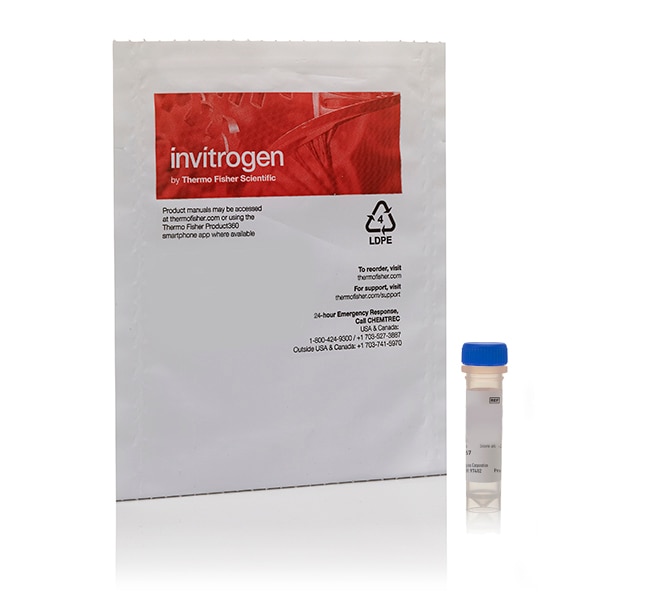
APF(羟自由基、次氯酸根或过氧亚硝基传感器)
氨基苯基荧光素 (APF) 和羟苯基荧光素 (HPF, H36004) 是 T. Nagano 开发的两种活性氧簇 (ROS)了解更多信息
| 货号 | 数量 |
|---|---|
| A36003 | 470 μL |
货号 A36003
价格(CNY)
10,009.00
Each
数量:
470 μL
价格(CNY)
10,009.00
Each
氨基苯基荧光素 (APF) 和羟苯基荧光素 (HPF, H36004) 是 T. Nagano 开发的两种活性氧簇 (ROS) 指示剂,具有比二氯二氢荧光素二乙酸酯 (H2DCFDA, D399) 更高的特异性和稳定性。APF 和 HPF 的非选择性反应性有限,并且对光诱导氧化具有相对较高的耐受性。这两种新型荧光素衍生物在与羟自由基或过氧亚硝基阴离子发生反应之前是不发荧光的。APF 还会与次氯酸根阴离子发生反应。可同时使用这两种 ROS 指示剂选择性地检测次亚氯酸根阴离子。氧化后,APF 和 HPF 会产生亮绿色荧光(最大激发/发射波长 ∼490/515 nm),与任何检测荧光素的仪器均兼容。
仅供科研使用。不可用于诊断程序。
规格
数量470 μL
检测方法Fluorescence
产品类型ROS Indicator
Unit SizeEach
引用和文献 (17)
引用和文献
Abstract
Measuring reactive species and oxidative damage in vivo and in cell culture: how should you do it and what do the results mean?
Journal:Br J Pharmacol
PubMed ID:15155533
'Free radicals and other reactive species (RS) are thought to play an important role in many human diseases. Establishing their precise role requires the ability to measure them and the oxidative damage that they cause. This article first reviews what is meant by the terms free radical, RS, antioxidant, oxidative
Externally applied pressure activates pancreatic stellate cells through the generation of intracellular reactive oxygen species.
Journal:Am J Physiol Gastrointest Liver Physiol
PubMed ID:17761838
'Local tissue pressure is higher in chronic pancreatitis than in the normal pancreas. We reported recently that pressure application induces synthesis of extracellular matrix (ECM) and cytokines in pancreatic stellate cells (PSCs) and that epigallocatechin gallate (EGCG), a potent antioxidant, inhibits the transformation of PSCs from quiescent to activated phenotype
Fluorescence probes used for detection of reactive oxygen species.
Journal:J Biochem Biophys Methods
PubMed ID:16297980
'Endogenously produced pro-oxidant reactive species are essential to life, being involved in several biological functions. However, when overproduced (e.g. due to exogenous stimulation), or when the levels of antioxidants become severely depleted, these reactive species become highly harmful, causing oxidative stress through the oxidation of biomolecules, leading to cellular damage
Monitoring singlet oxygen and hydroxyl radical formation with fluorescent probes during photodynamic therapy.
Journal:Photochem Photobiol
PubMed ID:19508643
'Singlet oxygen (1O2) is the primary oxidant generated in photodynamic therapy (PDT) protocols involving sensitizers resulting in type II reactions. 1O2 can give rise to additional reactive oxygen species (ROS) such as the hydroxyl radical (*OH). The current study was designed to assess 3''-p-(aminophenyl) fluorescein (APF) and 3''-p-(hydroxyphenyl) fluorescein (HPF)
Myeloperoxidase is a key regulator of oxidative stress mediated apoptosis in myeloid leukemic cells.
Journal:Clin Cancer Res
PubMed ID:17875773
'PURPOSE: We reported previously that reactive oxygen species (ROS) are key mediators of apoptosis induced by a polyphenol, (-)-epigallocatechin-3-gallate (EGCG), in myeloid leukemic cells. This study aimed to further examine the mechanism of ROS-mediated apoptosis induced by EGCG and its relationship to the heme enzyme myeloperoxidase (MPO). EXPERIMENTAL DESIGN: We