What is the best way of engineering a sampling and analysis solution for high availability?
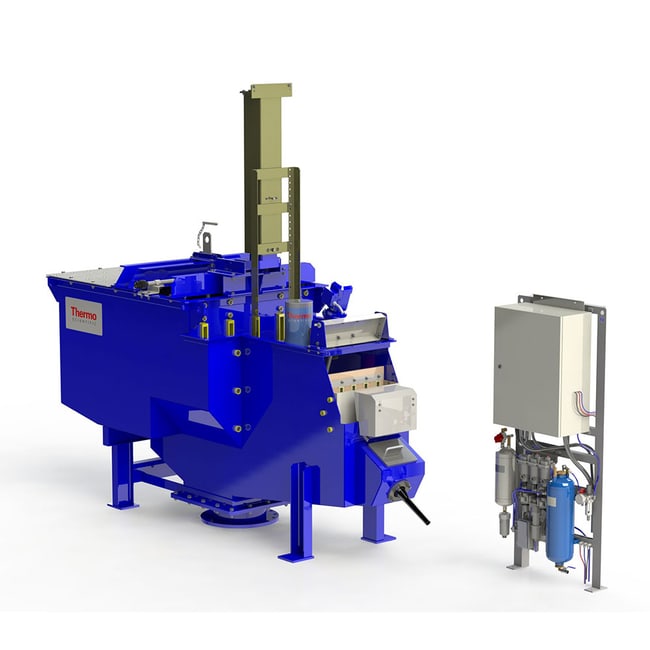
Integrating sampling and analysis into one product is the best solution. Placing the analyzer within the sampler eliminates any scope for settling or sedimentation. This approach ensures dedicated real-time measurement with minimal risk of blockage. On the CAPEX front, this approach reduces piping design hours and expenditures on pumping. On an ongoing basis, integration minimizes maintenance and operation costs. The off-the-shelf solution, Thermo Scientific AnStat-330 Sampling and Analysis Station, encapsulates this approach. As a low head loss system, it offers market-leading availability and is well-matched to applications requiring high frequency dedicated measurement.
How can I reduce construction costs in my new copper mining plant or expansion?
Thermo Scientific samplers and analyzers have the lowest head loss on the market. This helps minimizing the need for additional piping and pumps. Our solutions can help reduce costs of new plants by sensing and sorting waste and ore prior to stockpiles and plant feed. This diversion of below cut-off grade ore and waste enables a smaller plant footprint.
How can I reduce the need for pipes and pumps in my copper mining plant?
Dedicated analyzers can be placed close to the sample point to minimize the need for additional piping and often avoids the need for a pump. The Thermo Scientific AnStat-330 Sampling and Analysis Station is a dedicated analyzer that also incorporates an industry leading statistically representative sampling station. It has the lowest head loss of any analyzer on the market which enables its placement downstream of the sample point thereby using gravity to take the sample to the analyzer.
In an online slurry analysis system, how do I know if the recirculating load is being fully monitored?
To fully monitor the recirculating load, it is also necessary to monitor the rougher and scavenger concentrates and cleaner tailing streams. As recirculating loads tend to build up slowly with time, these analyses are not required on a minute-by-minute basis so these streams can be monitored with a lower cost-per-stream centralized analyzer.
In an online elemental analysis system, how critical is a given stream is in the overall process control strategy?
If the critical streams are monitored frequently as per the recommended criteria, the operators should be able to control the plant to give overall stability and best metallurgical results at minimum cost. The less critical intermediate streams can then be monitored at a lower frequency for the fine tuning of the circuit.
The degree of confidence required in the assay-based control decisions must be known. Streams that are more critical for control of the plant need to be monitored more frequently. Trends in plant performance will then be shown in more detail, showing effect of control actions on grade in real-time and giving greater confidence in control decisions. For example, in a base metal concentrator, the main objective might be to minimize metal losses in primary floatation while producing a particular concentrate grade in the cleaners. In addition, test work may show that recirculating loads tend to build up in the cleaning stages which is a result of recovery of excessive gangue in the rougher concentrate. Continuous analysis of tailings grades provides a critical tool in the operation of rougher flotation. On-line analysis of concentrates provides a tool to manage grade-recovery in the cleaners and better control impurities to meet the smelter requirements.