Search


引用和文献 (59)
Invitrogen™
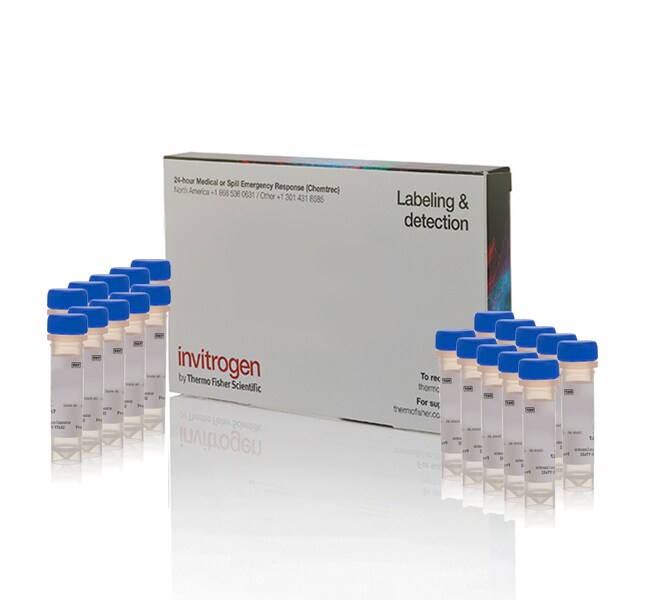
LysoSensor™ Green DND-189 - 特殊包装
LysoSensor™ Green DND-189 可用于测量溶酶体等酸性细胞器的 pH 值。LysoSensor 染料在酸性环境下的荧光会增强。LysoSensor™ Green了解更多信息
| 货号 | 数量 |
|---|---|
| L7535 | 20 x 50 μL |
货号 L7535
价格(CNY)
4,283.00
Online exclusive
Ends: 31-Dec-2026
5,948.00共减 1,665.00 (28%)
Each
数量:
20 x 50 μL
价格(CNY)
4,283.00
Online exclusive
Ends: 31-Dec-2026
5,948.00共减 1,665.00 (28%)
Each
LysoSensor™ Green DND-189 可用于测量溶酶体等酸性细胞器的 pH 值。LysoSensor 染料在酸性环境下的荧光会增强。LysoSensor™ Green DND-189 的 pKa 为 ∼5.2。
仅供科研使用。不可用于诊断程序。
规格
最大浓度1 mM
检测方法荧光
数量20 x 50 μL
运输条件室温
子细胞定位溶酶体
颜色绿色
发射波长范围443⁄505
适用于(设备)荧光显微镜
产品线LysoSensor
产品类型染料
Unit SizeEach
内容与储存
在冷冻冰箱(-5°C 至 -30°C)中避光储存。
常见问题解答 (FAQ)
What is the working concentration for LysoSensor Green DND-189 (Cat. No. L7535)?
Can I use a plate reader to measure the pH of acidic organelles, such as lysosomes, with LysoSensor ratiometric probes?
What reagents would you recommend for measuring the pH in acidic organelles, such as lysosomes?
引用和文献 (59)
引用和文献
Abstract
Expression of the voltage-gated sodium channel NaV1.5 in the macrophage late endosome regulates endosomal acidification.
Journal:J Immunol
PubMed ID:17548620
'Voltage-gated sodium channels expressed on the plasma membrane activate rapidly in response to changes in membrane potential in cells with excitable membranes such as muscle and neurons. Macrophages also require rapid signaling mechanisms as the first line of defense against invasion by microorganisms. In this study, our goal was to
High density of octaarginine stimulates macropinocytosis leading to efficient intracellular trafficking for gene expression.
Journal:J Biol Chem
PubMed ID:16326716
'The mechanism of the arginine-rich peptide-mediated cellular uptake is currently a controversial issue. Several factors, including the type of peptide, the nature of the cargo, and the linker between them, appear to affect uptake. One of the less studied factors, which may affect the uptake mechanism, is the effect of
Porphyrin-retinamides: synthesis and cellular studies.
Journal:Bioconjug Chem
PubMed ID:17518439
'A series of four porphyrin-retinamides containing either all-trans- or 13-cis-retinoid acid residues, directly linked to the para-phenyl position of meso-tetraphenylporphyrin or via a low-molecular-weight PEG spacer, have been synthesized. The biological properties of these conjugates were evaluated in a model cell line, human HEp2, and in neuroblastoma SK-N-DZ cells, which
Helicobacter pylori enter and survive within multivesicular vacuoles of epithelial cells.
Journal:Cell Microbiol
PubMed ID:12366404
'Although intracellular Helicobacter pylori have been described in biopsy specimens and in cultured epithelial cells, the fate of these bacteria is unknown. Using differential interference contrast (DIC) video and immunofluorescence microscopy, we document that a proportion of cell-associated H. pylori enter large cytoplasmic vacuoles, where they remain viable and motile
Carbohydrate oxidation acidifies endosomes, regulating antigen processing and TLR9 signaling.
Journal:J Immunol
PubMed ID:20200279
'Phagocytes kill encapsulated microbes through oxidative cleavage of surface carbohydrates, releasing glycan fragments and microbial contents that serve as ligands for immune receptors, which tailor the immune response against the offending pathogen. The glycan fragments serve as MHC class II (MHC II) ligands and innate receptor agonists, whereas microbial proteins