Search

Thermo Scientific™
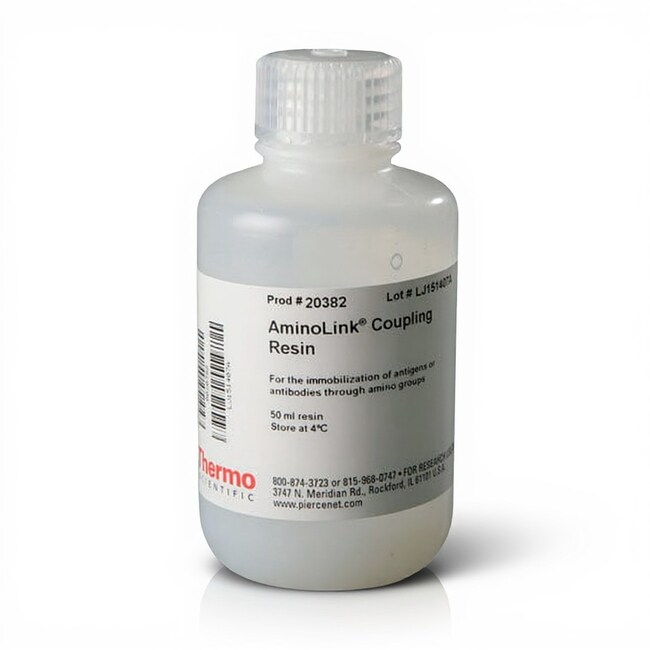
AminoLink™ 偶联树脂
Thermo Scientific AminoLink 偶联树脂是一种已经过醛基团活化的交联 4% 微珠状琼脂糖,通过伯胺实现抗体和其他蛋白的共价固定。AminoLink 偶联树脂的特点:•AminoLink 偶联树脂—醛类活化交联 4%了解更多信息
Have Questions?
更改视图

| 货号 | 数量 |
|---|---|
| 20382 | 50 mL |
| 20381 | 10 mL |
货号 20382
价格(CNY)
8,495.00
Each
数量:
50 mL
价格(CNY)
8,495.00
Each
Thermo Scientific AminoLink 偶联树脂是一种已经过醛基团活化的交联 4% 微珠状琼脂糖,通过伯胺实现抗体和其他蛋白的共价固定。
AminoLink 偶联树脂的特点:
•AminoLink 偶联树脂—醛类活化交联 4% 微珠状琼脂糖
• 非常适用于抗体和其他蛋白—通过伯胺 (-NH2) 固定分子
• 灵活的偶联条件—可在较宽范围的 pH 值 (4-10) 和缓冲液(PBS 或其他含有或不含有机溶剂的非胺缓冲液)条件下实现高效 (>85%) 偶联
• 稳定、永久性的固定—偶联反应在树脂和配体之间产生稳定、防渗漏的仲胺键
• 优于 CNBr-活化琼脂糖的固定化—化学键更为稳定且不带电荷,在亲和纯化步骤中产生更少的非特异性结合
• 多功能且可重复使用—制备的亲和树脂可适应色谱柱和批次亲和技术,并可根据蛋白结合相互作用将树脂重复用于典型应用
蛋白和含有伯胺的其他分子可以共价连接(固定)到 AminoLink 树脂上,从而使色谱柱可用于亲和纯化。醛基与伯胺形成稳定的仲胺键,如存在于赖氨酸 (K) 残基的侧链中,该残基通常在蛋白中丰度高且易于进入蛋白。蛋白固定化后,制备的亲和树脂可用于涉及固定化蛋白结合相互作用的各种批次和柱亲和纯化方法。树脂和连结在亲和色谱分析中通常使用的大多数结合和洗脱条件下是稳定的,使得制备好的树脂可用于多次亲和纯化程序。
AminoLink 树脂固定反应涉及在醛类和胺自然形成席夫基体连结,并可使用温和还原剂培养对其进行后续稳定。整个偶联反应,被称为还原性氨化,在简单非胺缓冲液(如 PBS)中,在 4 至 6 小时内完成。与抗体和典型蛋白的偶联效率通常高于 85%,使得每毫升树脂得到 1 至 20 mg 的固定化蛋白。
相关产品
AminoLink™ 固定试剂盒
AminoLink™ 还原剂
AminoLink 偶联树脂的特点:
•AminoLink 偶联树脂—醛类活化交联 4% 微珠状琼脂糖
• 非常适用于抗体和其他蛋白—通过伯胺 (-NH2) 固定分子
• 灵活的偶联条件—可在较宽范围的 pH 值 (4-10) 和缓冲液(PBS 或其他含有或不含有机溶剂的非胺缓冲液)条件下实现高效 (>85%) 偶联
• 稳定、永久性的固定—偶联反应在树脂和配体之间产生稳定、防渗漏的仲胺键
• 优于 CNBr-活化琼脂糖的固定化—化学键更为稳定且不带电荷,在亲和纯化步骤中产生更少的非特异性结合
• 多功能且可重复使用—制备的亲和树脂可适应色谱柱和批次亲和技术,并可根据蛋白结合相互作用将树脂重复用于典型应用
蛋白和含有伯胺的其他分子可以共价连接(固定)到 AminoLink 树脂上,从而使色谱柱可用于亲和纯化。醛基与伯胺形成稳定的仲胺键,如存在于赖氨酸 (K) 残基的侧链中,该残基通常在蛋白中丰度高且易于进入蛋白。蛋白固定化后,制备的亲和树脂可用于涉及固定化蛋白结合相互作用的各种批次和柱亲和纯化方法。树脂和连结在亲和色谱分析中通常使用的大多数结合和洗脱条件下是稳定的,使得制备好的树脂可用于多次亲和纯化程序。
AminoLink 树脂固定反应涉及在醛类和胺自然形成席夫基体连结,并可使用温和还原剂培养对其进行后续稳定。整个偶联反应,被称为还原性氨化,在简单非胺缓冲液(如 PBS)中,在 4 至 6 小时内完成。与抗体和典型蛋白的偶联效率通常高于 85%,使得每毫升树脂得到 1 至 20 mg 的固定化蛋白。
相关产品
AminoLink™ 固定试剂盒
AminoLink™ 还原剂
仅供科研使用。不可用于诊断程序。
规格
色谱柱类型亲和,琼脂糖树脂
产品规格瓶装
数量50 mL
固定相醛类
靶标通过伯胺固定抗体、蛋白
产品线AminoLink
类型树脂
Unit SizeEach
内容与储存
储存于 4°C。