Search

Thermo Scientific™
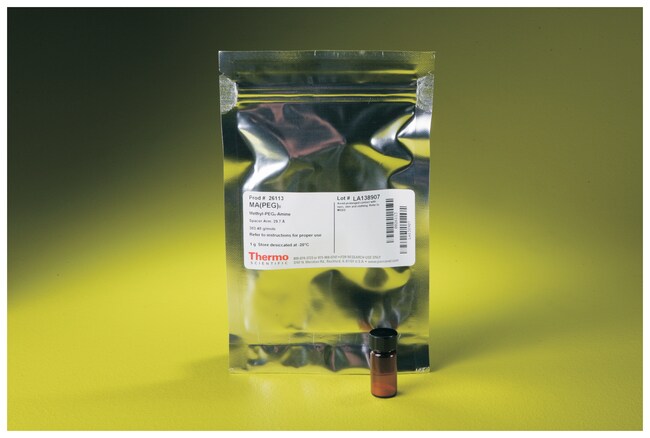
MA(PEG)24 甲基-PEG-胺化合物
Thermo Scientific Pierce MA(PEG)12 是一种甲基和胺封端的聚乙二醇试剂,可用于各种表面修饰和分子聚乙二醇化应用。MA(PEG)12 的特性:• 具有明确 PEG 链长度的完全表征聚乙二醇化试剂;离散分子量的分子,确保蛋白修饰应用中的性能一致性•了解更多信息
Have Questions?
更改视图

| 货号 | 数量 |
|---|---|
| 26114 | 100 mg |
| 26115 | 1 g |
货号 26114
价格(CNY)
6,148.00
飞享价
Ends: 31-Dec-2026
8,308.00共减 2,160.00 (26%)
Each
数量:
100 mg
价格(CNY)
6,148.00
飞享价
Ends: 31-Dec-2026
8,308.00共减 2,160.00 (26%)
Each
Thermo Scientific Pierce MA(PEG)12 是一种甲基和胺封端的聚乙二醇试剂,可用于各种表面修饰和分子聚乙二醇化应用。
MA(PEG)12 的特性:
• 具有明确 PEG 链长度的完全表征聚乙二醇化试剂;离散分子量的分子,确保蛋白修饰应用中的性能一致性
• PEG 间隔具有独特的优势,包括更高的稳定性、更低的积聚倾向和更低的免疫原性
• 允许对蛋白质或表面上的伯胺或羧基进行位点特异性标记或交联
• 易于遵循的指令增加了获得成功结果的可能性
MA(PEG)n 是一组具有聚乙二醇 (PEG) 间隔而其两端为甲基 (-CH3) 和氨基 (-NH2) 基团的化合物的缩写。无支链、亲水、离散长度的分子具有甲基-PEGn-胺形式,其中下标“n”表示 4、8、12 或 24 个乙二醇单位。每个化合物的末端伯胺为交联和其他偶联方法提供了特异性靶标,使这些化合物可用作聚乙二醇化试剂。
聚乙二醇化的应用:
•聚乙二醇化羧酸盐或胺表面
• 向蛋白质、免疫原、药物化合物和探针添加惰性物质
• 提高蛋白质或肽的溶解度(减少团聚)而不影响功能
• 保护蛋白质免受蛋白质水解
共价连接的方法:
• 使用 EDC 和 Sulfo-NHS 偶联至羧基
• 使用 DSS、BS(PEG)5/BS(PEG)9 或其他 NHS-酯试剂交联至伯胺
• 使用 Sulfo-SMCC 或 SM(PEG)n 试剂交联至巯基
• 通过还原胺化作用连接至氧化的碳水化合物基团(醛)
为什么将一种蛋白或肽聚乙二醇化?
甲基封端的含 PEG 的试剂已经用于修饰蛋白质以提供特定的优点。蛋白聚乙二醇化可以提高修饰蛋白的稳定性,使其免于蛋白水解酶切,提高其在生物学的应用中的半衰期,掩盖其引起的免疫原性反应,降低其抗原性或潜在毒性,提高其溶解度,降低聚合的可能性,并能尽可能降低体外和体内应用的干扰。聚乙二醇(也称为聚氧乙烯 (PEO))具有这些效应,因为它无毒、无免疫原性、具有亲水性、可溶性和高度灵活性。
离散长度的聚乙二醇化合物的优势
这些试剂经特殊合成,生成具有确定分子量的均相化合物,其特点是离散链长度,可更好地优化和表征表面蛋白修饰。PEG 化合物的典型制剂是含规定平均分子量或近似数量 PEG 亚单位链长度分布的多相混合物。
相关产品
MA(PEG) 4 甲基-PEG-胺化合物
MA(PEG) 8 甲基-PEG-胺化合物
MA(PEG) 24 甲基-PEG-胺化合物
MA(PEG)12 的特性:
• 具有明确 PEG 链长度的完全表征聚乙二醇化试剂;离散分子量的分子,确保蛋白修饰应用中的性能一致性
• PEG 间隔具有独特的优势,包括更高的稳定性、更低的积聚倾向和更低的免疫原性
• 允许对蛋白质或表面上的伯胺或羧基进行位点特异性标记或交联
• 易于遵循的指令增加了获得成功结果的可能性
MA(PEG)n 是一组具有聚乙二醇 (PEG) 间隔而其两端为甲基 (-CH3) 和氨基 (-NH2) 基团的化合物的缩写。无支链、亲水、离散长度的分子具有甲基-PEGn-胺形式,其中下标“n”表示 4、8、12 或 24 个乙二醇单位。每个化合物的末端伯胺为交联和其他偶联方法提供了特异性靶标,使这些化合物可用作聚乙二醇化试剂。
聚乙二醇化的应用:
•聚乙二醇化羧酸盐或胺表面
• 向蛋白质、免疫原、药物化合物和探针添加惰性物质
• 提高蛋白质或肽的溶解度(减少团聚)而不影响功能
• 保护蛋白质免受蛋白质水解
共价连接的方法:
• 使用 EDC 和 Sulfo-NHS 偶联至羧基
• 使用 DSS、BS(PEG)5/BS(PEG)9 或其他 NHS-酯试剂交联至伯胺
• 使用 Sulfo-SMCC 或 SM(PEG)n 试剂交联至巯基
• 通过还原胺化作用连接至氧化的碳水化合物基团(醛)
为什么将一种蛋白或肽聚乙二醇化?
甲基封端的含 PEG 的试剂已经用于修饰蛋白质以提供特定的优点。蛋白聚乙二醇化可以提高修饰蛋白的稳定性,使其免于蛋白水解酶切,提高其在生物学的应用中的半衰期,掩盖其引起的免疫原性反应,降低其抗原性或潜在毒性,提高其溶解度,降低聚合的可能性,并能尽可能降低体外和体内应用的干扰。聚乙二醇(也称为聚氧乙烯 (PEO))具有这些效应,因为它无毒、无免疫原性、具有亲水性、可溶性和高度灵活性。
离散长度的聚乙二醇化合物的优势
这些试剂经特殊合成,生成具有确定分子量的均相化合物,其特点是离散链长度,可更好地优化和表征表面蛋白修饰。PEG 化合物的典型制剂是含规定平均分子量或近似数量 PEG 亚单位链长度分布的多相混合物。
相关产品
MA(PEG) 4 甲基-PEG-胺化合物
MA(PEG) 8 甲基-PEG-胺化合物
MA(PEG) 24 甲基-PEG-胺化合物
仅供科研使用。不可用于诊断程序。
规格
形式实心
标签类型聚乙二醇 (PEG)、封闭基团
数量100 mg
反应一部分胺、伯胺
溶解度水
化学反应性酮
产品类型胺化合物
间隔子12 个乙二醇单元
Unit SizeEach
内容与储存
收到产品后防潮储存在 -20°C 下。产品在环境温度下运输。