Search

Thermo Scientific™
Mass Spectrometry Grade Proteases
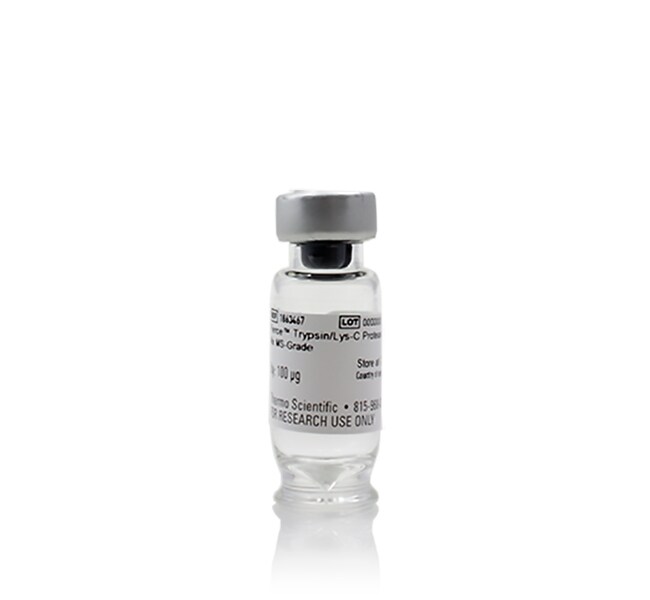
MS-级 Thermo Scientific Pierce 胰蛋白酶/Lys-C 蛋白酶混合物是一种胰蛋白酶和 LysC 的质谱 (MS) 级丝氨酸胞内蛋白酶混合物,与单独使用胰蛋白酶相比,可以同时酶切蛋白以实现更有效的酶切了解更多信息
Have Questions?
更改视图

| 货号 | 数量 | 产品类型 |
|---|---|---|
| A41007 | 5 x 20μg | 胰蛋白酶/Lys-C 蛋白酶混合物 |
| 90053 | 2 μg | Asp-N内切蛋白酶 |
| 90056 | 4 x 25 μg | 糜蛋白酶内切蛋白酶 |
| 90054 | 5 x 10 μg | Glu-C内切蛋白酶 |
| 90305 | 1 x 100 μg | 胰蛋白酶 |
| 90059 | 1 mg | 胰蛋白酶 |
| A40007 | 20 μg | 胰蛋白酶/Lys-C 蛋白酶混合物 |
| A40009 | 100 μg | 胰蛋白酶/Lys-C 蛋白酶混合物 |
| 90051 | 1 x 20 μg | Lys-C内切蛋白酶 |
| 90307 | 100 μg | Lys-C蛋白酶 |
| 90057 | 5 x 20μg | 胰蛋白酶 |
| 90058 | 5 x 100μg | 胰蛋白酶 |
货号 A41007
价格(CNY)
3,525.00
飞享价
Ends: 31-Dec-2026
4,352.00共减 827.00 (19%)
Each
数量:
5 x 20μg
产品类型:
胰蛋白酶/Lys-C 蛋白酶混合物
价格(CNY)
3,525.00
飞享价
Ends: 31-Dec-2026
4,352.00共减 827.00 (19%)
Each
MS-级 Thermo Scientific Pierce 胰蛋白酶/Lys-C 蛋白酶混合物是一种胰蛋白酶和 LysC 的质谱 (MS) 级丝氨酸胞内蛋白酶混合物,与单独使用胰蛋白酶相比,可以同时酶切蛋白以实现更有效的酶切。
MS 级 Pierce 胰蛋白酶/Lys-C 蛋白酶混合物的特点包括:
•增强酶切 — 酶组合可减少胰蛋白酶缺失切割
•便利 — 胰蛋白酶和 LysC 蛋白酶以优化的比值提供,以组合使用形式进行酶切
•出色的选择性 — 胰蛋白酶具有 >95% 的 C 端赖氨酸和精氨酸特异性;LysC 具有 >90% 的 C 端赖氨酸切割特异性
•稳定 — 酶混合物以冻干形式提供
通过 MS 以高效、可重现的蛋白酶切开始进行蛋白表征、鉴别和定量。尽管胰蛋白酶通常用于蛋白酶切,但单独这一种蛋白酶并不足以完全酶切赖氨酸和精氨酸残基的羧基端的蛋白。因此,Lys-C 蛋白酶通常与胰蛋白酶共同作用,以连续酶切蛋白,缺失切割较少。Pierce 胰蛋白酶/Lys-C 蛋白酶混合物是胰蛋白酶和 LysC 蛋白酶的冻干混合物,已经过优化以提高蛋白酶切效率。它以 20 µg、5 x 20 µg 或 100 µg 灵活规格提供,也包括在 EasyPep Mini MS 样品制备试剂盒中。
此混合物中 MS 级胰蛋白酶源自猪胰腺提取物,经 TPCK 处理以消除糜蛋白酶活性并甲基化以改善酶切期间的稳定性。MS 级 Lys-C 蛋白酶是一种从产酶溶杆菌中高度纯化的天然酶。与胰蛋白酶不同,Lys-C 可以切割赖氨酸然后切割脯氨酸,是与其他蛋白酶配合使用实现较佳的蛋白酶切的理想选择。当作为混合物使用时,根据酶与蛋白比值,酶切可在短短 1.5–3 小时内完成或者过夜。在 -20°C 下储存时,该冻干酶混合物可保持稳定一年。
相关产品
EasyPep Mini MS 样品制备试剂盒
Pierce 比色肽定量测定
氯乙酰胺,No-Weigh 形式
MS 级 Pierce 胰蛋白酶/Lys-C 蛋白酶混合物的特点包括:
•增强酶切 — 酶组合可减少胰蛋白酶缺失切割
•便利 — 胰蛋白酶和 LysC 蛋白酶以优化的比值提供,以组合使用形式进行酶切
•出色的选择性 — 胰蛋白酶具有 >95% 的 C 端赖氨酸和精氨酸特异性;LysC 具有 >90% 的 C 端赖氨酸切割特异性
•稳定 — 酶混合物以冻干形式提供
通过 MS 以高效、可重现的蛋白酶切开始进行蛋白表征、鉴别和定量。尽管胰蛋白酶通常用于蛋白酶切,但单独这一种蛋白酶并不足以完全酶切赖氨酸和精氨酸残基的羧基端的蛋白。因此,Lys-C 蛋白酶通常与胰蛋白酶共同作用,以连续酶切蛋白,缺失切割较少。Pierce 胰蛋白酶/Lys-C 蛋白酶混合物是胰蛋白酶和 LysC 蛋白酶的冻干混合物,已经过优化以提高蛋白酶切效率。它以 20 µg、5 x 20 µg 或 100 µg 灵活规格提供,也包括在 EasyPep Mini MS 样品制备试剂盒中。
此混合物中 MS 级胰蛋白酶源自猪胰腺提取物,经 TPCK 处理以消除糜蛋白酶活性并甲基化以改善酶切期间的稳定性。MS 级 Lys-C 蛋白酶是一种从产酶溶杆菌中高度纯化的天然酶。与胰蛋白酶不同,Lys-C 可以切割赖氨酸然后切割脯氨酸,是与其他蛋白酶配合使用实现较佳的蛋白酶切的理想选择。当作为混合物使用时,根据酶与蛋白比值,酶切可在短短 1.5–3 小时内完成或者过夜。在 -20°C 下储存时,该冻干酶混合物可保持稳定一年。
相关产品
EasyPep Mini MS 样品制备试剂盒
Pierce 比色肽定量测定
氯乙酰胺,No-Weigh 形式
For Research Use Only. Not for use in diagnostic procedures.
规格
最终产品类型肽
适用于(设备)质谱仪
分级MS
数量5 x 20μg
运输条件湿冰
工作流程步骤蛋白质消化
检测方法质谱分析
形式实心
产品线Pierce
产品类型胰蛋白酶/Lys-C 蛋白酶混合物
原始材料蛋白样品
Unit SizeEach