Search


引用和文献 (15)
Invitrogen™
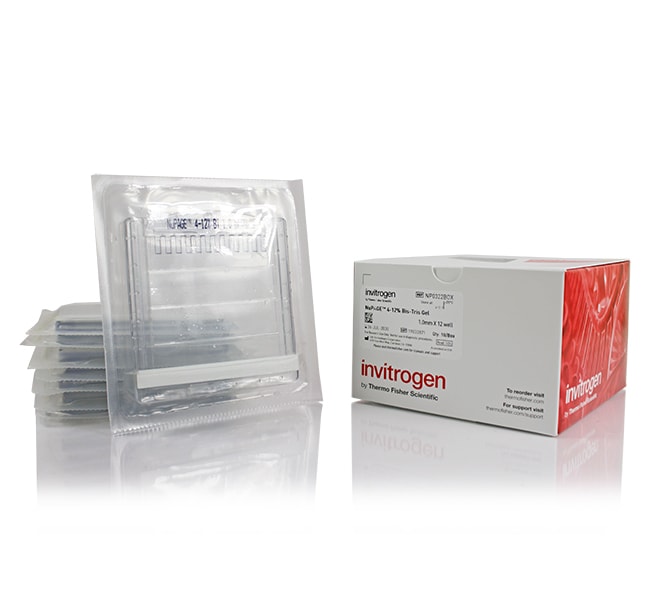
NuPAGE™ 4-12%,Bis-Tris,1.0–1.5 mm,小型蛋白凝胶
Invitrogen NuPAGE Bis-Tris 预制胶是用于各种分子量蛋白在变性条件下进行高效分离的预制聚丙烯酰胺凝胶。与传统 Tris- 甘氨酸预制胶不同,NuPAGE Bis-Tris 预制胶具有中性 pH了解更多信息
Have Questions?
更改视图

| 货号 | 孔 | 凝胶厚度 | 数量 |
|---|---|---|---|
| NP0321BOX | 10孔 | 1.0 mm | 10 块凝胶/盒 |
| NP0321PK2 | 10孔 | 1.0 mm | 2 块凝胶/盒 |
| NP0322BOX | 12孔 | 1.0 mm | 10 块凝胶/盒 |
| NP0322PK2 | 12孔 | 1.0 mm | 2 块凝胶/盒 |
| NP0323BOX | 15孔 | 1.0 mm | 10 块凝胶/盒 |
| NP0323PK2 | 15孔 | 1.0 mm | 2 块凝胶/盒 |
| NP0324BOX | 1孔 | 1.0 mm | 10 块凝胶/盒 |
| NP0326BOX | 2D 孔 | 1.0 mm | 10 块凝胶/盒 |
| NP0327BOX | 9孔 | 1.0 mm | 10 块凝胶/盒 |
| NP0329BOX | 17孔 | 1.0 mm | 10 块凝胶/盒 |
| NP0329PK2 | 17孔 | 1.0 mm | 2 块凝胶/盒 |
| NP0330BOX | IPG 孔 | 1.0 mm | 10 块凝胶/盒 |
| NP0335BOX | 10孔 | 1.5 mm | 10 块凝胶/盒 |
| NP0335PK2 | 10孔 | 1.5 mm | 2 块凝胶/盒 |
| NP0336BOX | 15孔 | 1.5 mm | 10 块凝胶/盒 |
| NP0336PK2 | 15孔 | 1.5 mm | 2 块凝胶/盒 |
货号 NP0321BOX
价格(CNY)
700.00
飞享价
Ends: 31-Dec-2026
997.00共减 297.00 (30%)
Each
孔:
10孔
凝胶厚度:
1.0 mm
数量:
10 块凝胶/盒
价格(CNY)
700.00
飞享价
Ends: 31-Dec-2026
997.00共减 297.00 (30%)
Each
Invitrogen NuPAGE Bis-Tris 预制胶是用于各种分子量蛋白在变性条件下进行高效分离的预制聚丙烯酰胺凝胶。与传统 Tris- 甘氨酸预制胶不同,NuPAGE Bis-Tris 预制胶具有中性 pH 环境,可尽量减少蛋白质修饰。使用 NuPAGE Bis-Tris 预制胶制备蛋白质以用于测序、质谱分析、以及任何其他蛋白质完整性至关重要的技术。同时,也可使用 NuPAGE 预制胶以在日常使用中获得理想的结果。
NuPAGE Bis-Tris 预制胶的特点包括:
•更好的蛋白完整性—优化的样品制备过程可保留您的蛋白质
•广泛的分子量分离范围—选择正确的凝胶和电泳缓冲液有助于实现蛋白质的最佳分离
•更短的电泳时间—在短短 35 分钟内即可分离蛋白质
•更长的有效期— NuPAGE Bis-Tris 预制胶可在室温下储存至少 12 月
了解更多关于我们所有的 NuPAGE Bis-Tris 预制胶的信息 >
查看迁移图›
选择适用于您蛋白质分离的 NuPAGE Bis-Tris 预制胶
选择合适的凝胶和电泳缓冲液,有助于实现蛋白的最佳分离。NuPAGE Bis-Tris 蛋白预制胶有 4 种聚丙烯酰胺浓度:8%、10%、12% 和 4–12% 梯度。凝胶有两种尺寸:小型 (8 cm x 8 cm) 或中型 (8.7 cm x 13.3 cm),厚度为 1.0 mm (小型和中型凝胶)或 1.5 mm (仅限小型凝胶规格)。NuPAGE Bis-Tris 预制胶还具有多种孔规格。
NuPAGE Bis-Tris 预制胶适用于变性凝胶电泳应用。要实现理想样品制备,请使用 NuPAGE LDS 上样缓冲液和 NuPAGE 样品还原剂。在电泳缓冲液中使用 NuPAGE 抗氧化剂可在电泳期间保持蛋白质的还原状态,并达到最大的条带清晰度。凝胶可搭配 NuPAGE MES SDS 电泳缓冲液使用,以更高效地分离低分子量蛋白,或者搭配 NuPAGE MOPS SDS 电泳缓冲液使用,以分离中至高分子量蛋白。
我们还提供 NuPAGE tris-乙酸凝胶用于分离分子量更大的蛋白质。对于经典的基于 Laemmli 的 Tris- 甘氨酸电泳系统,我们提供了 Novex Tris- 甘氨酸预制胶。
用于将蛋白质转印到膜上,我们建议使用 NuPAGE 转膜缓冲液。使用 Pierce Power Blotter 可实现快速半干式转印,或使用 iBlot2 凝胶转膜仪进行快速干式转印。或者,可以使用 XCell II Blot 模块或 迷你印迹模块.
相关链接
1D 蛋白电泳概述
NuPAGE Tris-Bis 与传统 Tris-甘氨酸凝胶的比较
NuPAGE Bis-Tris 预制胶的特点包括:
•更好的蛋白完整性—优化的样品制备过程可保留您的蛋白质
•广泛的分子量分离范围—选择正确的凝胶和电泳缓冲液有助于实现蛋白质的最佳分离
•更短的电泳时间—在短短 35 分钟内即可分离蛋白质
•更长的有效期— NuPAGE Bis-Tris 预制胶可在室温下储存至少 12 月
了解更多关于我们所有的 NuPAGE Bis-Tris 预制胶的信息 >
查看迁移图›
选择适用于您蛋白质分离的 NuPAGE Bis-Tris 预制胶
选择合适的凝胶和电泳缓冲液,有助于实现蛋白的最佳分离。NuPAGE Bis-Tris 蛋白预制胶有 4 种聚丙烯酰胺浓度:8%、10%、12% 和 4–12% 梯度。凝胶有两种尺寸:小型 (8 cm x 8 cm) 或中型 (8.7 cm x 13.3 cm),厚度为 1.0 mm (小型和中型凝胶)或 1.5 mm (仅限小型凝胶规格)。NuPAGE Bis-Tris 预制胶还具有多种孔规格。
NuPAGE Bis-Tris 预制胶适用于变性凝胶电泳应用。要实现理想样品制备,请使用 NuPAGE LDS 上样缓冲液和 NuPAGE 样品还原剂。在电泳缓冲液中使用 NuPAGE 抗氧化剂可在电泳期间保持蛋白质的还原状态,并达到最大的条带清晰度。凝胶可搭配 NuPAGE MES SDS 电泳缓冲液使用,以更高效地分离低分子量蛋白,或者搭配 NuPAGE MOPS SDS 电泳缓冲液使用,以分离中至高分子量蛋白。
我们还提供 NuPAGE tris-乙酸凝胶用于分离分子量更大的蛋白质。对于经典的基于 Laemmli 的 Tris- 甘氨酸电泳系统,我们提供了 Novex Tris- 甘氨酸预制胶。
用于将蛋白质转印到膜上,我们建议使用 NuPAGE 转膜缓冲液。使用 Pierce Power Blotter 可实现快速半干式转印,或使用 iBlot2 凝胶转膜仪进行快速干式转印。或者,可以使用 XCell II Blot 模块或 迷你印迹模块.
相关链接
1D 蛋白电泳概述
NuPAGE Tris-Bis 与传统 Tris-甘氨酸凝胶的比较
For Research Use Only. Not for use in diagnostic procedures.
规格
适用于(设备)XCell SureLock Mini-Cell 电泳槽操作指南
凝胶厚度1.0 mm
长度(公制)8 cm
分离模式分子量
数量10 块凝胶/盒
推荐应用变性
上样容量最多 25 µL
有效期12个月
运输条件室温
储存要求储存于 4–25°C。切勿冷冻。
宽度(公制)8 cm
凝胶百分比4 至 12%
凝胶尺寸小型
凝胶类型Bis-Tris 体系
产品线NuPAGE
分离范围3.5至260 kDa
分离类型变性
孔10孔
Unit SizeEach
内容与储存
一盒中包含 10 支凝胶。于4–25°C 下储存。切勿冷冻。有效期为 12 个月。
常见问题解答 (FAQ)
我将蛋白质置于Tris-甘氨酸凝胶上在非变性条件下进行电泳。蛋白质的pI高于Tris-甘氨酸转膜缓冲液的pH。你们建议如何对蛋白质进行转印?
配制20X NuPAGE转膜缓冲液时,是否需要加入氯丁醇?
NuPAGE凝胶转印能否使用碳酸盐或CAPS转膜缓冲液?
对于改善NuPAGE凝胶上大分子蛋白的转印效果,你们有何建议?
我的凝胶电泳速度比正常速度快,且分辨率较差。可能原因是什么?
引用和文献 (15)
引用和文献
Abstract
The mRNA export machinery requires the novel Sac3p-Thp1p complex to dock at the nucleoplasmic entrance of the nuclear pores.
Journal:EMBO J
PubMed ID:12411502
'Yra1p and Sub2p are components of the TREX complex, which couples transcription elongation with nuclear export of mRNAs. Here, we report a genetic interaction between Yra1p and a conserved protein Sac3p, which previously was found to interact with Sub2p. In vivo, Sac3p forms a stable complex with Thp1p, which was
Rapid purification and mass spectrometric characterization of mitochondrial NADH dehydrogenase (Complex I) from rodent brain and a dopaminergic neuronal cell line.
Journal:Mol Cell Proteomics
PubMed ID:15591592
'Oxidative stress and mitochondrial dysfunction signify important biochemical events associated with the loss of dopaminergic neurons in Parkinson''s disease (PD). Studies using in vitro and in vivo PD models or tissues from diseased patients have demonstrated a selective inhibition of mitochondrial NADH dehydrogenase (Complex I of the OXPHOS electron transport
Intestinal trefoil factor confers colonic epithelial resistance to apoptosis
Journal:Proc Natl Acad Sci U S A
PubMed ID:10639160
'Intestinal trefoil factor (ITF) is an essential regulator of colonic epithelial restitution, the rapid migration of colonocytes over mucosal wounds. High levels of ITF are frequently present in colorectal cancers and derived cell lines. Mucosal restitution requires the detachment of epithelium from substrate, which would be expected to induce apoptosis.
2F3 monoclonal antibody recognizes the O26 O-antigen moiety of the lipopolysaccharide of enterohemorrhagic Escherichia coli strain 4276.
Journal:Clin Diagn Lab Immunol
PubMed ID:15138178
'Enterohemorrhagic Escherichia coli (EHEC) and enteropathogenic E. coli (EPEC) organisms are groups of pathogenic strains whose infections are characterized by a typical lesion of enterocyte attachment and effacement. They are involved in enteric diseases both in humans and in animals, and EHEC strains can be responsible for hemolytic uremic syndrome
Human parainfluenza virus type 3 (PIV3) expressing the hemagglutinin protein of measles virus provides a potential method for immunization against measles virus and PIV3 in early infancy.
Journal:J Virol
PubMed ID:10888621
'Recombinant human parainfluenza virus type 3 (PIV3) was used as a vector to express the major protective antigen of measles virus, the hemagglutinin (HA) glycoprotein, in order to create a bivalent PIV3-measles virus that can be administered intranasally. The measles virus HA open reading frame (ORF) was inserted as an