Search
在血细胞计数板中进行细胞计数
常见细胞类型的生长因子类型
什么是血球计数板,它的用途是什么?
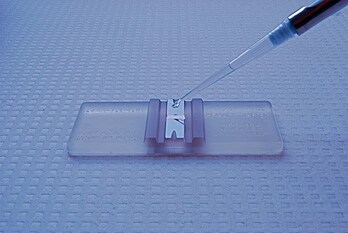
血球计数板,也称为血细胞计数板或血球计数器,是一种用于手动计数细胞培养样本中细胞数量的玻璃显微镜载玻片。为了帮助研究人员有条理且准确地计数细胞,血球计数板上带有由不同大小的方格和垂直线组成的网格。每个计数池的网格由九个方格(子网格)组成,每个方格的面积为1平方毫米。最常见的血球计数板网格是Neubauer或改良Neubauer型,当然也有其他网格样式可供不同细胞培养应用选择。计算细胞密度对于确保培养中的细胞有足够空间以自然方式生长和增殖至关重要。要计算样本的细胞密度,必须知道网格空间的大小和计数池的体积。血球计数板的计数池被设计为可容纳特定体积的培养样本,以便获得准确且可重复的细胞密度。不同的网格可能容纳的体积不同,但Neubauer网格方格的标准体积为0.1立方毫米。
在血球计数板上手动计数细胞所需的材料
除了下述材料外,血球计数板还可从Fisher Scientific获得。
细胞计数操作规程
以下流程为使用血球计数板手动计数细胞的一般指导。贴壁细胞的消化和悬浮细胞的收集用于计数和分析需要额外的步骤。
如果您希望测量活细胞的浓度,可以加入台盼蓝染色。
- 用酒精清洁计数室和盖玻片。将盖玻片擦干并固定到位。
- 收集细胞,并轻柔但彻底地重悬细胞沉淀(如有需要)。使用微量移液器,向血球计数板中加入10微升细胞溶液。不要加得过满。
- 将计数室固定在倒置显微镜下,使用10倍物镜。用相差显微镜来区分细胞。
- 为了计算细胞数量,在大而中央的有格方块(1平方毫米)中以之字形方式沿每一行计数活细胞数量。下图中已圈出该有格方块。将计数结果乘以10的4次方,以估算每毫升的细胞数量(样品中的细胞浓度)。准备重复样品并取平均值,以获得细胞浓度。

点击图片放大
为什么在计数细胞时要乘以10,000?
10,000,即10的4次方,是一个校正因子,用于将Neubauer计数板一个网格中计数到的活细胞数转换为每毫升(mL)细胞数。
如上所述,Neubauer 计数板的体积为 0.1 mm³。0.1 mm³ 的体积等于 1x10⁻⁴ mL,即 1/10,000 mL。如果我们想要计算一个 Neubauer 计数板的细胞浓度(细胞数/1 mL),需要将所计数的细胞数乘以 10,000,以将一个计数格的体积换算为 1 mL。
因此,我们需要乘以 10,000(10⁴),以获得每毫升细胞的浓度。
血球计数板计算方法
使用血球计数板需要研究人员手动计算,以确定样品中的细胞浓度。在基本的血球计数板计算中,如上述实验步骤所述,研究人员通过将中央计数格中的细胞数乘以 10⁴ 来计算细胞浓度。
然而,如果你想要计算样品中活细胞的密度,可以使用以下公式:C = N x D x 10³。
C = 活细胞浓度(个/mL)
N = 在 10 个小格(1.0 mm³)中计数的活细胞数
D = 稀释倍数
10³ = 修正系数
你可能还想知道在总细胞浓度中有多少细胞是活细胞。可以使用以下公式计算:V = N/T x 100%。
V = 活细胞百分比
N = 在 10 个小格(1 mm³)中计数的活细胞数
T =在 10 个小格(1 mm³)中计数的总细胞数
其他细胞计数方法
血球计数板最初是为计数血细胞而开发的,后来也被用于计数各种类型和物种的细胞。虽然在血球计数板上计数细胞是传统的细胞计数方法,但它并不一定是最高效或最准确的。许多血球计数板的使用者选择这种细胞计数方法,是因为它在许多现有的实验方案和研究中被广泛引用。然而,手动计数细胞通常耗时且容易出现人为错误。自动细胞计数仪正在成为细胞计数方案的新标准。比较一下使用血球计数板与自动细胞计数仪进行细胞计数的区别。
下一个实验方案:
推荐产品


参考文献
- Absher, Marlene (1973) 第一章 – 血球计数板计数。组织培养。Academic Press. 第395–397页。
- Hoffman, Tracy L. (2006) 细胞计数。细胞生物学(第三版)。Academic Press. 第21–24页。
- Camacho-Fernández, C., Hervás, D., Rivas-Sendra, A. 等(2018)六种不同细胞密度计算方法的比较。Plant Methods14, 30。
- Fuentes,Maria. (2024) 血球计数板——使用血球计数板进行细胞计数
- 血球计数板图片https://commons.wikimedia.org/wiki/File:Hemocytometer.jpg 。许可协议:https://creativecommons.org/licenses/by-sa/2.0/ 。该图片未经过任何修改。
Stylesheet for Classic Wide Template adjustments
仅供科研使用,不可用于诊断目的。