Search
On this page:
Scalable perfusion workflows from development to production
Scaling Chinese hamster ovary (CHO) perfusion can introduce shifts in nutrient demand, viability, and medium consumption that complicate steady-state operation and increase costs as cultures intensify. These pressures often slow development or limit performance on a larger scale. Gibco High-Intensity Perfusion (HIP) CHO Medium is formulated to help stabilize these conditions by supporting controlled growth and predictable behavior at a range of working concentrations. Its Advanced Granulation Technology (AGT) format helps streamline preparation, enabling reproducible use from development through commercial production.
Benefits of Gibco High-Intensity Perfusion CHO Media
Gibco High-Intensity Perfusion CHO Media support continuous culture by maintaining cell health and controlled growth across perfusion modes. Some potential benefits include:
- High viable cell density at low Vessel Working Volume
- Helps maintain viability over extended perfusion
- Enables reliable productivity across CHO platforms
- Allows flexible medium concentration adjustments
Performance across CHO cell lines
HIP CHO Medium supports stable behavior across commonly used CHO systems. Its formulation helps maintain growth and viability during adaptation, early culture, and steady-state operation. Studies with CHO-S, CHO-K1, CHO-GS, and DG44 lines demonstrate controlled performance at low VVD exchange rates and across various concentration ranges, supporting the use of these lines in perfusion workflows
Table 1: Feeds and characteristics across CHO cell lines
Cell line |
Recommended feed |
Description |
CHO-S |
Gibco EfficientFeed C+ Supplement |
Supports stable growth and sustained viability in perfusion |
CHO-K1 |
Gibco EfficientFeed A+ Supplement |
Maintains productivity and controlled metabolism during scale-up |
CHO-GS |
Gibco EfficientFeed B+ Supplement |
Enables steady-state density at low VVD exchange rates |
DG44 |
EfficientFeed C+ Supplement |
Supports adaptation and consistent output in long perfusion runs |
Enable continuous, high-density perfusion
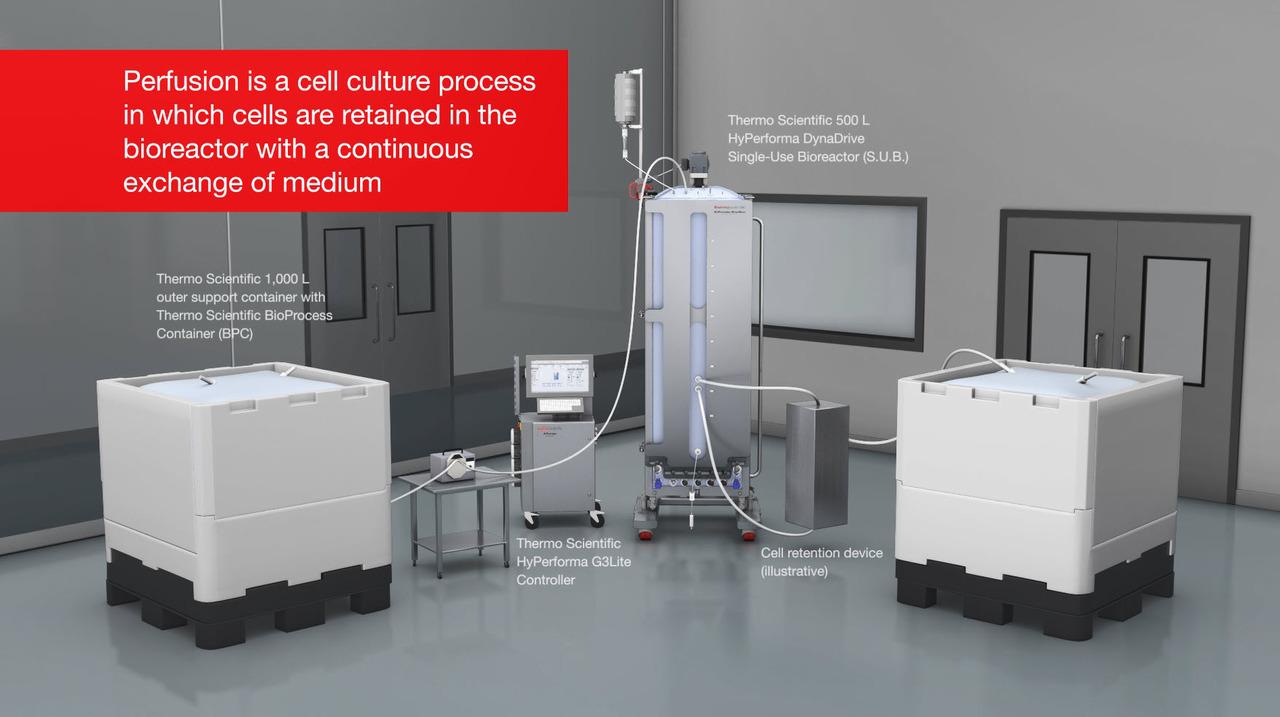
Continuous perfusion processes rely on stable cell growth, balanced nutrient delivery, and efficient medium preparation to maintain high viable cell density over extended runs. Gibco High-Intensity Perfusion (HIP) CHO Medium supports these conditions by helping sustain steady viability at low VVD exchange rates and under a range of culture concentrations.

Ordering information
High-Intensity Perfusion CHO Media
Support perfusion with CHO media
CHO processes rely on media that maintain cell health, support metabolic stability, and perform consistently as cultures intensify. Gibco CHO media are formulated to meet these needs across fed-batch and perfusion formats, helping teams manage nutrient delivery and reproducibility at each stage of development


Explore other media for consistent cell growth
Beyond CHO workflows, Gibco cell culture media support consistent performance across a range of cell types and production systems. These formulations help maintain viability, growth, and reproducibility from early development through manufacturing.


Frequently asked questions
Continuous perfusion requires controlled nutrient delivery and stable cell behavior over long culture periods. HIP CHO Medium is formulated to help maintain these conditions by supplying nutrients at levels that support growth at low VVD exchange rates. In extended runs, cultures have shown steady viability with limited shifts in metabolism. These characteristics help support high-density operation under continuous perfusion conditions.
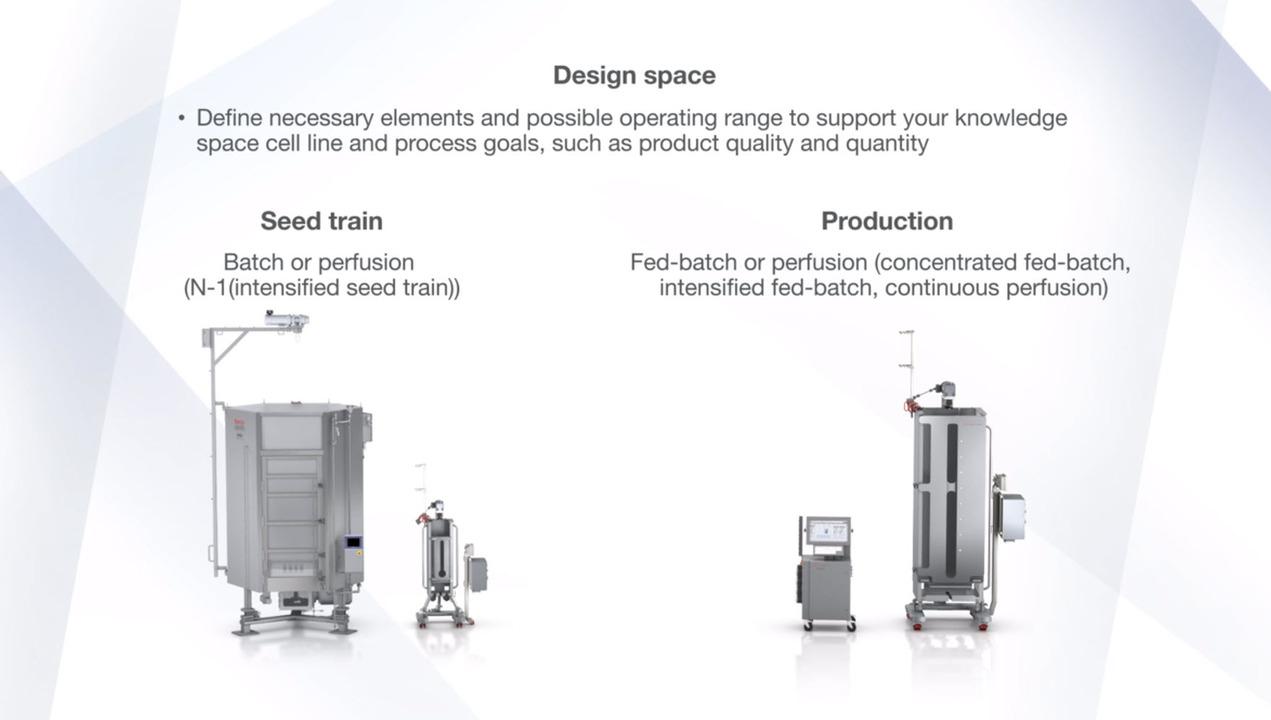
HIP CHO Medium can be evaluated in N-1 and intensified fed-batch formats where cultures require controlled growth and stable viability at higher cell densities. Its component profile supports cell expansion under conditions with increased passage frequency or elevated starting densities. In these applications, nutrient availability and metabolic behavior remain important factors to monitor as cultures approach higher cell concentrations. Results from internal studies indicate that HIP CHO Medium can maintain growth and viability in these intensified formats when process parameters are optimized to align with perfusion-based conditions.
HIP CHO Medium has been evaluated with several commonly used CHO hosts, including CHO-S, CHO-K1, CHO-GS, and DG44. Across these systems, cultures have shown stable growth and viability under perfusion conditions when operated at low VVD exchange rates. Differences in behavior between cell lines may require adjustment of seeding density, retention strategy, or operating parameters. In general, each of these CHO platforms has demonstrated consistent performance when paired with process settings suited to perfusion operation.
HIP CHO Medium is designed for continuous operation, where nutrients are supplied at low exchange rates and cells remain in culture for extended periods. Standard batch-fed formulations are typically optimized for periodic nutrient additions and shorter culture duration. These differences influence how cells respond to nutrient levels, byproduct accumulation, and overall metabolic conditions. In perfusion testing, HIP CHO Medium has supported steady viability and controlled growth under conditions that differ from those used in fed-batch operation.
HIP CHO Medium supports the perfusion stage of CHO processes by maintaining growth and viability under continuous operation. In a broader workflow, it accompanies upstream media, such as Gibco Dynamis Medium and the Efficient-Pro Medium and Feeds System, used in cell expansion and fed-batch development. These components can be evaluated together to manage nutrient needs as cultures progress toward higher densities. HIP CHO Medium offers a perfusion-specific option that aligns with scalable upstream strategies.
HIP CHO Medium is manufactured under cGMP conditions with controls that help support lot-to-lot consistency and documentation needs. The formulation is animal origin–free (AOF), which reduces variability associated with raw materials and supports regulatory expectations for upstream materials. Production is supported by Thermo Fisher Scientific's global supply network, which helps maintain reliable availability across regions. These factors contribute to consistent performance as processes move from development to clinical and commercial stages.

 HIP CHO media
Additional bioprocessing resources


Bioprocessing resources


For research use or further manufacturing. Not for diagnostic use or direct administration into humans or animals.